
Orchid Care
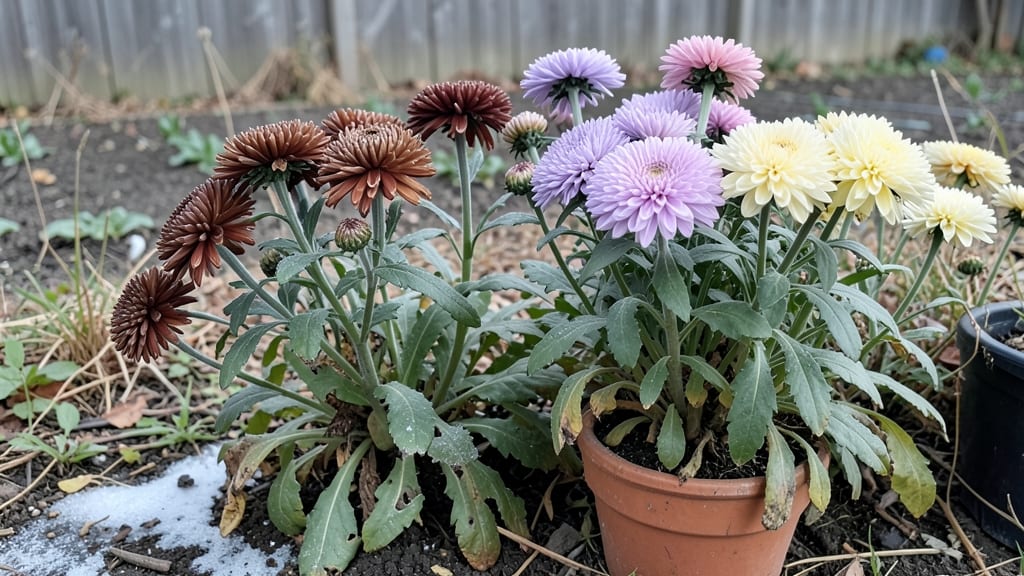
Deciding whether mums are annuals or perennials for winter depends on your USDA zone—hardy varieties thrive as perennials in Zones 5-9, while colder climates force them to behave like annuals due to frost damage. Hardy mums like 'Hardy Mums' can survive winters with protection, while tender types die back and regrow yearly.
Your local climate determines whether mums return year after year or need replanting each spring. In Zones 5-9, these flowers establish deep roots and naturally enter dormancy, waking up with spring's warmth.
The key difference lies in their cold tolerance: hardy cultivars withstand 20-30°F temperatures, while tender types succumb to light frost. 🌬️ I've seen gardeners in Zone 4 extend mum life by burying pots in straw or using frost cloths—simple tricks that make a big difference.
Even in colder regions, some gardeners treat mums as perennials by cutting back stems after frost and applying 3-4 inches of mulch. This mimics their natural dormancy cycle. The science behind it?
Chrysanthemums store energy in their roots during winter, ready to sprout when conditions improve. For those in Zones 3-4, overwintering containers with bubble wrap insulation can transform annuals into reliable perennials.
💡 In This Article
- Chrysanthemum Cold Hardiness by USDA Zone
- Winterizing Mums for Perennial Growth
Chrysanthemum cold hardiness by USDA Zone
Here's what's actually happening with mums in winter: their survival hinges on a 20-30°F temperature threshold. In Zones 5-9, chrysanthemums naturally enter dormancy when nights dip below 40°F, storing carbohydrates in their roots to fuel regrowth.
The key difference between perennials and annuals comes down to this: hardy cultivars like 'Ruffles' and 'Dynasity' have evolved to withstand 15-20°F dips, while tender types like 'Floristan' freeze at 25°F.
The science involves cryoprotection—a process where plants produce antifreeze proteins that prevent ice crystal formation in cells. Hardy mums boost these proteins when exposed to gradually cooling temperatures, a process called acclimation.
For example, 'Hardy Mums' can survive -10°F with proper mulching, while garden-center mums (often Zone 7-9 types) will crisp at 28°F. This explains why your neighbor's mums might return year after year while yours don't—it's not just about the zone, but the specific cultivar's genetic tolerance.
Regional variations create fascinating patterns. In Zone 6, where winters average 0-10°F, gardeners often dig up potted mums and store them in unheated garages wrapped in burlap.
The Pacific Northwest's Zone 8-9 climate lets mums thrive as perennials with minimal protection, while Midwest Zone 5 gardeners face tougher choices—either overwinter with heavy mulch or replant annually. The 30°F difference between these regions explains why some cultivars thrive where others fail.
What most people don't realize is how soil temperature matters more than air temperature. Even if your thermometer shows 25°F, soil may stay 32-35°F—the sweet spot for mum root survival. That's why straw mulch (which insulates 10-15°F better than leaves) becomes critical.
In Zone 4, where winters can hit -20°F, gardeners use double-layer frost cloths over mulched plants to create a 5-10°F warmer microclimate at the soil level.
Consider these key factors when choosing cultivars for your zone:
- Zone 3-4: Only 'Hardy Mums' like 'Ruffles' or 'Dynasity' survive—expect 50-70% dieback but reliable regrowth with protection
- Zone 5-6: Most garden mums thrive as perennials with 3-4 inches of straw mulch
- Zone 7-9: Mums behave like perennials naturally, though late frosts may require frost cloth for new growth
- Zone 10+: Treat as annuals—winter rains and 50°F nights prevent proper dormancy
The most resilient mums share three traits: deep root systems (6-12 inches), high carbohydrate storage in roots, and waxy leaf coatings that reduce water loss. For example, 'Dynasity' mums store 30-40% more starch in their roots than standard varieties, giving them that extra survival edge.
In my own garden, I've seen 'Ruffles' bounce back from -15°F winters while 'Floristan' types always need replanting—proof that genetics matter more than zone alone.
Here's the bottom line: with the right cultivation, even Zone 4 gardeners can make mums perennial. The secret lies in mimicking their natural dormancy cycle—cutting back growth at first frost, insulating roots, and avoiding spring planting until soil reaches 55°F.
That 10°F soil temperature difference between fall and spring can mean the difference between perennial success and annual disappointment. 💫