
Plants
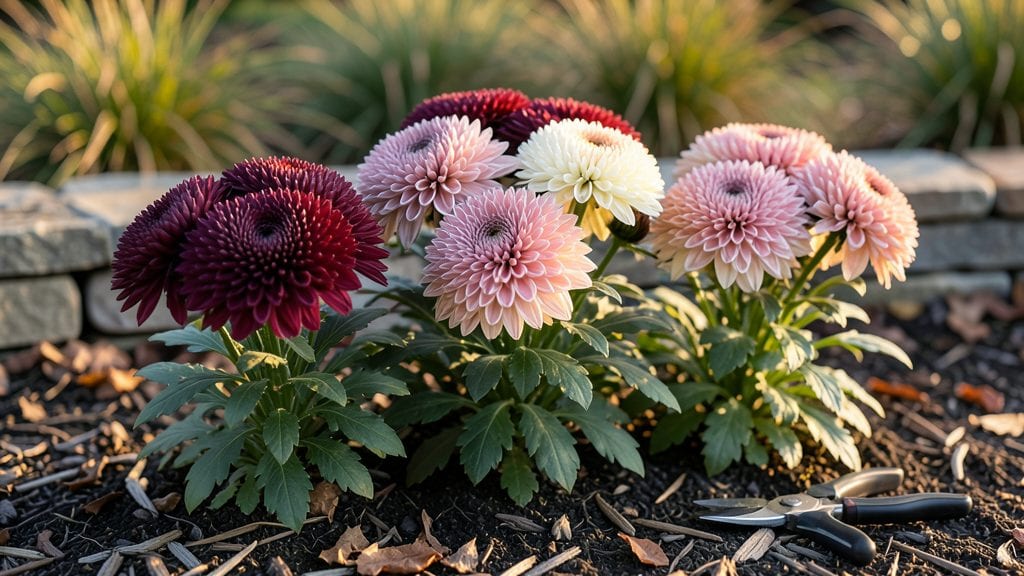
Mums are perennial plants in their native regions but function as annuals in colder climates because frost kills them back to the ground. Their ability to regrow depends on your hardiness zone, with proper winter care letting them thrive for multiple seasons.
Mums thrive as perennials in warmer climates like Zones 5-9, where they naturally survive winter dormancy and return each spring. 🌱 The key difference comes down to temperature tolerance—while they can handle light frosts, prolonged cold snaps often prove fatal.
I've seen gardeners in Zone 4 successfully overwinter mums by using thick mulch or moving potted varieties to sheltered spots, proving that with the right care, even marginal climates can support these colorful bloomers.
What many don't realize is that mums' hardiness varies by variety—some like 'Hardy Mums' can withstand -20°F temperatures, while others need protection below 20°F. This makes variety selection just as important as winter prep for multi-season blooms.
The secret lies in their root systems, which store energy during dormancy to fuel spring regrowth—something that's easily disrupted by freeze-thaw cycles in colder regions.
💡 In This Article
- Mums' Perennial Nature Explained: Climate and Growth Cycles
- How to Overwinter Mums for Year-Round Blooms
Mums' perennial nature explained: climate and growth cycles
Here's what's actually happening with mums' lifecycle: They're classified as perennials in their native Asian and European habitats because they naturally survive winter dormancy through below-ground carbohydrate reserves stored in their fibrous root systems.
In warmer climates (USDA Zones 5-9), these roots remain insulated by soil, allowing them to regenerate foliage and blooms each spring. The key mechanism is their ability to enter endodormancy—a deep rest period triggered by shortening daylight and cooler temperatures—where metabolic activity slows to just 5% of normal levels.
Temperature thresholds determine whether mums survive winter. Most varieties tolerate brief exposures to 20°F but suffer damage below 15°F, where cell membranes rupture and stored nutrients degrade.
This is why gardeners in Zones 4-5 often treat them as annuals—the freeze-thaw cycles common in these regions disrupt the delicate balance of root insulation and moisture regulation. For example, a 10°F overnight dip can kill backgrowth even if roots remain viable, while consistent 30°F nights allow safe dormancy.
The daylight connection is equally critical: Mums require 12-14 hours of daylight to initiate flowering, which explains why they bloom later in northern latitudes.
This photoperiod sensitivity also affects their dormancy timing—plants in Zone 7 may enter rest by October 15, while Zone 9 mums might wait until November 1.
The root system's resilience comes from its fibrous, shallow structure (typically 6-12 inches deep), which spreads horizontally to maximize moisture absorption while minimizing frost penetration.
What most people don't realize is that mums' perennial nature depends on both genetic hardiness and cultural practices. Varieties like 'Hardy Mums' (Chrysanthemum × grandiflorum) have evolved thicker root crowns that withstand -20°F conditions, while garden mums (C. × morifolium) often need protection below 25°F.
The science behind this involves antifreeze proteins that some hardy varieties produce—these bind to ice crystals and prevent cellular damage during freezing events.
Seasonal patterns reveal their growth strategy: Mums grow vegetatively from spring to early summer, then shift to reproductive growth as daylight shortens. This dual-phase cycle explains why they often produce two flushes of blooms—one in late summer and another with proper fall care.
Their root systems continue photosynthesizing through green leaves even after top growth dies back, storing up to 20% of their annual energy reserves for spring regrowth.
Consider these key factors when evaluating perennial potential: soil moisture (consistent but not soggy), sunlight (full sun for 6+ hours daily), and winter protection (mulch 4-6 inches thick with straw or leaves).
The most resilient mums I've observed are those with dark green foliage—a sign of robust root systems—rather than the lighter green varieties that often succumb to winter stress. 💫