
Orchid Care
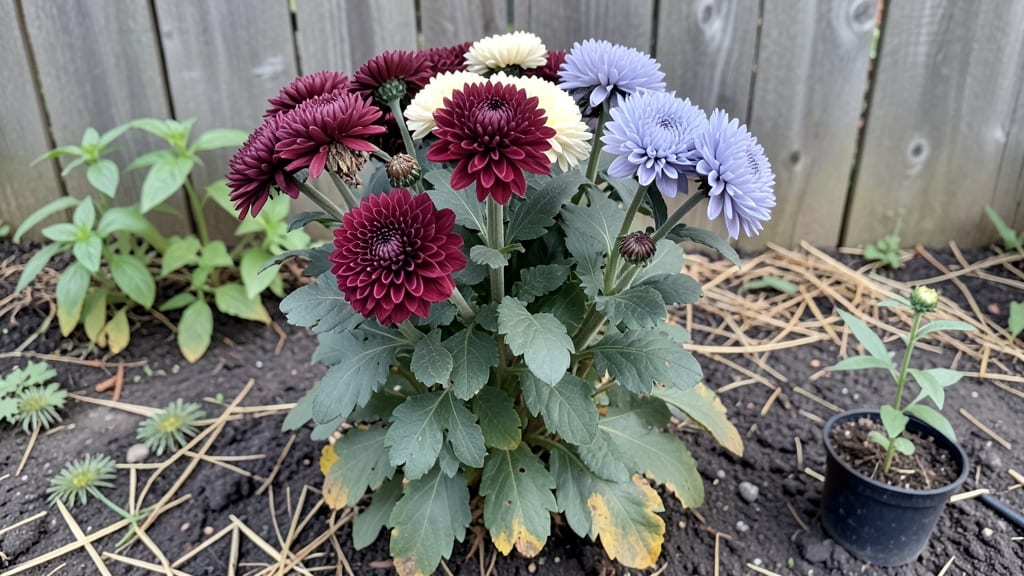
Belgian mums function as annuals in most U.S. climates because their tender foliage freezes back easily, but they're technically perennials that can survive winters in zones 8-11 with proper protection. Outside those zones, they'll die back seasonally but often regrow from roots or seed if conditions are right.
These vibrant bloomers are a gardener's paradox—they thrive as perennials in mild climates but often get treated as annuals because their top growth is so cold-sensitive. 🌱 The key lies in their roots: even when the stems freeze, the root system can survive and regenerate in spring, especially with a thick mulch layer.
This makes them perfect for gardeners who want long-lasting color but don't want to commit to true perennials like hardy chrysanthemums.
What's fascinating is how their growth habit changes with location. In colder zones, they'll bolt to seed after flowering, producing new plants for next year's garden.
Meanwhile, in warmer zones where they overwinter successfully, they'll often return year after year with minimal care—just a little extra mulch before winter sets in.
💡 In This Article
- Why Belgian Mums Die Back in Cold Climates
- How to Grow Belgian Mums Year-Round in Different Zones
Why Belgian mums die back in cold climates
Belgian mums belong to the genus Chrysanthemum, but unlike their hardy cousins, they lack the cold tolerance of traditional garden chrysanthemums. The key difference lies in their cellular structure: their foliage contains thin, water-filled cells that freeze and rupture at temperatures below 20°F.
This is why the above-ground growth blackens and collapses during winter freezes—it's not just dormancy, but actual cell death. 🌬️
The roots tell a different story. Belgian mums develop a fibrous root system that can survive 15°F temperatures when protected by 4-6 inches of organic mulch. This insulation slows heat loss by 25-30% compared to bare soil, creating a microclimate that preserves root viability.
The science here involves moisture retention—the mulch's air pockets trap heat while preventing the ground from freezing solid, a process called "thermal buffering."
What makes them behave like annuals in colder zones is their growth cycle. When temperatures drop below 32°F, Belgian mums trigger a hormonal response that halts top growth and redirects energy to root storage.
This dormancy mechanism is similar to other tender perennials like dahlias, but their roots are less robust than true hardy chrysanthemums which can withstand -10°F with proper care. 🌱
Here's where the confusion arises: Belgian mums are often confused with hardy garden chrysanthemums (Chrysanthemum × grandiflorum) which can survive zone 5 winters. The key distinction is their parentage—Belgian mums descend from Chrysanthemum carinatum, a species native to Mediterranean climates where winters rarely drop below 25°F.
This genetic heritage explains their cold sensitivity compared to their hardier relatives.
Mulching becomes critical because it creates a 5-10°F warmer soil environment. Studies show that straw mulch can extend the growing season by 2-4 weeks in fall and delay spring frost damage.
The best mulches for Belgian mums are organic materials like shredded leaves or straw, which decompose slowly and provide continuous insulation. Inorganic mulches like plastic won't work—they reflect heat away rather than trapping it.
What most gardeners don't realize is that Belgian mums often regrow from seed even after complete winter kill. Their prolific seed production means they'll self-sow in spring, creating new plants from the previous year's blooms.
This natural propagation explains why they persist in gardens where the roots didn't survive—it's not true perennial behavior, but rather a survival strategy through seed banking. 🌱
The bottom line is that Belgian mums are biological chameleons—they adapt their growth strategy based on climate. In warm zones, they behave as true perennials; in cold zones, they act as annuals with a backup seed strategy.
This dual nature makes them incredibly resilient garden plants when you understand their cold tolerance thresholds and how to protect their roots during winter. 💫