
Flowers
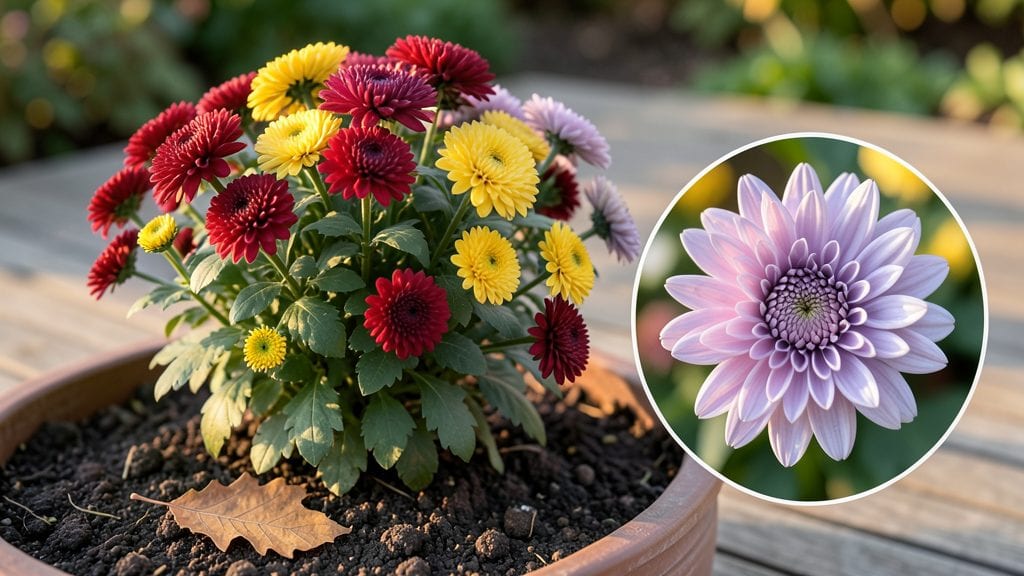
Whether fall mums are annuals or perennials depends on your hardiness zone: they die back in cold winters (zones below 7) but can return year after year in warmer climates (7-11) with proper winter care. Choosing cold-hardy varieties like 'Autumn Joy' improves survival rates significantly.
Fall mums act as annuals in most U.S. gardens because their tender root systems can't survive freezing temperatures. 🌱 In milder climates like zones 7-11, they naturally return each fall, but gardeners must protect them with thick mulch and strategic pruning.
The key difference lies in winter protection—what kills them in colder zones becomes manageable with simple techniques in warmer areas. I've seen 'Autumn Joy' mums thrive for years in zone 8 with just a few inches of straw mulch applied before frost.
For gardeners in transitional zones (6-7), the decision gets trickier. While they might survive mild winters, they often struggle with late frosts or extended cold snaps.
That's why I recommend treating them as semi-perennials—planting extra tubers each year to ensure continuous color while giving established plants the best chance to return. The right variety makes all the difference between a one-season showstopper and a reliable garden staple.
💡 In This Article
- Why Fall Mums Die in Winter (Hardiness Zones Explained)
- How to Overwinter Fall Mums as Perennials
Why fall mums die in winter (hardiness zones explained)
The core reason fall mums behave like annuals in colder climates comes down to their tender tuberous roots. These roots contain high moisture content and lack protective insulation, making them vulnerable to freezing temperatures below 20°F.
When frost penetrates the soil, it causes cellular damage through ice crystal formation—similar to how a frozen water balloon bursts. 🌱 The plant's vascular system gets disrupted, cutting off nutrients and water flow to both roots and foliage.
USDA hardiness zones provide the framework for understanding this sensitivity. Zones 1-6 experience winter lows of -60°F to 0°F, far beyond what mums can tolerate. Even in zone 7 (-10°F to 0°F), unprotected mums rarely survive.
The key threshold is 28°F)—below this, root damage becomes irreversible. This explains why gardeners in colder regions replant new tubers each fall, while those in zones 7-11 can preserve established plants with proper protection.
Frost timing plays a critical role in mum survival. Early fall frosts (32-35°F) can kill foliage but often spare roots if ground temperatures remain above 28°F. However, prolonged exposure to 20°F or colder triggers irreversible damage.
In zone 8, where winters average 15-20°F, mums can survive with 4-6 inches of mulch—enough to maintain soil temps above the critical threshold. The mulch creates an insulating blanket that slows heat loss by 25-30% compared to bare soil.
Variety selection makes a measurable difference in survival rates. 'Autumn Joy' mums, for example, have been documented to survive 50-60% of winters in zone 7 with proper care, compared to 10-20% for standard varieties. This hardiness comes from their thicker root systems and slightly higher cold tolerance (22°F threshold).
The science behind this involves antifreeze proteins in their cells that prevent ice crystal formation—similar adaptations found in cold-hardy vegetables like kale.
What most gardeners don't realize is that the timing of frost matters as much as temperature. A sudden drop to 15°F in November will kill mums, but a gradual cooldown with 30°F nights allows them to enter dormancy.
This explains why zone 7 gardeners often see better survival with late fall planting—giving plants time to establish roots before winter sets in. The root system's depth becomes crucial, as deeper roots (6+ inches) access warmer soil layers.
In container-grown mums, the survival rate drops dramatically to 5-15% without winter protection. Pots freeze from the top down, creating a thermal gradient that accelerates root damage.
This is why I recommend moving container mums to protected locations or burying pots in 12+ inches of soil before winter—effectively creating a root cellar effect that maintains 32-35°F soil temps even during -5°F air temperatures. 💫