
Flowers
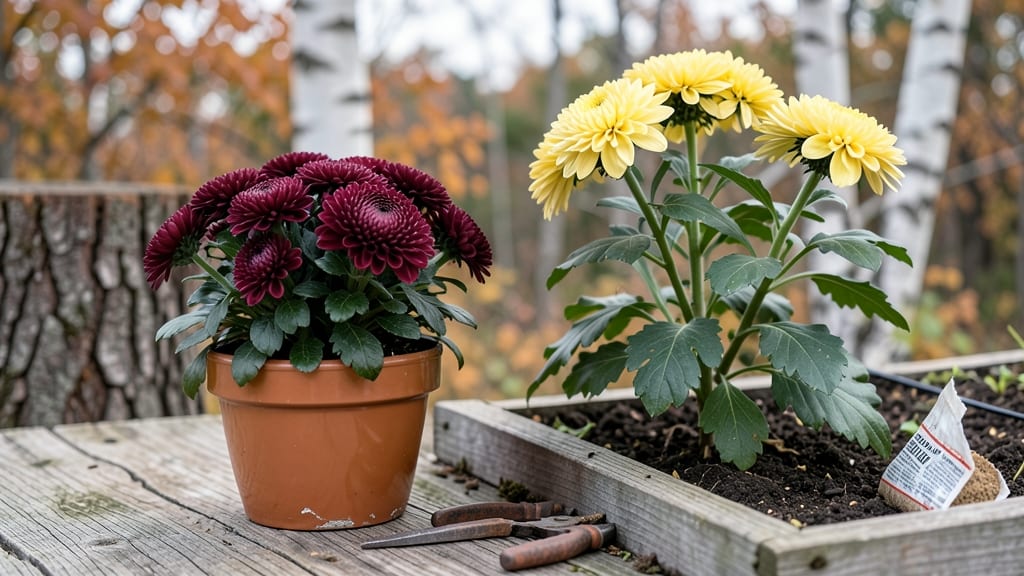
Whether garden mums are annual or perennial depends entirely on your climate zone—most gardeners treat them as annuals in colder regions, while they thrive as perennials in USDA zones 7-11 where frost is rare. Their ability to survive winter hinges on root hardiness, not just above-ground growth.
This distinction matters because garden mums are frost-sensitive, with tender stems dying back in cold snaps. 🌡️ In milder zones, the roots stay alive underground, sending up new growth each spring—hence their perennial nature. Meanwhile, gardeners in colder areas replant new tubers every year to avoid winter damage.
The key difference? Root resilience versus top-kill tolerance, which determines whether you'll see repeat blooms or need to start fresh annually.
For those in marginal zones (like USDA zone 6), overwintering techniques like heavy mulching or container growing can sometimes extend their lifespan beyond a single season. I've found that choosing cold-hardy varieties—like 'Autumn Joy' or 'Purple Dome'—also improves survival odds in transitional climates.
💡 In This Article
- Understanding Garden Mum Life Cycles by Climate Zone
- Year-Round Garden Mum Care Strategies
Understanding garden mum life cycles by climate zone
The perennial vs. annual behavior of garden mums hinges on their biological response to temperature. These plants originate from Asia's mountainous regions where they naturally experience mild winters and cool summers.
Their roots contain stored carbohydrates that sustain growth, but the stems are frost-tender, dying back when temperatures drop below 28°F. In USDA zones 7-11, where winter lows rarely fall below 10°F, the roots remain viable underground, allowing regrowth each spring.
Here's what happens in colder climates: when frost hits 32°F for extended periods, the above-ground foliage blackens and appears dead—a condition called top-kill. However, the roots can survive down to 15°F if protected by organic mulch.
The key difference between zones is this: in zones 7-11, the roots experience only mild winter stress (20-30°F), while in zones 4-6, prolonged exposure to 10°F or colder often kills even the roots.
This is why gardeners in colder areas replant new tubers annually rather than risking winter loss.
The science behind this involves a process called cold acclimation. Garden mums gradually harden off as temperatures drop, converting starches in their roots into sugars that act as antifreeze. However, this adaptation only works within limits. In zone 7, where winters average 25-30°F, this mechanism keeps them perennial.
But in zone 5 with -10°F winters, even hardened roots struggle to survive. The transition point occurs around zone 6, where some varieties may survive with protection but most still require annual replanting.
What most gardeners don't realize is that hybrid varieties play a crucial role in this equation. Modern cultivars like 'Autumn Joy' have been bred for slightly better cold tolerance, able to handle 15°F with protection.
These hybrids store more carbohydrates in their roots, giving them a survival advantage in marginal zones. The trade-off? They often bloom later in the season compared to traditional annual varieties.
For example, 'Purple Dome' typically flowers 2-3 weeks later than its non-hardy counterparts but may survive winters in zone 6 with proper mulching.
Consider this comparison: In Florida (zone 10), garden mums grow as true perennials, returning year after year with minimal care. In Minnesota (zone 4), they're treated as annuals because winter survival is nearly impossible without greenhouse conditions.
The difference comes down to 100 hours of exposure below 32°F—that's the threshold where root damage becomes likely. This explains why gardeners in zone 6 often see mixed results: some winters are mild enough for survival, while others are harsh enough to require replanting.
The root system's depth also matters. Mature garden mum roots extend 12-18 inches deep, where soil temperatures remain more stable. This is why heavy mulching (4-6 inches of straw or leaves) helps insulate roots during freeze-thaw cycles.
The insulation creates a 5-10°F warmer microclimate at the root zone, making the difference between survival and death in marginal climates. This is particularly important in zone 6, where winter temperatures fluctuate wildly between 15°F and 40°F.
Here's a practical takeaway: if you're in zone 7 or warmer, treat your garden mums as perennials and protect them with mulch. In zones 4-6, plan to replant annually but experiment with cold-hardy varieties and overwintering techniques.
The boundary between annual and perennial behavior isn't fixed—it's a sliding scale determined by your specific winter conditions and how well you protect the roots. 💫