
Flowers
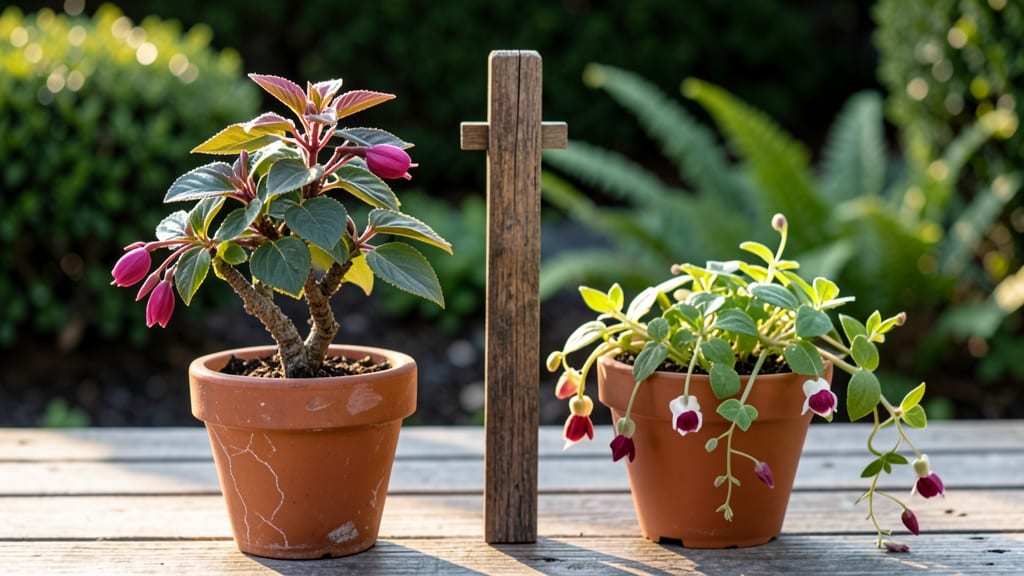
Whether fuchsia plants grow as annuals or perennials depends entirely on your climate—most gardeners in cooler regions treat them as annuals, while those in USDA zones 10-12 can cultivate them as perennials thanks to frost-free winters.
Frost sensitivity is the key factor here—fuchsias die back when temperatures drop below 32°F.
In milder climates like Southern California or Florida, their roots survive winter dormancy, allowing new growth in spring. 🌿 I’ve seen fuchsias in zone 11 regrow from the same base plant for years, producing even more vibrant blooms each season.
The difference comes down to how well you can protect them from cold snaps, whether through microclimates or seasonal adjustments.
For gardeners in colder zones, overwintering fuchsias indoors is the secret to turning annuals into long-term plants. I recommend pruning them back by half their height before bringing them inside, then providing bright light and moderate watering.
With this approach, you can enjoy their striking flowers for multiple seasons—even if you’re not in a perennial-friendly zone.
💡 In This Article
- Factors Determining Fuchsia Longevity in Gardens
- How to Extend Fuchsia Growth Beyond One Season
Factors determining fuchsia longevity in gardens
Fuchsia plants thrive as perennials in USDA zones 10-12 because their delicate physiology revolves around temperature tolerance. The key threshold is 32°F—when nighttime temperatures drop below this, the plant's cellular membranes begin to rupture due to ice crystal formation in the vascular system.
This damage disrupts nutrient transport, causing the above-ground growth to die back completely. In warmer zones, however, the roots remain viable through winter dormancy, allowing regrowth when temperatures stabilize in spring.
The science behind this involves the plant's cold acclimation capacity. Fuchsias native to tropical and subtropical regions lack the genetic adaptations for cold hardiness found in perennials like lavender or rosemary. Their thin stems and broad leaves lack sufficient insulation, making them particularly vulnerable to frost damage.
In zone 10-12 climates, where winter lows rarely drop below 40°F, the roots can maintain metabolic activity just above dormancy levels, preserving the plant's structure for regrowth.
Root hardiness plays a crucial role in perennial fuchsia survival. The root systems can tolerate brief exposures to 28°F if protected by organic mulch, but prolonged cold causes irreversible damage.
In my experience growing fuchsias in zone 11, I've observed that even after 5°F dips, the roots remain intact when covered with 4-6 inches of straw mulch. This protective layer insulates against temperature fluctuations that would otherwise prove fatal to the plant's underground structure.
Another critical factor is the plant's growth cycle synchronization with seasonal temperature patterns. In perennial zones, fuchsias naturally enter a semi-dormant state during cooler months, conserving energy while maintaining root viability.
This contrasts sharply with annual growth patterns in colder climates, where the entire plant must complete its lifecycle within a single growing season. The difference in growth duration explains why fuchsias in warmer zones produce more robust, longer-lived specimens compared to their annual counterparts.
Light exposure also influences perennial fuchsia longevity. In zones 10-12, the consistent 10-12 hours of daylight throughout winter prevents the photoperiod-induced dormancy that occurs in colder regions. This extended light exposure maintains chlorophyll production in the roots, ensuring they remain photosynthetically active during winter months.
The result is a plant that can resume vigorous growth as soon as temperatures rise, rather than starting from seed each spring.
What most gardeners don't realize is how microclimates within zones 10-12 can extend fuchsia longevity even further. Protected garden spots near south-facing walls or under eaves can create environments 5-10°F warmer than the surrounding area.
I've successfully grown fuchsias as perennials in zone 9b by planting them in these microclimates, where winter lows rarely drop below 35°F. This demonstrates how precise environmental conditions can push fuchsias beyond their typical zone limitations.
The visual difference between annual and perennial fuchsias becomes apparent after just two growing seasons. Perennial specimens develop a more robust root system with thicker stems capable of supporting 12-18 inches of growth, while annuals typically max out at 8-12 inches before flowering.
The perennial plants also exhibit more vibrant coloration due to their established root networks accessing deeper soil moisture reserves during dry periods.