
Flowers
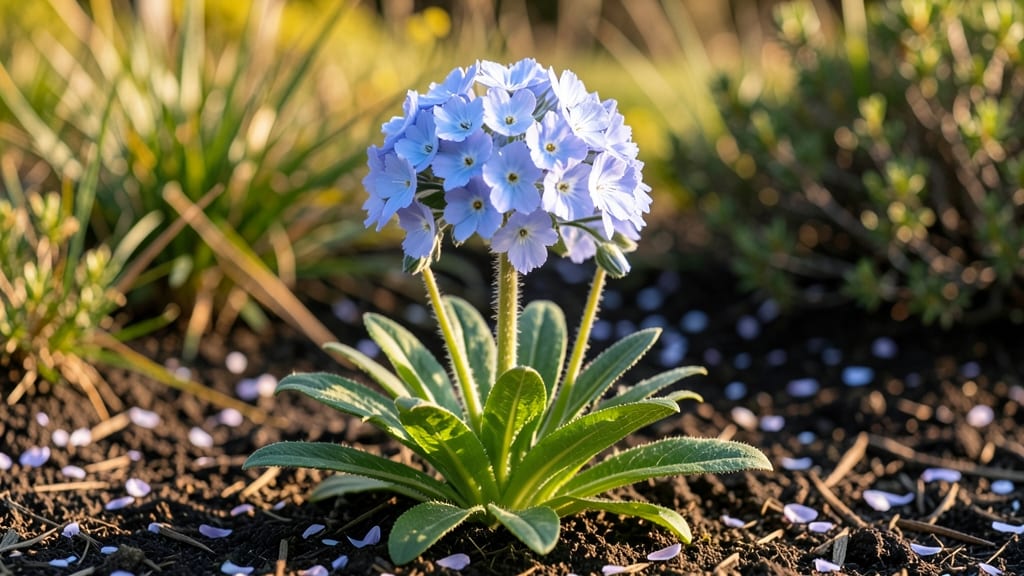
Deciding whether forget-me-not flowers grow as annuals or perennials depends on your climate—cool zones 3-7 support them as hardy perennials, while warmer areas treat them as annuals. Their signature blue blooms may return yearly in ideal conditions but often self-seed aggressively if not properly maintained.
These charming flowers actually behave like short-lived perennials, typically lasting 2-3 years in perfect conditions. 🌸 The key difference lies in winter survival: forget-me-nots thrive in cooler climates where they can establish strong root systems, but struggle in heat where they complete their lifecycle in a single season.
Many gardeners in warmer regions replant them yearly to maintain continuous blooms, though they'll often reseed themselves if left unchecked.
For those in transitional zones, fall mulching and spring pruning can help extend their lifespan. I've found that planting them in partial shade with well-draining soil gives them the best chance to return year after year, though they'll still need regular deadheading to prevent unwanted spread.
The secret to their longevity lies in mimicking their natural woodland habitat conditions.
💡 In This Article
- Understanding Forget-Me-Not Growth Habits
- How to Extend Forget-Me-Not Blooms Year-Round
Understanding forget-me-not growth habits
Forget-me-nots (Myosotis spp.) are classified as short-lived perennials because they typically live 2-3 years in ideal conditions before declining. This differs from true perennials like peonies, which can thrive for decades.
The key botanical distinction lies in their crown structure—forget-me-nots develop a shallow, fibrous root system that stores minimal energy reserves for winter survival. This makes them vulnerable to temperature fluctuations and soil conditions that true perennials can better endure.
Their growth cycle is heavily influenced by vernalization, a process where cool temperatures trigger flowering. In USDA zones 3-7, forget-me-nots naturally enter dormancy in winter, then regrow from their crowns when spring temperatures stabilize.
However, in zones 8-10, the lack of winter chill prevents proper dormancy, causing them to behave more like annuals—completing their lifecycle in a single season. The 30-40°F winter temperatures in zones 3-7 are critical for breaking their seed dormancy and encouraging robust regrowth.
What most gardeners don't realize is how self-seeding behavior complicates their classification. Forget-me-nots produce thousands of tiny seeds per plant, which scatter easily and germinate readily in cool, moist conditions.
This aggressive reseeding explains why they often appear as "volunteers" in garden beds year after year, even when intentionally planted as perennials. The trade-off is that this self-sufficiency comes at the cost of controlled growth—unlike true perennials, they don't develop strong woody stems or extensive root systems.
Climate plays a surprising role in their flower color intensity too. In cooler zones, forget-me-nots develop deeper blue blooms (thanks to higher anthocyanin production in response to lower light levels), while warmer climates often produce lighter lavender flowers.
This color variation occurs because temperature affects the pH balance of soil microbes that influence pigment development. Gardeners in zone 7b often report their plants lasting 3 years with proper care, while those in zone 8a typically treat them as annuals due to summer heat stress.
Here's what's actually happening during their dormancy: Forget-me-nots enter a state called quiescence, where metabolic activity slows dramatically. Unlike true perennials that store energy in thick roots, forget-me-nots rely on their crown buds (just above soil level) to survive.
These buds contain meristematic cells that can regenerate new growth when conditions improve. The challenge is that these buds are only 1/4-inch thick, making them vulnerable to frost heave or soil compaction—common issues in northern climates.
For gardeners in marginal zones (like zone 7a), the solution often involves mulching with 2-3 inches of straw in late fall to insulate crowns. In warmer zones, container cultivation becomes essential—pots can be moved to shaded areas during summer heat.
The 60-70°F daytime temperatures that forget-me-nots prefer explain why they struggle in southern summers, where afternoon temps often exceed 90°F. 🌿