
Flowers
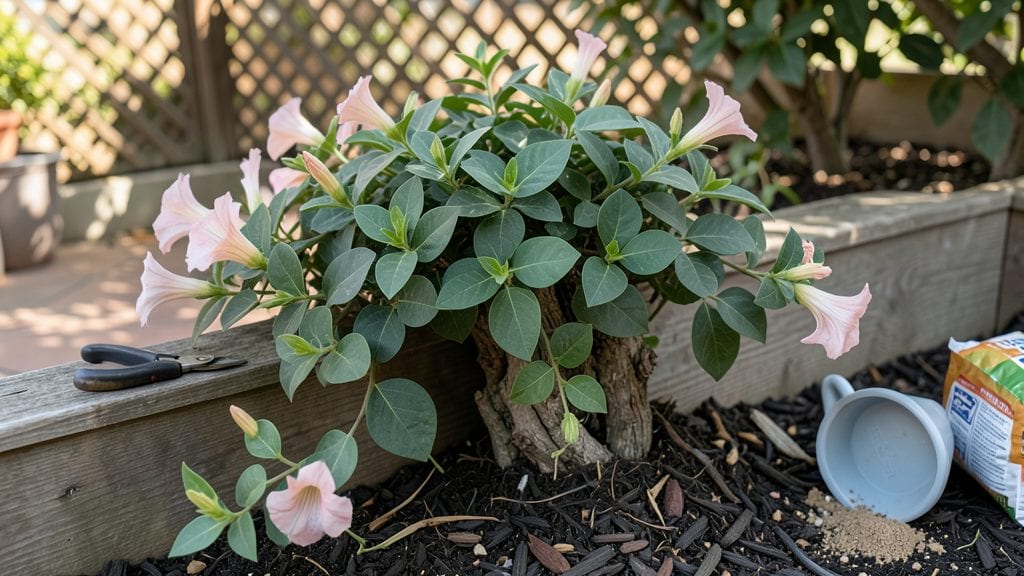
Deciding whether vining mandevilla is annual or perennial depends on your climate: it's a hardy perennial in USDA zones 9-11 but dies back to the ground in frost, forcing gardeners in colder areas to treat it as an annual. In frost-free zones, it thrives year-round with consistent blooms, while container gardening helps extend its life in temperate regions.
This tropical beauty's lifespan hinges on temperature—once frost hits, its woody stems and roots can't survive, making it behave like an annual in colder climates. 🌿 In warmer zones, it naturally regrows from the same roots each year, producing those signature trumpet-shaped blooms for decades with minimal care.
The key difference? Perennial mandevillas develop thicker stems and deeper root systems over time, while annuals must be replanted annually after winter kills them back.
For gardeners outside zones 9-11, overwintering in containers or digging up tubers is the secret to keeping your mandevilla alive year after year.
I've found that even in zone 7, with proper winter storage (cool, dark, and slightly moist), you can coax it back to life in spring—just don't let the soil freeze solid. Cold-hardy varieties like 'Alice du Pont' handle brief chills better, but most still need protection below 25°F.
💡 In This Article
- Mandevilla Growth Cycle: Perennial vs Annual Behavior
- Extending Mandevilla’s Lifespan in Cold Climates
Mandevilla growth cycle: perennial vs annual behavior
Here's what's actually happening botanically: vining mandevilla (Dipladenia species) is a tropical perennial by nature, meaning its roots and some underground structures can survive year-round in frost-free conditions. The key difference between its perennial behavior in zones 9-11 and annual treatment elsewhere comes down to cold sensitivity.
When temperatures drop below 30°F, the plant's above-ground growth dies back completely, but the root system may still survive in warmer microclimates. In true perennial zones, these roots regenerate new growth each spring without intervention.
The science behind this involves the plant's dormancy mechanisms. In frost-free regions, mandevilla enters a natural growth cycle where it blooms heavily in warm months (typically spring through fall) and maintains minimal growth during cooler periods.
The roots develop a woody, tuber-like structure that stores nutrients, similar to dahlias but less robust. When you see mandevilla thriving for decades in Florida or California, you're looking at this perennial behavior in action—with some varieties living 20+ years with proper care.
What most people don't realize is how the root hardiness varies by variety. Cold-hardy selections like 'Alice du Pont' can tolerate brief dips to 25°F when dormant, while standard varieties begin suffering damage above 32°F.
The root zone needs to stay above freezing for perennial behavior to occur. In colder climates, even the roots often die when soil temperatures drop below 28°F for extended periods, forcing annual replanting.
Seasonal regrowth patterns provide clear visual clues about this behavior. In perennial zones, you'll see new shoots emerge from the ground in early spring, often before the old growth has completely died back.
The new stems are typically green and flexible, while annual regrowth in containers comes from cuttings or stored tubers. The timing of blooms also differs—perennial plants often flower 2-3 weeks earlier in spring than container-grown annuals.
Consider these key factors when evaluating your climate's impact:
- Root zone temperature: Perennial behavior requires soil temps above 30°F year-round
- Air temperature tolerance: Even perennial varieties need protection below 35°F for foliage
- Growth cycle length: Perennial mandevilla grows 4-6 weeks longer into fall than annuals
- Bloom duration: Year-round bloomers in zones 10-11 vs seasonal in zones 9-11
The most striking example of this behavior is in Miami, where mandevilla grows as a semi-evergreen shrub that flowers continuously with minimal seasonal dieback. Compare that to zone 7, where even container-grown plants need complete dormancy in winter—otherwise, the roots rot at 20°F soil temperatures.
This temperature threshold explains why container gardening helps in cold climates: you can move the plant before ground freeze occurs.
What this means for your garden is that location determines lifespan. In frost-free zones, mandevilla becomes a low-maintenance perennial that rewards patience with decades of blooms.
In colder areas, it's an annual project requiring annual cuttings or winter storage—but with proper techniques, you can still enjoy its beauty year after year. 🌸