
Flowers
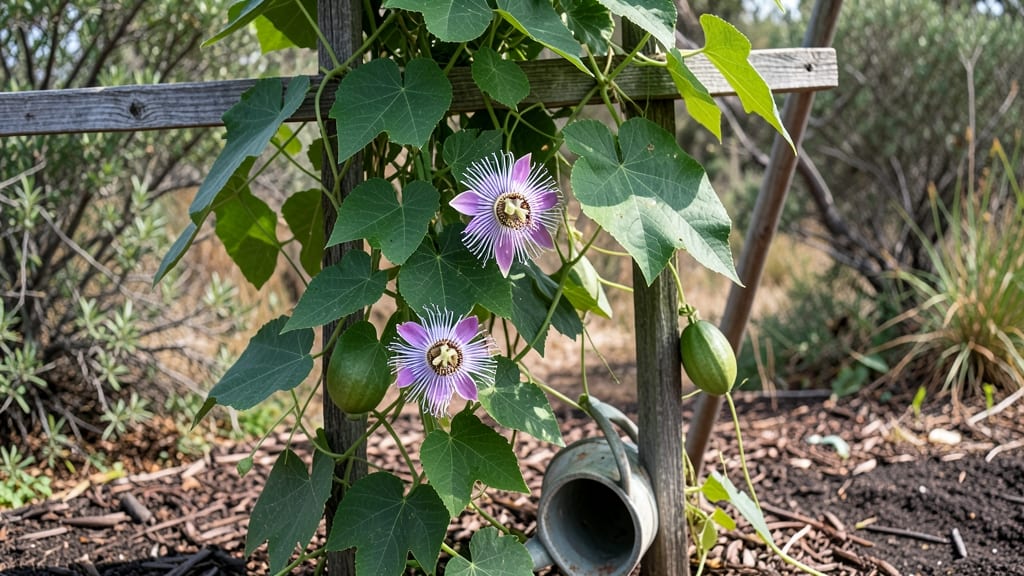
Determining whether passion flower is annual or perennial depends on your climate: it's a hardy perennial in USDA zones 8-11, returning each year from its deep roots, but dies back to the ground in colder regions where frost kills it annually.
This distinction comes down to the plant's root system—passion flowers store energy in thick, tuberous roots that allow them to regrow in warm climates. 🌱 In colder zones, gardeners often replant from seeds or cuttings each spring since the roots don't survive winter frost.
The key difference lies in temperature tolerance: while some varieties handle brief freezes, most need consistent warmth to persist beyond one growing season.
For gardeners in marginal zones (7 or below), choosing cold-hardy varieties like Passiflora incarnata (maypop) can help extend the plant's lifespan, though even these may need winter protection.
The decision to treat it as annual or perennial ultimately depends on how much you're willing to invest in seasonal care versus enjoying its dramatic blooms year after year.
💡 In This Article
- Passion Flower Growth Cycle in Different Climates
- Extending Passion Flower Lifespan in Cold Regions
Passion flower growth cycle in different climates
The passion flower's behavior as a perennial or annual hinges on its root system and temperature tolerance. In warm climates (USDA zones 8-11), it develops thick, tuberous roots that store nutrients and energy, allowing the plant to regrow each spring from the same rootstock.
These roots can survive winter dormancy in frost-free conditions, with some varieties producing new growth within 4-6 weeks of warm temperatures returning. The plant's ability to regenerate from these roots explains why it thrives as a perennial in ideal conditions.
Here's what happens in the roots: During summer, passion flowers store starches and sugars in their tuberous roots, which can weigh up to 1-2 pounds in mature plants. These roots act like natural batteries, providing the energy needed for rapid regrowth when temperatures rise above 60°F.
In contrast, cold-sensitive varieties lack this robust root system, making them more vulnerable to winter dieback. The root structure's resilience is why gardeners in warm zones often see passion flowers return year after year with minimal intervention.
In colder climates, the story changes dramatically. When temperatures drop below 28°F, the plant's above-ground growth dies back completely, and even the roots of many varieties succumb to frost damage.
The key difference is that passion flowers in cold zones don't develop the same thick, insulating root systems as their tropical cousins. Without this protection, the entire plant—roots and all—can freeze solid, requiring gardeners to start fresh each spring.
This is why most gardeners in zones 7 and below treat passion flowers as annuals.
What most people don't realize is how quickly passion flowers can recover when conditions are right. In frost-free zones, you'll often see new shoots emerge from the ground within 2-3 weeks of warm weather, while the plant's vines can grow up to 15-20 feet per season.
The contrast between perennial behavior in warm climates and annual treatment in cold ones comes down to this root system's ability to store and regenerate—something that's completely lost when frost hits.
Consider these key factors when evaluating your climate's impact: The plant's dormancy patterns differ significantly between zones. In warm climates, passion flowers enter a mild dormancy during cooler months, conserving energy in their roots.
In colder regions, the entire plant essentially "resets" each year, with no reliable way to carry over from one season to the next.
This biological difference explains why some gardeners in marginal zones (like zone 7) might see partial survival with heavy mulching, while others in colder areas get no regrowth at all.
For those curious about the science, passion flowers exhibit a form of geophytic dormancy in warm climates—where the plant survives adverse conditions through underground storage organs. This is similar to how dahlias or cannas behave in frost-free regions.
The contrast with cold-climate passion flowers shows how quickly environmental factors can transform a perennial into what appears to be an annual. Understanding this root-based growth cycle helps explain why some varieties thrive for decades in warm gardens while others need annual replanting in colder areas.