
Flowers
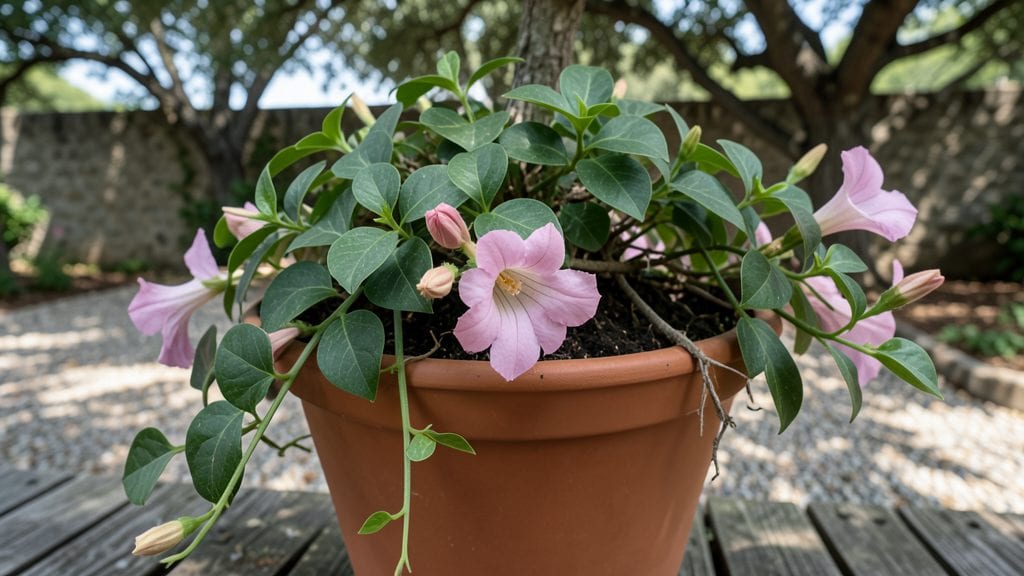
Vining Mandevilla is not a true perennial in cold climates, as it dies back to the ground when temperatures drop below 30°F (-1°C), requiring winter protection or replanting each spring in frost-prone zones.
Vining Mandevilla thrives as a perennial only in warm climates like USDA Zones 9-11, where it naturally blooms year-round. 🌿 Its tropical origins mean frost sensitivity—once temperatures dip below 30°F, the plant's stems and leaves blacken and fall off, leaving only the roots alive.
This makes it a seasonal favorite in colder regions unless you take proactive steps to protect it during winter months.
Gardeners in colder zones often treat Mandevilla like an annual, but with the right care, you can revive it each spring. The key is understanding its growth cycle: it's not cold-hardy, but its roots can survive dormancy if insulated properly.
This explains why some gardeners successfully overwinter it in containers or mulched beds, while others prefer to dig up tubers and store them indoors.
💡 In This Article
- Understanding Mandevilla’s Perennial Classification
- Winter Care Strategies for Mandevilla in Cold Zones
Understanding Mandevilla’s perennial classification
Vining Mandevilla originates from tropical regions of South America, where it naturally thrives year-round in USDA Zones 9-11. Its classification as a perennial in these warm climates stems from its ability to grow continuously without dormancy.
The plant's woody stems and lush foliage remain active throughout winter, producing vibrant blooms even during cooler months. This perpetual growth cycle is possible because the plant's cells contain natural antifreeze proteins that protect against temperatures down to 32°F (0°C), though prolonged exposure to frost still poses risks.
The plant's tropical nature means its cellular structure lacks the cold-hardiness adaptations found in temperate perennials. For example, while some cold-hardy vines like clematis can survive -20°F (-29°C) through specialized root systems and bud protection, Mandevilla's thin stems and broad leaves freeze solid at 30°F (-1°C).
This temperature threshold triggers irreversible damage to the vascular system, causing the stems to blacken and collapse. The roots, however, remain viable if protected, which explains why gardeners can often revive the plant in spring by cutting back dead growth and encouraging new shoots from the root base.
Here's what's actually happening at the cellular level: Mandevilla's cells contain high concentrations of water, which expands when frozen, rupturing cell walls. This is why the plant's stems turn black and mushy during frost—it's not just wilting, but actual cellular destruction.
In contrast, cold-hardy perennials like hydrangeas produce antifreeze compounds that lower the freezing point of their cell sap, preventing ice crystal formation. Mandevilla lacks these adaptations, making it dependent on warm climates for survival.
The plant's growth habit also plays a role in its cold sensitivity. Vining Mandevilla grows rapidly during warm seasons, producing tender new growth that's particularly vulnerable to frost. Each new shoot contains delicate meristem tissue that freezes at 32°F (0°C), while more mature stems might survive slightly colder temperatures.
This explains why established plants in Zone 9 can sometimes survive light frosts while younger plants in the same zone suffer complete dieback.
What most people don't realize is how microclimates can extend Mandevilla's growing season in marginal zones. In areas just outside its natural range (like Zone 8), gardeners often report successful overwintering by planting in sheltered locations near south-facing walls or under eaves.
These microclimates can create 5-10°F (3-6°C) warmer conditions than the surrounding area, sometimes pushing temperatures above the critical 30°F (-1°C) threshold. The plant's ability to thrive in these protected spots demonstrates its potential for perennial behavior when given the right conditions.
Consider these key factors when evaluating Mandevilla's perennial status in your region:
- Root hardiness: While stems die at 30°F (-1°C), roots can survive 25°F (-4°C) for short periods if properly mulched
- Growth rate: Faster-growing varieties (like 'Alice du Pont') are more frost-sensitive than slower-growing types
- Soil conditions: Well-draining soil prevents root rot during winter dormancy, which is often the limiting factor in cold zones
- Plant age: Mature plants (3+ years) develop slightly more cold tolerance than young specimens
The bottom line is that while Mandevilla can't survive winter exposure in most cold climates, its tropical origins don't make it inherently annual. With the right protection strategies, you can successfully overwinter it and enjoy its perennial-like behavior year after year.
The key is understanding its biological limitations and working with them rather than against them. 🌟