
Lawn
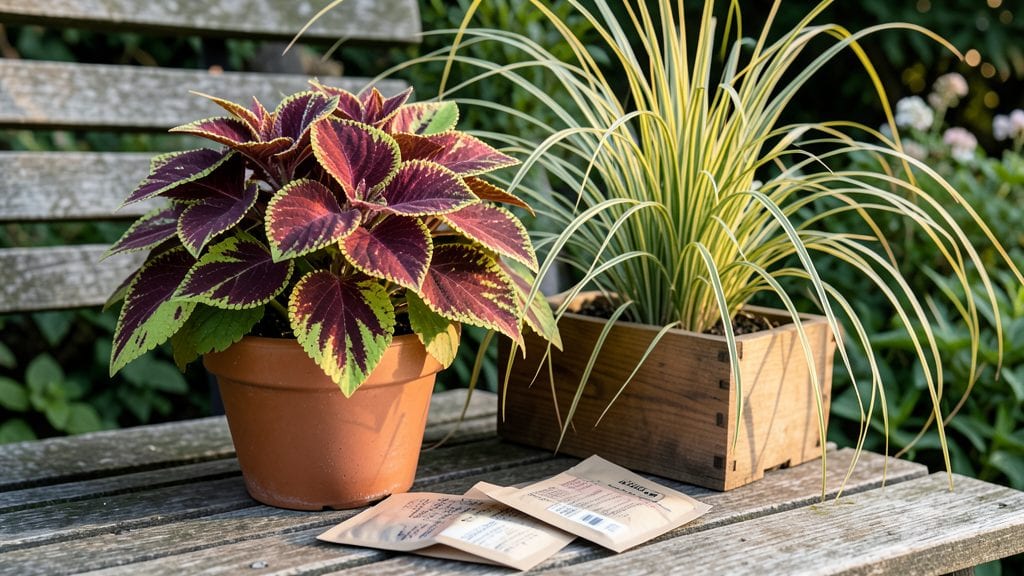
Growing perennial coleus and ornamental grass seeds gives you bold color and movement that lasts all season—without the annual replanting headache.
I learned the hard way that treating these as throwaway plants means missing out on their real magic: coleus that thrives in heat, grasses that sway through winter, and textures that turn dull beds into showstoppers. The secret isn’t complicated—it’s about matching their tropical roots to your climate’s quirks.
You’ll need just three things to start: fresh seeds (look for cold-hardy varieties if you’re in zones 5-8), well-draining potting mix (no soggy roots here), and a spot with 4-6 hours of sun—coleus tolerates shade, but grasses need light to stand tall.
Plant seeds ¼ inch deep, keep them moist but not soggy, and expect sprouts in 10-20 days. The real payoff? Coleus keeps its vibrant leaves until frost, while ornamental grasses hold their structure through winter, offering year-round interest.
Once established, maintenance is almost nonexistent. Coleus loves weekly watering in dry spells and occasional pinching to bush out, while grasses thrive on neglect—just trim back dead foliage in early spring.
Pair coleus with purple fountain grass or Mexican feather grass for a jewel-toned, textured combo that begs for photos. The best part? These plants outperform annuals in heat and humidity, making them the smart choice for low-maintenance gardens.
For cooler climates, treat coleus as an annual but protect grasses with mulch—they’ll bounce back in spring. In warmer zones, both will return year after year, rewarding your patience with lush, fuss-free beauty.
Start small with a few pots or a single bed, and watch how quickly they transform even the simplest space.
📚 In This Guide
- What you need
- Instructions
- Tips and common mistakes
- Wrapping up and next steps
What you need
- ● Perennial coleus seeds – Choose cold-hardy varieties like Coleus blumei or Plectranthus scutellarioides (check seed packets for perennial types). Quantity: ~50–100 seeds (or 1–2 seed packets).
- ● Ornamental grass seeds – Opt for cold-tolerant varieties like Miscanthus sinensis, Carex oshimensis, or Pennisetum alopecuroides. Quantity: 50–100 seeds (or 1–2 packets).
- ● Seed-starting trays or biodegradable pots – 2–4" deep with drainage holes (or repurpose egg cartons!). Quantity: 12–24 cells/trays.
- ● Seed-starting mix – Lightweight, sterile blend (e.g., Pro Mix or Black Gold). Quantity: 1–2 cubic feet.
- ● Grow lights or sunny windowsill – 12–16 hours of light daily (LED grow lights work best).
- ● Spray bottle – For gentle watering (avoid over-saturating seeds!).
- ● Plastic wrap or humidity dome – To retain moisture until germination.
- ● Fertilizer – Balanced liquid fertilizer (e.g., 10-10-10) or slow-release granules. Quantity: Small bottle or 1 lb.
- ● Transplanting tools – Small trowel, hand shovel, and garden gloves.
- ● Heat mat – Speeds up germination (especially for coleus).
- ● Soil moisture meter – Ensures optimal dampness (not soggy!).
- ● Mulch – Straw or shredded leaves to protect young plants in fall/winter.
- ● Label markers – To track varieties (trust us, you’ll forget!).
- ● Compost or worm castings – Boosts soil health for perennial growth.
Step-by-step instructions for growing perennial coleus and ornamental grass from seeds
Here’s the straightforward approach I’ve used to establish vibrant, low-maintenance perennial coleus and ornamental grass—no fuss, just texture and color year after year.
Prepare Containers and Seed Starting Mix
Fill 4-inch deep containers with 2 gallons of seed starting mix, tamping it down gently to remove air pockets. I like to use shallow trays with drainage holes to prevent waterlogging, which can rot delicate coleus seeds. The mix should feel like a damp sponge—press it lightly, and it should hold its shape without crumbling.
Sow coleus seeds first, scattering them ¼ inch deep across the surface. They’re tiny, so I tap the tray gently to ensure even distribution. Cover lightly with a sprinkle of additional mix—just enough to hide the seeds without burying them too deeply. This ensures they won’t struggle to reach the light.
Sow Ornamental Grass Seeds and Provide Warmth
After sowing coleus, scatter ornamental grass seeds on the surface—these don’t need covering. Press them lightly into the mix so they make contact with the soil. Grass seeds often germinate slowly, so patience is key here. Place the tray on a seedling heat mat set to 75-80°F to speed up germination.
Cover the tray with a clear plastic dome to retain moisture and warmth. Check daily for condensation—if the dome fogs up, lift it briefly to let excess humidity escape. Coleus seeds typically sprout in 10-14 days, while ornamental grasses may take 2-3 weeks. Don’t be tempted to water yet; the dome traps enough moisture for now.
Introduce Light and Monitor Germination
Once coleus seedlings emerge, remove the dome immediately to prevent damping-off. Position the tray under a grow light 2-3 inches above the plants, providing 14-16 hours of light daily. Without enough light, coleus seedlings stretch leggy and weak—watch for sturdy, dark green leaves as your cue that they’re thriving.
Ornamental grasses will appear as fine, grass-like shoots. Keep the soil consistently moist but never soggy—water from the bottom by placing the tray in ½ inch of water for 10 minutes, then drain excess. This method prevents disturbing delicate seedlings while ensuring even moisture.
Thin Seedlings and Transition to Individual Pots
When coleus seedlings reach 2 inches tall, thin them to 3 inches apart to reduce competition. Use small scissors to snip unwanted seedlings at soil level—pulling risks damaging roots. Ornamental grasses can stay slightly crowded at this stage but will need spacing as they mature.
Transplant into 6-inch pots filled with 1 gallon of potting mix once seedlings have 3-4 true leaves. Harden them off by placing outdoors in partial shade for 1 hour daily, gradually increasing exposure over 7-10 days. This prepares them for permanent planting in well-draining garden beds or large containers.
Establish Permanent Plantings for Year-Round Interest
Plant coleus and ornamental grasses 12-18 inches apart in partial to full shade, where their foliage will shine without scorching. Mulch with 1 inch of organic mulch to retain moisture and suppress weeds. Coleus thrives in 60-75°F temperatures, while ornamental grasses tolerate a wider range—both add texture and color without demanding attention.
Water deeply 2-3 times weekly, letting the soil dry slightly between waterings. Fertilize lightly with ½ teaspoon of balanced fertilizer every 4-6 weeks during the growing season. Prune coleus stems back by ⅓ in early summer to encourage bushier growth, and trim ornamental grasses to shape as needed.
Tips & tricks for perfect perennial coleus and ornamental grass growth
Mastering these key strategies will transform your seed-starting success from hit-or-miss to consistently vibrant perennial plants.
Seed Starting Mix Preparation: The 2 gallons of seed starting mix should be moistened to a damp sponge consistency before sowing coleus seeds. I recommend mixing in a large bowl first—this ensures even moisture distribution throughout the entire 4-inch depth. For extra insurance against damping-off, consider adding a thin layer of perlite to the top inch of mix after sowing. This creates a natural barrier against fungal spores while still allowing light penetration.
Heat Mat Temperature Precision: Maintaining that 75-80°F range on your seedling heat mat is crucial for germination timing. I've found that placing a small thermometer directly on the mat surface gives more accurate readings than relying on the mat's built-in gauge. Coleus seeds particularly benefit from the upper end of this range (closer to 80°F) for faster emergence within the 10-14 day window. Ornamental grasses, however, tolerate the cooler end better—this is why I often divide my heat mat into zones when starting both species together.
Light Distance Optimization: Those 2-3 inches between your grow light and seedlings might seem like a small detail, but it makes all the difference. I adjust the height daily by watching for two key indicators: first, when seedlings develop their first true leaves, and second, when they begin to stretch toward the light. The 14-16 hours of daily light should be split evenly between morning and evening—this mimics natural daylight patterns and prevents leggy growth. A simple timer for your grow light eliminates guesswork and ensures consistency.
Transplanting Timing Strategy: When your coleus seedlings reach 2 inches tall and have 3-4 true leaves, they're ready for their 6-inch pots. I've developed a simple test: gently tug on the largest seedling—if it slides out easily with minimal root disturbance, it's ready. For ornamental grasses, which develop more slowly, I wait until I see consistent growth over 7-10 days of hardening off before transplanting. The gradual increase in outdoor exposure during this period is what builds their resilience for permanent planting.
Pro Tips for Perennial Coleus Ornamental Grass Seeds
- Mastering these key strategies will transform your seed-starting success from hit-or-miss to consistently vibrant perennial plants.
- Seed Starting Mix Preparation: The 2 gallons of seed starting mix should be moistened to a damp sponge consistency before sowing coleus seeds.
- Heat Mat Temperature Precision: Maintaining that 75-80°F range on your seedling heat mat is crucial for germination timing.
Frequently asked questions
Got questions about growing perennial coleus and ornamental grasses from seeds? We’ve got answers! Here are some of the most common queries to help you get started with confidence.
Can perennial coleus really survive winter in my climate?
Most perennial coleus varieties are hardy in USDA Zones 10-12, but in cooler regions, treat them as annuals or overwinter indoors. Choose cold-tolerant types like Coleus scutellarioides ‘Kong’ or grow in containers for easy protection. Ornamental grasses like Miscanthus or Carex often handle frost better—check specific seed packets for zone details!
How long does it take for ornamental grass seeds to germinate?
Germination time varies by type, but most ornamental grass seeds sprout in 10–30 days under ideal conditions (warm soil, consistent moisture). Coleus seeds are faster—usually 7–14 days. For quicker results, pre-soak seeds or use a heat mat. Patience is key, but thin seedlings early to avoid overcrowding!
Are there low-maintenance alternatives to coleus for shade?
Try Heuchera (coral bells), Hosta, or Astilbe for shade-loving perennials with bold colors. For texture, Liriope or Ophiopogon (mondograss) are grassy, drought-tolerant picks. Ornamental grasses like Hakonechloa (Japanese forest grass) thrive in partial shade too—just check light requirements before planting!
Why are my coleus seedlings leggy or not growing?
Leggy seedlings often mean too little light or overcrowding. Move trays to a brighter spot (but avoid direct sun) and thin seedlings to 2–3 inches apart. If growth stalls, check soil moisture—coleus prefers consistently damp (not soggy) soil. For grasses, ensure good airflow to prevent fungal issues like rust.
Can I mix coleus and ornamental grass seeds in the same container?
Yes! Pairing coleus (for color) with grasses (for texture) works well in containers. Just ensure their care needs align—most coleus prefer partial shade and moist soil, while grasses like Pennisetum tolerate more sun. Use a well-draining mix and group plants with similar water needs together for harmony.
Wrapping up and next steps
Transforming your outdoor space into a vibrant, low-maintenance paradise is easier than you think! Perennial coleus and ornamental grasses bring year-round texture and color while requiring minimal effort—perfect for busy gardeners or beginners.
Whether you’re refreshing a tired lawn or adding drama to borders, these plants deliver effortless beauty with bold foliage and striking forms.
Ready to dive in? Start by sketching your design—mix heights, colors, and textures for a cohesive look. Then, grab your seeds and tools, and let nature do the rest! 🌿✨