
Vegetables
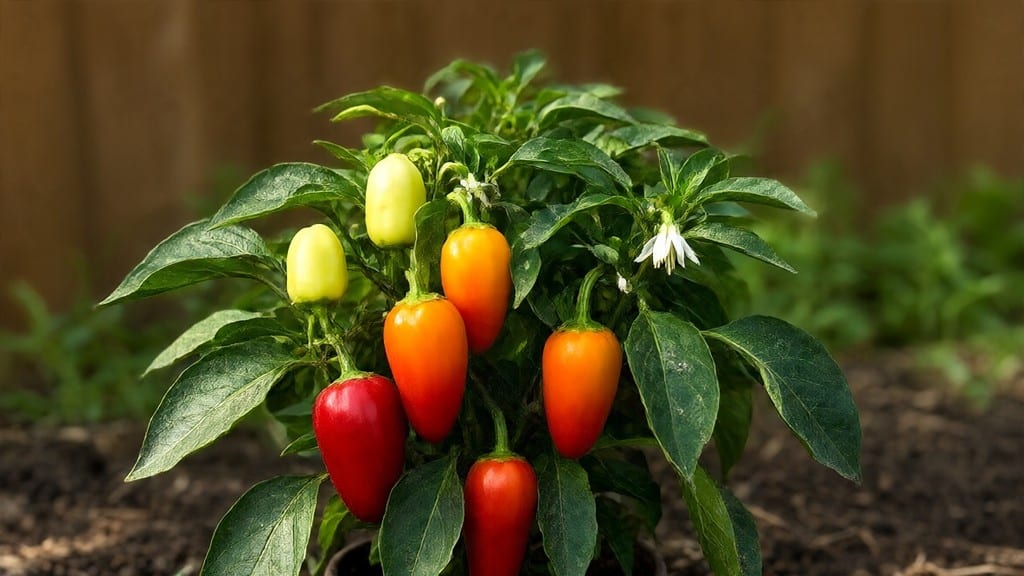
Ornamental peppers are not perennial in most climates, meaning they won't survive winter outdoors without protection. While they die back after frost, many regrow from their roots if sheltered or replanted each spring. Cold tolerance ranges by type, with some varieties thriving in zones 9–11.
Ornamental peppers behave like tender perennials—they won't survive freezing temperatures like true perennials, but their root systems often persist underground. 🔥 The key difference lies in their native tropical origins: most varieties can't handle sustained frost below 28°F, though some Capsicum annuum hybrids push limits to 32°F with protection.
What saves them is their ability to regenerate from dormant roots when spring arrives, making them semi-perennial in ideal conditions.
This explains why gardeners in colder zones treat them like annuals—until they discover the secret to overwintering. The root systems contain meristematic cells that can regrow when warmed, but only if protected from freezing soil.
That's why mulching with 4–6 inches of straw or using containers for indoor overwintering works so well for dedicated growers.
💡 In This Article
- Ornamental Pepper Cold Tolerance by Variety
- Year-Round Ornamental Pepper Growing Strategies
Ornamental pepper cold tolerance by variety
The cold tolerance of ornamental peppers hinges on their botanical lineage and cellular adaptations. Most belong to the Capsicum annuum species, which evolved in tropical climates where temperatures rarely dip below 50°F.
Their survival threshold sits at 28–32°F—when temperatures drop below this range, cellular membranes begin to rupture due to ice crystal formation, triggering irreversible damage. 🔥 The C. frutescens varieties, like the fiery habanero, are even more sensitive, typically succumbing at 30°F or higher.
Here's where the science gets fascinating: ornamental peppers have evolved a survival mechanism called dormancy. When exposed to cooler temperatures (50–60°F), their growth slows dramatically, and metabolic processes shift to preserve energy.
The root crown—where stems meet roots—contains specialized cells that can remain viable for months if protected from freezing. This is why you often see regrowth in spring, even after the plant appears dead.
For comparison, true perennials like asparagus can handle -20°F because their root systems are adapted to cold storage compounds like sugars and proteins.
Variety plays a critical role in cold resilience. Capsicum annuum varieties like 'Black Pearl' or 'Lunchbox' often survive 32°F with protection, while C. frutescens types rarely tolerate below 30°F.
The difference lies in their genetic makeup—C. annuum has thicker cuticles and more waxy coatings that slow moisture loss during cold snaps. Some modern hybrids (e.g., 'Jester' series) have been bred to push these limits slightly further, making them better candidates for zone 8 gardens with winter protection.
What most gardeners don't realize is how soil temperature affects survival more than air temperature. Even if the air stays above 32°F, frozen soil can kill the roots.
This is why mulching with 4–6 inches of straw or leaves creates a critical insulating layer—it maintains soil temps 5–10°F warmer than ambient air.
The root systems of ornamental peppers can remain dormant but viable in 40°F soil, which explains why they often bounce back in spring even after severe above-ground dieback.
Consider this real-world example: In zone 7, where winter lows often hit 15–20°F, ornamental peppers planted in containers can be moved to unheated garages with 40°F conditions and still regrow. The key is preventing the soil from freezing solid.
This same principle applies to greenhouse cultivation—maintaining 45°F nighttime temps can extend the growing season by 4–6 weeks in marginal climates. The trade-off? Slower growth during cooler periods, but the ability to produce colorful peppers earlier in the season.
For those pushing the limits in zones 8–9, varieties like 'Apache' or 'Fiery Fierce' often survive winters with minimal protection. These types have been selected for thicker stems and more robust root systems, allowing them to withstand brief 28°F dips.
The lesson here? While no ornamental pepper is truly perennial in cold climates, strategic variety selection and protection can turn them into semi-perennial garden stars. 💫