
Flowers
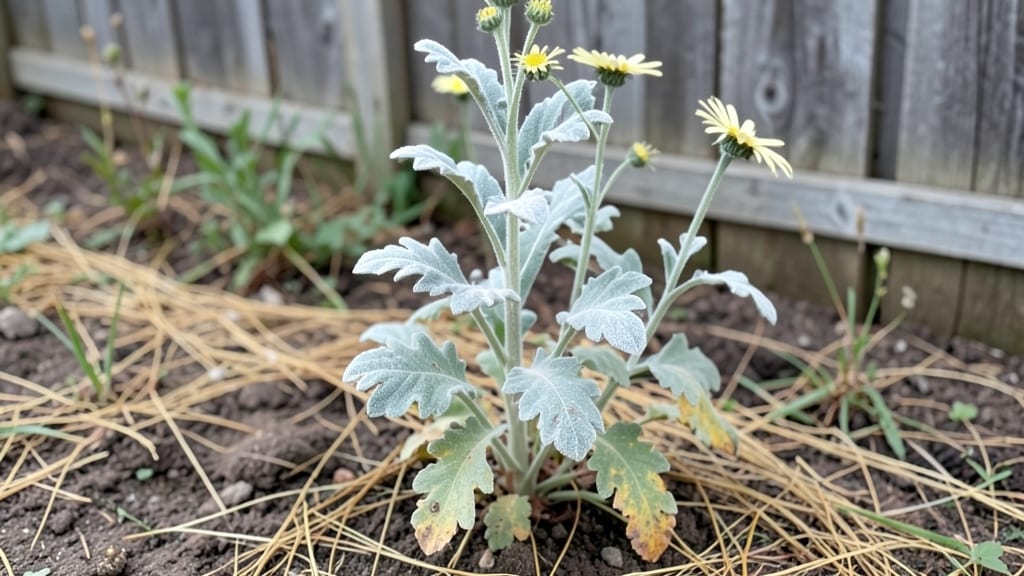
Deciding whether dusty miller is annual or perennial depends on your climate: it’s an annual in most regions but can act as a short-lived perennial in USDA zones 7-10, where mild winters allow regrowth from roots. Varieties like Jacobaea maritima show this resilience best.
Dusty miller’s growth habits shift dramatically based on where you live. In colder zones below 7, the plant rarely survives winter and must be replanted each spring. 🌱 However, in warmer areas like Southern California or coastal regions, some varieties naturally return year after year, especially if protected by mulch.
The key difference lies in frost sensitivity—most dusty miller varieties simply can’t handle freezing temperatures, which is why gardeners in colder climates treat it as an annual despite its perennial tendencies in ideal conditions.
For those in marginal zones (6-7), strategic planting and winter care can sometimes coax a second season. I’ve seen ‘Silver Spun’ varieties make it through mild winters with thick mulch, though they may look ragged until new growth appears.
The Mediterranean Jacobaea maritima stands out as the most adaptable, thriving where others fail due to its natural drought tolerance and heat resistance.
💡 In This Article
- How Dusty Miller’s Growth Cycle Varies by Climate Zone
- Extending Dusty Miller’s Season: Planting and Care Tips
How dusty miller’s growth cycle varies by climate zone
Dusty miller's growth cycle hinges on its frost tolerance, which varies dramatically between varieties. Most commercial cultivars (like 'Silver Spun' or 'Cotton Boll') are treated as annuals because they lack the genetic resilience to survive freezing temperatures below 20°F.
Their thick, fuzzy foliage actually traps cold air against the stems, accelerating frost damage. The key difference lies in their root systems: annual varieties develop shallow roots that freeze solid in winter, while true perennials like Jacobaea maritima grow deeper, more robust root structures that can withstand brief cold snaps.
The Mediterranean Jacobaea maritima stands out as nature's perennial version, evolved to handle dry summers and mild winters. Its natural range includes coastal areas where temperatures rarely drop below 25°F for extended periods.
This variety's secret weapon is its ability to enter dormancy when stressed by cold, then regrow from the crown when temperatures rise above 45°F.
What most gardeners don't realize is that even in zone 7, a sudden 15°F freeze can kill back these plants completely - they're not truly cold-hardy, just more resilient than their annual cousins.
Here's what happens botanically during winter: Annual varieties experience complete cellular death when exposed to 15°F or colder, while perennials may only lose their above-ground growth. The root crown of Jacobaea maritima contains meristematic tissue that remains protected by insulating leaf bases.
This is why you'll sometimes see these plants "come back" in spring - they've been dormant all winter, not dead. The trade-off? Their regrowth is often slower and less vigorous than fresh spring plantings.
Your local climate's microconditions matter more than just the zone number. Coastal areas in zone 7 (like San Francisco) often see dusty miller thrive as perennials because ocean breezes moderate temperatures, while inland areas at the same latitude may experience killing frosts.
The 100-hour frost-free period threshold is critical - if your area has fewer than 100 hours below 32°F annually, you're in the perennial-friendly range for Jacobaea maritima varieties.
What most gardeners overlook is how soil temperature affects survival. Even in zone 8, if your soil doesn't warm above 50°F for at least 6 weeks in spring, dusty miller won't regrow.
This explains why you might see it thrive as a perennial in Southern California but fail in similarly zoned but cooler areas like the Pacific Northwest. The plant's growth cycle is tightly coupled to soil thermodynamics - colder soils delay metabolic reactivation.
For those in marginal zones (6-7), the difference between annual and perennial behavior often comes down to 3 inches of mulch applied in late fall. This insulating layer can raise soil temperatures by 5-8°F during winter, making the difference between survival and death.
The mulch doesn't just protect roots - it also prevents soil heaving that can damage dormant crowns. 🌱
Remember: even "perennial" dusty miller varieties will weaken over time if pushed beyond their limits. After 3-4 years of marginal survival, their vigor declines as root systems degrade.
This is why professional gardeners recommend treating even the hardiest varieties as short-lived perennials - they're not built for decades of regrowth like true perennials such as lavender or rosemary.