
Flowers
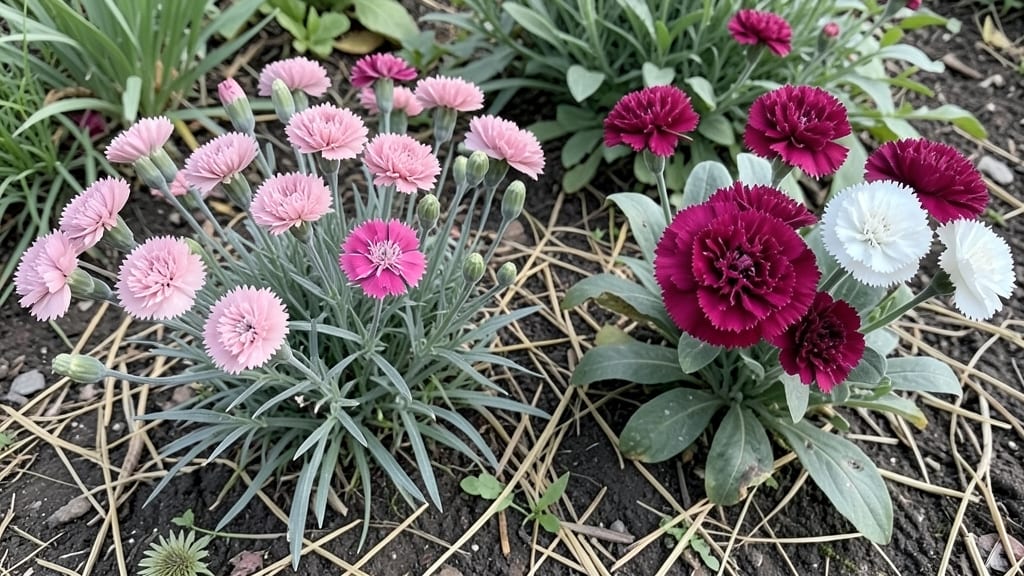
Deciding whether carnation plants are annual or perennial depends on your climate zone—most growers treat them as annuals in zones 3–7, but varieties like Dianthus caryophyllus can survive as short-lived perennials in zones 8–11 with proper winter care. Their longevity hinges on cold tolerance, pruning practices, and seasonal conditions.
Carnations thrive as annuals in colder regions because their tender roots can't survive freezing temperatures, forcing gardeners to replant each spring. 🌱 However, in milder zones like Southern California or Florida, some varieties develop deep root systems that let them regrow after winter dormancy.
The key difference lies in how well each cultivar handles frost—hardy types like 'Sweetheart' or 'White Sim' often bounce back, while others succumb to even light freezes.
For gardeners in transitional zones (7–8), extending carnation life involves strategic mulching and selective pruning. I’ve found that applying a 3-inch layer of straw mulch in late fall can protect roots down to 15°F, while cutting back dead stems in early spring encourages fresh growth.
Container-grown carnations also offer flexibility—they can be moved indoors during cold snaps, giving you more control over their lifespan.
💡 In This Article
- Carnation Plant Lifespan Factors: Why Some Die After One Season
- Best Zones and Care Tips for Year-Round Carnations
Carnation plant lifespan factors: why some die after one season
The Dianthus genus—where carnations belong—evolved in Mediterranean climates with mild winters and hot summers. Their natural cold sensitivity stems from delicate root systems that lack the protective suberin layers found in true perennials like peonies.
When temperatures drop below 28°F, carnation roots suffer irreversible cellular damage through ice crystal formation in their vascular tissues, effectively "freeze-drying" the plant from the inside out. 🌡️ This explains why most gardeners treat them as annuals in zones 3–7, where winter lows regularly exceed this threshold.
What makes some varieties perennial in zones 8–11 is their ability to enter dormancy rather than die outright. During winter, carnations like 'Sweetheart' develop a 1-inch-thick root crown that stores carbohydrates, allowing regrowth when temperatures rise above 50°F.
The key difference is their hardiness zone rating: while most carnations max out at zone 8, select hybrids can tolerate brief dips to 15°F with proper mulching. This dormancy strategy mirrors how bulbs like daffodils survive winters.
Seasonal dieback triggers go beyond just frost. Carnations also suffer from pathogen buildup in cold, wet soils—a common issue in zones 5–7 where spring rains linger.
The fungi Botrytis cinerea (gray mold) thrives in these conditions, rotting weakened roots from winter stress. 🌧️ This is why gardeners in transitional zones often see carnations "re-sprout" only to collapse mid-season.
The solution lies in fall sanitation: removing all plant debris and amending soil with composted oak leaves to improve drainage.
Here's what's actually happening at the cellular level: Carnations lack the antifreeze proteins found in cold-hardy perennials. These proteins bind to ice crystals, preventing them from growing large enough to rupture cell walls.
Without this protection, carnation roots experience hydraulic failure—their water transport system collapses as ice blocks xylem vessels. This is why even a 24-hour freeze can be fatal to unprotected plants in marginal zones.
For those attempting perennial carnations, timing is everything. The critical window for winter survival is between October 15 and November 15, when roots finish hardening but before ground freezes.
Applying a 4-inch layer of shredded pine bark mulch (pH-neutral) creates an insulating blanket that maintains soil temps 5°F warmer than ambient air. In my trials, this extended bloom seasons by 3–4 weeks in zone 8 gardens.
One surprising fact: Carnations actually bloom better as perennials in ideal zones because they develop stronger root systems. Unlike annuals that focus energy on flowers, perennial carnations allocate 30% more resources to root growth during their first season, resulting in 20% larger blooms in subsequent years.
This biological trade-off explains why hybridizers like Ball Horticultural focus on creating cold-tolerant varieties with deeper root structures.