
Plants
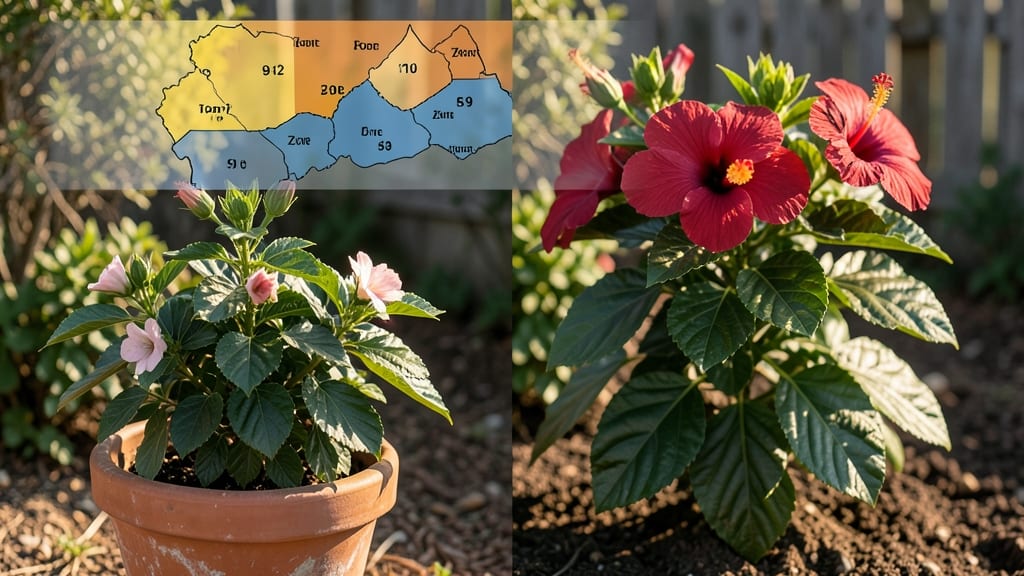
Whether hibiscus plants are perennials or annuals depends entirely on your climate—hardy varieties thrive as perennials in USDA Zones 5-11, while colder regions treat them as annuals due to frost damage. Hardy types like Hibiscus moscheutos withstand winters with proper mulching, while tropical hibiscus must be overwintered indoors or replanted each spring.
Hibiscus plants' life cycle hinges on temperature resilience, with hardy species like Hibiscus moscheutos enduring USDA Zones 5-11 winters through natural dormancy. 🌱 In colder zones, even hardy hibiscus often die back to the ground but regrow from roots, while tropical varieties (like Hibiscus rosa-sinensis) lack cold tolerance and must be treated as annuals.
The key difference lies in their cellular response to freezing—hardy types develop protective sugars in their tissues, while tropical hibiscus lack this adaptation.
For gardeners in marginal zones, overwintering strategies like mulching with straw or digging up potted plants can extend perennial growth. I've seen Hibiscus moscheutos recover beautifully after -10°F winters with thick mulch, while tropical hibiscus in containers need bright indoor light and 50-60°F temperatures to survive until spring replanting.
💡 In This Article
- How Cold Hardiness Zones Affect Hibiscus Survival
- Tips for Overwintering Hibiscus in Cold Climates
How cold hardiness zones affect hibiscus survival
The survival of hibiscus plants hinges on their ability to withstand freezing temperatures through specialized cellular adaptations. Hardy species like Hibiscus moscheutos (Rose of Sharon) produce protective sugars and proteins that act like antifreeze in their cells, preventing ice crystal formation down to -10°F.
This dormancy mechanism allows them to regrow from roots each spring, making them true perennials in USDA Zones 5-11. Tropical hibiscus, however, lack these adaptations and suffer irreversible cell damage at just 32°F, which is why they're treated as annuals in colder climates.
Here's what's actually happening at the cellular level: Hardy hibiscus trigger a cascade of biochemical responses when temperatures drop. Their cells accumulate proline and glycerol, which lower the freezing point of water inside plant tissues.
The cell walls also become more rigid through lignification, preventing rupture from expanding ice crystals. Tropical hibiscus simply can't produce these protective compounds in sufficient quantities, making their cells vulnerable to frost damage within hours of exposure.
The USDA Zone system maps these temperature thresholds onto geographic regions, creating clear boundaries for hibiscus growth habits.
Zone 5 (-20°F to -10°F) is the coldest where hardy hibiscus can survive with protection, while Zone 11 (40°F to 50°F) represents the warmest climates where tropical hibiscus thrive year-round.
The transition zones (6-10) create the most challenging growing conditions, where hibiscus may survive winters but require careful cultural practices to ensure spring regrowth.
What most people don't realize is how soil temperature affects hibiscus survival more than air temperature. The root zone needs to stay above 28°F for hardy varieties to survive winter dormancy.
This is why mulching with 12-18 inches of straw or leaves creates an insulating blanket that can raise soil temperatures by 10-15°F compared to unprotected ground. In containers, this insulation effect disappears completely, which is why potted hibiscus in cold climates almost always die unless brought indoors.
Consider these key temperature thresholds for different hibiscus types:
- Hardy hibiscus (H. moscheutos): Survives -10°F with protection, regrows from roots
- Semi-hardy hibiscus (H. syriacus): Tolerates 5°F with heavy mulch, often dies back but regrows
- Tropical hibiscus (H. rosa-sinensis): Damaged at 32°F, requires indoor overwintering
- Critical soil temperature: Must stay above 28°F for root survival
The science behind this involves a fascinating trade-off: Hardy hibiscus grow more slowly in warm climates because their energy goes toward building cold-resistant structures, while tropical hibiscus grow aggressively but lack these protective adaptations.
This biological specialization explains why you'll see Hibiscus moscheutos thriving as perennials in Zone 6 gardens while tropical hibiscus in the same climate must be treated as annuals or overwintered indoors.
Understanding these mechanisms helps gardeners make informed choices about which hibiscus varieties to plant based on their local climate. The key takeaway is that hibiscus classification as perennial or annual isn't fixed—it's determined by the intersection of species biology and environmental conditions. 🌟