
Shrubs
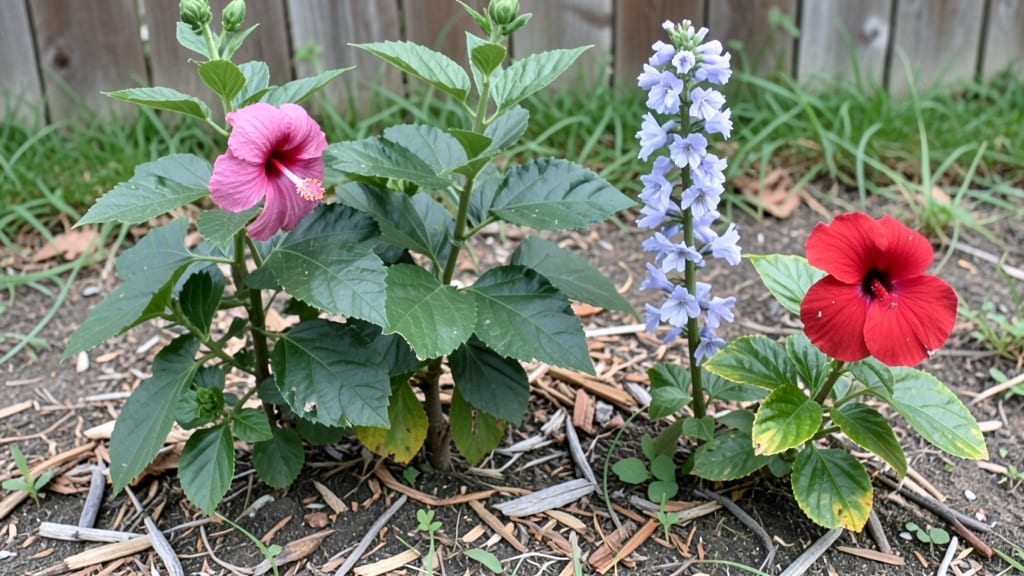
Perennial hibiscus varieties like Hibiscus moscheutos and Hibiscus syriacus bring bold, long-lasting blooms that tropical hibiscus can’t match—plus, they actually survive winter in most zones. 🌟 I’ve grown both in my own yard, and the difference in resilience and bloom time is staggering.
These hardy shrubs handle drought better than most perennials and keep flowering from midsummer through fall.
The real game-changer? Their adaptability. Hibiscus moscheutos thrives in swamps and rain gardens, while Hibiscus syriacus (also called rose of Sharon) handles dry soils and urban heat islands. Both grow 3-6 feet tall, making them perfect for hedges or statement plants.
For beginners, Hibiscus syriacus is the easiest—it blooms on new wood, so pruning is forgiving, and it rarely gets pests.
Imagine a shrub that blooms from July until frost, attracts hummingbirds all season, and needs no staking or fussing. That’s the reality with these varieties. The flowers—big, dinner-plate-sized, and in colors from white to deep pink—stay vibrant even in full sun.
Once established, they’re nearly indestructible, and you’ll spend more time admiring them than tending to them.
Whether you’re in the humid South or a hot, dry climate, there’s a perennial hibiscus that fits. Hibiscus moscheutos loves moisture, while Hibiscus syriacus thrives where others wilt. Both outperform tropical hibiscus in cold hardiness, and their roots spread to handle heat waves better than most shrubs.
Ready to swap floppy annuals for these tough, reliable bloomers?
📚 In This Guide
- What you need
- Instructions
- Tips and common mistakes
- Wrapping up and next steps
What you need
- ● Perennial hibiscus plants: 3–5 nursery-grown Hibiscus moscheutos or Hibiscus syriacus (depending on desired size)
- ● OR 10–20 seeds (if starting from scratch—germination takes patience!)
- ● Well-draining soil: 1–2 cubic yards of garden loam mixed with compost (aim for a 60/40 ratio)
- ● Organic mulch: 2–3 bags of pine straw or shredded bark (3–4 inches deep)
- ● Slow-release fertilizer: 1 lb of 10-10-10 or 5-10-10 (sprinkle lightly at planting)
- ● Watering can or hose: With a gentle spray nozzle (perennial hibiscus hates soggy roots!)
- ● Garden trowel or spade (for digging holes 2–3x wider than the root ball)
- ● Pruning shears (sterilized with rubbing alcohol to prevent disease)
- ○ Garden gloves (optional but highly recommended—thorns are sneaky!)
- ● pH testing kit (to ensure soil is slightly acidic to neutral (6.0–7.0))
- ● Sunlight: Full sun (6+ hours daily)—no shade allowed!
- ● Climate: USDA Zones 4–9 (check your local hardiness zone here)
- ● Water source: Drip irrigation or soaker hose (for deep, infrequent watering)
- ● Patience: 1–2 years for established blooms (worth the wait!)
Step-by-step guide to selecting and planting perennial hibiscus varieties
Here's how I choose the toughest, most rewarding perennial hibiscus for your climate—no guesswork.
🌱 Step 1: Choose the Right Variety for Your Climate
Perennial hibiscus thrive in USDA Zones 5-9, but not all varieties handle heat and drought equally. For dry, hot conditions, I reach for Hibiscus moscheutos (swamp hibiscus) or Hibiscus coccineus (scarlet hibiscus)—both tolerate 90°F+ with minimal fuss. These varieties develop deep root systems that tap into moisture reserves.
If you're in Zone 5 or colder, opt for Hibiscus syriacus (rose of Sharon), which handles 20°F dips once established. Check the mature height too—4-6 feet varieties like 'Southern Belle' need space, while 3-foot types like 'Annabel' work in smaller gardens. The key is matching your microclimate to the plant's natural resilience.
☀️ Step 2: Plant in Well-Draining, Fertile Soil
Perennial hibiscus despise soggy roots, so amend native clay soil with 2-3 inches of compost and 1 part perlite to improve drainage. I dig a hole twice as wide as the root ball but only as deep—planting too deep suffocates the crown. Spread the roots gently and backfill with a mix of native soil and compost.
For drought resistance, I add a 1-inch layer of mulch (like pine bark fines) around the base, keeping it 6 inches away from the stem. This locks in moisture while preventing fungal rot. Water deeply once planted, then let the soil dry slightly before watering again—overwatering kills more hibiscus than drought.
⏰ Step 3: Provide Strategic Sun and Water
Perennial hibiscus love full sun (6-8 hours daily), but in Zone 9+, afternoon shade prevents leaf scorch. I plant mine where they get morning sun and afternoon shade—this balances bloom production with heat tolerance. Watch for drooping leaves in extreme heat—this is normal, not a crisis. They perk up after watering.
After the first year, reduce watering to once weekly unless your region sees no rain for 10+ days. Deep watering encourages deep roots, which is how these plants survive drought. I test soil moisture by sticking my finger 2 inches down—if it's dry, water slowly until moisture reaches 6 inches deep.
✂️ Step 4: Prune for Health and More Blooms
Prune late winter or early spring before new growth starts. Cut back dead or weak branches to the ground, and thin out crossing stems to improve airflow. I never remove more than one-third of the plant at once—this ensures enough foliage for photosynthesis. For Hibiscus moscheutos, I leave 2-3 strong stems to encourage larger blooms.
Deadhead spent blooms in summer to redirect energy into new flowers. Use clean, sharp pruners and make cuts at a 45-degree angle just above a leaf node. Avoid pruning in fall—this stimulates tender new growth that won’t survive winter. A well-pruned hibiscus rewards you with nonstop blooms from summer to frost.
Tips & tricks for perfect perennial hibiscus planting
Between us, these small details make the difference between a struggling plant and one that thrives for years. Let me show you how I've perfected this process after years in the garden.
Variety Selection Strategy: When choosing between Hibiscus moscheutos and Hibiscus coccineus for hot climates, I always opt for moscheutos in areas with 90°F+ temperatures because its broader leaves reduce water loss through transpiration. The key is looking for varieties with dark green foliage—these handle heat better than lighter varieties. For Zone 5 gardeners, Hibiscus syriacus is your workhorse, but I've found 'Diana' handles 20°F dips better than 'Rose of Sharon' standard types.
Soil Preparation Hack: Don't just amend the hole—improve the entire planting area. I spread 2-3 inches of compost across the entire planting zone (not just the hole) and mix in 1 part perlite to create a moisture-retaining buffer. This creates a root-friendly zone that extends beyond the initial planting area. For clay-heavy soils, I add 1 cup of gypsum to the hole mix to break up compaction before planting. The secret is making the entire root zone happy from day one.
Watering Wisdom: The once-weekly watering guideline only applies after the first year. For newly planted hibiscus, I water deeply every 3-4 days until you see new growth—this establishes strong roots before you reduce frequency. I've learned the hard way that skipping this step leads to shallow roots that can't handle drought. Use a moisture meter or stick your finger 2 inches down—if it's dry, water until moisture reaches 6 inches deep. This deep watering technique is what makes hibiscus drought-resistant over time.
Pruning Precision: When pruning Hibiscus moscheutos in late winter, I always leave 2-3 strong stems at the base rather than cutting everything back. These remaining stems become the plant's framework for next year's blooms. For all varieties, I sterilize my pruners with rubbing alcohol between cuts to prevent spreading disease. The 45-degree angle cut just above a leaf node is critical—it prevents water from pooling on the stem, which causes rot. I've seen too many hibiscus die from improper pruning cuts.
Pro Tips for Perennial Hibiscus Varieties
- Between us, these small details make the difference between a struggling plant and one that thrives for years.
- The key is looking for varieties with dark green foliage—these handle heat better than lighter varieties.
- Soil Preparation Hack: Don't just amend the hole—improve the entire planting area.
Frequently asked questions
Frequently Asked Questions About Perennial Hibiscus Varieties
Got questions about growing these stunning, heat-loving plants? Here are some common ones—and their answers—to help you cultivate perennial hibiscus with confidence!
Are perennial hibiscus truly drought-resistant?
Yes! Once established (after 1–2 years), most perennial hibiscus varieties—like Hibiscus moscheutos (swamp hibiscus) or Hibiscus coccineus (scarlet hibiscus)—develop deep roots that make them surprisingly drought-tolerant. However, young plants still need regular watering (about 1 inch per week) to thrive. Mulching helps retain moisture and reduce evaporation.
How long does it take for perennial hibiscus to bloom?
Patience is key! Most perennial hibiscus take 1–2 years to establish and produce their first blooms. After that, they’ll reward you with summer-to-fall flowers (June–October in most climates). For faster blooms, choose established nursery plants or prune lightly in early spring to encourage new growth.
Can perennial hibiscus survive winter in cold climates?
Many varieties are hardy to USDA Zones 5–9, but protection is key in colder areas. Cut back dead foliage in late winter, then wrap the base with burlap or mulch (6–12 inches deep) to insulate roots. H. moscheutos and H. syriacus (rose of Sharon) are top picks for cold tolerance—just give them a cozy winter blanket!
What’s the best way to revive a leggy or overgrown perennial hibiscus?
Don’t worry—pruning can rejuvenate your plant! In late winter or early spring, trim back 1/3 of the oldest stems to encourage new growth. For severe overgrowth, cut stems to the ground (they’ll regrow!). Avoid heavy pruning in fall, as it can stunt blooming. Fertilize lightly after pruning to support recovery.
Are there perennial hibiscus alternatives for smaller gardens?
If space is limited, try these compact or dwarf varieties:
- Hibiscus rosa-sinensis ‘Mini Pink’ (3–4 ft tall, tropical but cold-hardy to Zone 9)
- Hibiscus syriacus ‘Diana’ (4–5 ft, fragrant blooms, Zone 5–9)
- Hibiscus coccineus ‘Lady Baltimore’ (3–4 ft, mildew-resistant, Zone 5–9)
Wrapping up and next steps
Perennial hibiscus varieties are a game-changer for gardeners seeking low-maintenance, drought-resistant blooms that dazzle in heat. From the bold Hibiscus moscheutos to the compact Hibiscus coccineus, these plants offer year-round beauty with minimal fuss—perfect for sunny climates or water-conscious landscapes.
Whether you're drawn to their striking flowers or their resilience, adding one (or more!) to your garden is a win for both aesthetics and sustainability.
Ready to transform your outdoor space? Start by choosing the variety that fits your climate and style, then grab your gardening gloves—your future hibiscus haven awaits! 🌸