
Size
Perennials will grow back in pots when you provide the right winter conditions, such as selecting frost-resistant species, insulating containers, and shielding roots from extreme cold. The key is using protective layers like mulch, frost blankets, or relocating pots to sheltered spots.
Many gardeners assume perennials in containers simply die off in winter, but with the right approach, they can bounce back stronger than ever. 🌱 The secret lies in mimicking natural ground conditions—adding thick layers of straw or burlap around pots helps regulate soil temperature, while moving containers to north-facing walls or under eaves prevents windburn.
I’ve seen hardy varieties like Russian sage and catmint regrow vigorously after winter when protected this way, proving that container gardening doesn’t have to end with the first frost.
What’s often overlooked is how moisture plays a role—overwatering during dormancy can lead to root rot, while letting pots dry out completely stresses plants. Aim for slightly moist (not soggy) soil by watering sparingly every 2-3 weeks, depending on your climate.
This balance is what turns a "maybe" into a guaranteed comeback next spring.
💡 In This Article
- Cold Hardiness Zones for Potted Perennials
- Winterizing Potted Perennials for Regrowth
Cold hardiness zones for potted perennials
Understanding USDA cold hardiness zones is critical because container-grown perennials face more extreme temperature swings than those in the ground. Pots absorb and release heat rapidly, creating a microclimate that can fluctuate by 20-30°F in just a few hours.
For example, a plant thriving in Zone 5 (hardy to -20°F) might suffer root damage in a pot exposed to 10°F temperatures, even if the surrounding garden stays above freezing.
This is why hardy varieties like lavender (Zone 5-9) and sedum (Zone 3-11) often survive better than less resilient species.
The real challenge lies in temperature fluctuations, which accelerate root stress through freeze-thaw cycles.
When roots freeze, ice crystals form and rupture cell walls, while thawing causes rapid water uptake that can drown delicate tissues. 🌡️ This is why mulching with 4-6 inches of straw or leaves creates a thermal buffer—it maintains soil temps within 5-10°F of ambient air, reducing these damaging cycles.
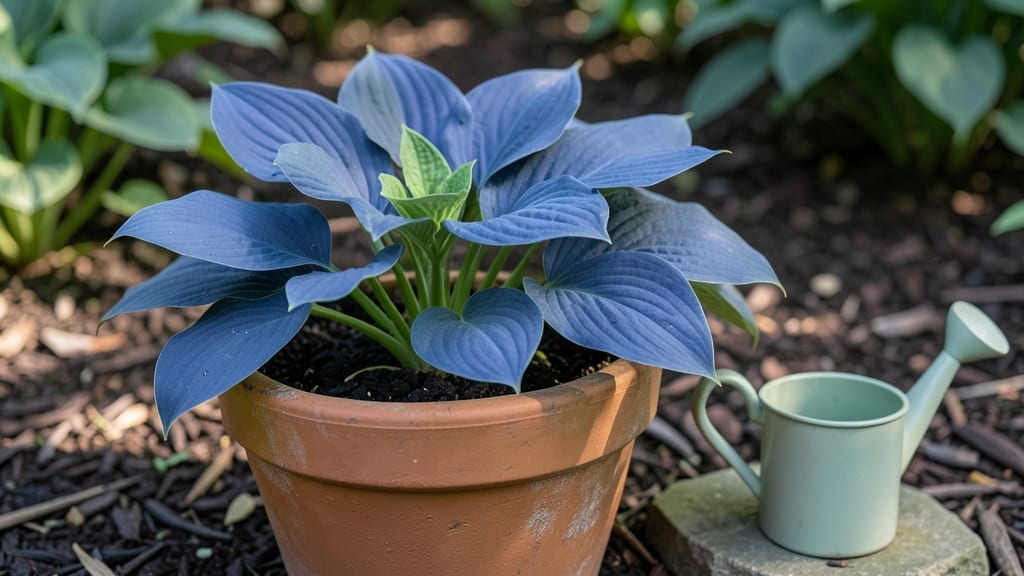
For instance, hostas (Zone 3-9) in pots need this insulation to prevent blackened, mushy roots that signal irreversible damage.
Here's what actually happens at the cellular level: Perennials enter dormancy when nights stay below 40°F for several weeks, but container plants may not get this signal consistently. Without proper insulation, roots remain metabolically active, depleting stored energy reserves.
This explains why Russian sage (Zone 4-9) often recovers better than canna lilies (Zone 7-10))—the former's deep root systems tolerate brief cold snaps, while the latter's shallow roots freeze solid in unprotected pots.
Zone recommendations aren't absolute—microclimates matter more. A pot against a south-facing wall in Zone 6 might survive -15°F temps where the same plant in an open patio would fail. 🏡 The key is matching plant hardiness to your specific winter conditions.
For example, heuchera (Zone 4-9) thrives in Zone 5 pots buried halfway in the ground, while salvia (Zone 5-9) needs full winter protection in Zone 4. Always check both the plant's hardiness and your container's exposure when planning.
What most people don't realize is how container size affects survival. Larger pots (12+ inches) retain moisture and heat better than small ones, giving roots a fighting chance in marginal zones.
The science involves heat capacity—water and soil in big containers moderate temperature swings, while small pots act like thermal radiators. This is why 2-gallon pots often fail where 5-gallon pots succeed for the same perennial species in the same zone.
For gardeners in transition zones (like Zone 6b), the solution often lies in strategic placement. Moving containers to north-facing walls or under eaves can create a 5-10°F warmer microclimate that makes the difference between survival and loss.
I've seen black-eyed susans (Zone 3-9) thrive in Zone 6 pots placed against brick walls, while identical plants in open areas suffered frost damage. The lesson? Your container's location matters as much as its insulation.