
Plants
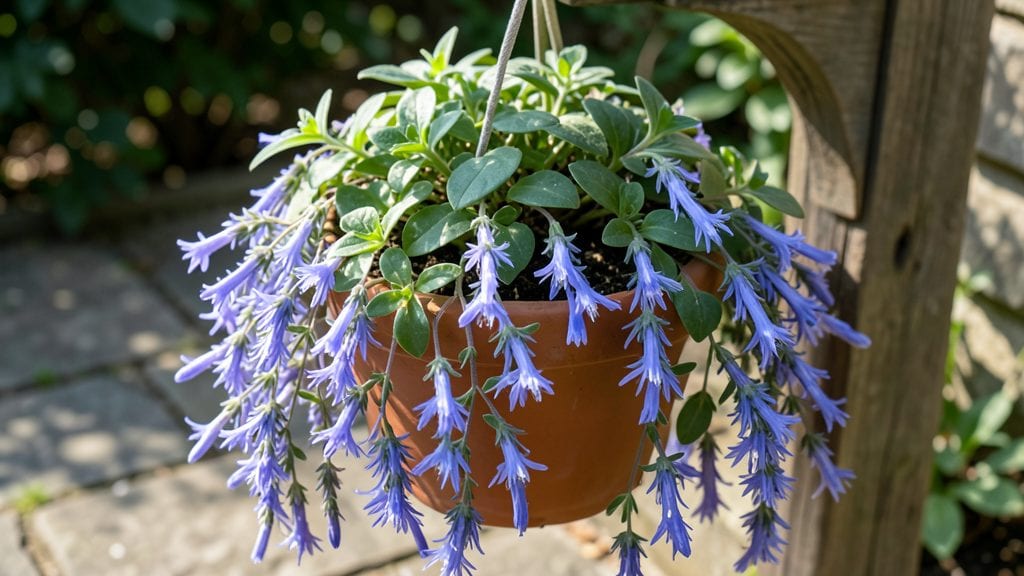
A trailing perennial is a plant that spreads horizontally along the ground, forming new roots at nodes while retaining its woody base or crown, allowing it to regrow each season. Unlike annuals, these hardy plants persist year after year, creating lush ground cover through runners or stolons.
A trailing perennial isn't just a plant that spreads—it's a gardener's secret weapon for instant ground cover. 🌿 These plants send out horizontal stems (called stolons or runners) that root at nodes, creating dense mats without needing replanting.
Unlike annuals that die back each year, trailing perennials return stronger, making them perfect for slopes, borders, or containers. My go-to example is creeping thyme, which spreads aggressively but stays low, crowding out weeds naturally.
What makes them unique is their dual nature: they stay rooted to their original spot while expanding outward, thanks to specialized growth hormones. This means you get both stability and spread, unlike creepers that might flop or annuals that require yearly replanting.
For gardeners, this means less maintenance and more coverage—once established, these plants become self-sustaining workhorses.
💡 In This Article
- How Trailing Perennials Spread: Runners vs Stolons vs Creepers
- Best Trailing Perennials for Gardens: Growth Habits and Uses
How trailing perennials spread: runners vs stolons vs creepers
The spread of trailing perennials begins with specialized stems that grow horizontally rather than vertically. Stolons are above-ground stems that root at nodes (points where leaves attach), creating new plants while staying connected to the parent.
Think of strawberries—their long, slender stolons stretch outward, forming roots at each node before lifting upward to become independent plants. This process relies on the plant hormone auxin, which regulates stem elongation and root initiation at precise locations along the stolon.
Runners, like those of Bermuda grass, function similarly but typically grow longer (often 12-24 inches) before rooting. The key difference is that runners usually stay closer to the soil surface and may form a dense mat, while stolons can lift slightly above ground.
Creepers, such as ivy or bugleweed, take a different approach—they climb or trail using tendrils or aerial roots, but their growth is more vine-like than stem-based. Unlike self-seeding perennials (which rely on seed dispersal), trailing perennials spread vegetatively, meaning no flowers or seeds are needed for expansion.
What most gardeners don’t realize is that the timing of root formation matters. Stolons and runners root most actively during spring and early summer, when soil moisture and temperatures are ideal (60-75°F). Auxin levels peak during this period, promoting both stem elongation and root development.
For example, mint stolons can root at every node if conditions are right, creating a dense colony in just 3-4 weeks. This rapid spread is why trailing perennials excel in erosion control—their extensive root systems stabilize soil while expanding outward.
Here’s how the three types compare in action:
- Stolons: Root at nodes while still attached to the parent (e.g., strawberries, creeping Charlie). Grow 6-12 inches before rooting.
- Runners: Longer stems (12-36 inches) that root at tips (e.g., Bermuda grass, spiderwort). Often form a sprawling mat.
- Creepers: Use tendrils/vines to climb or trail (e.g., ivy, clematis). Root only when in contact with soil.
The science behind this involves a balance of hormones: auxin promotes stem growth, while another hormone, cytokinin, triggers root formation at nodes. When stolons or runners touch soil, auxin levels drop locally, signaling the plant to form roots.
This is why pinning down stolons (a gardening technique) speeds up rooting—it mimics natural soil contact. 🌱 For gardeners, this means you can direct the spread by burying stems or trimming excess growth to control where new plants form.
Unlike self-seeding perennials (which rely on wind or animals to disperse seeds), trailing perennials spread through clonal reproduction, producing genetically identical plants. This makes them ideal for uniform ground cover, as seen in creeping thyme or ajuga.
The trade-off? Their aggressive spread can become invasive if not managed—hence the need for pruning or barriers in small gardens.