
Flowers
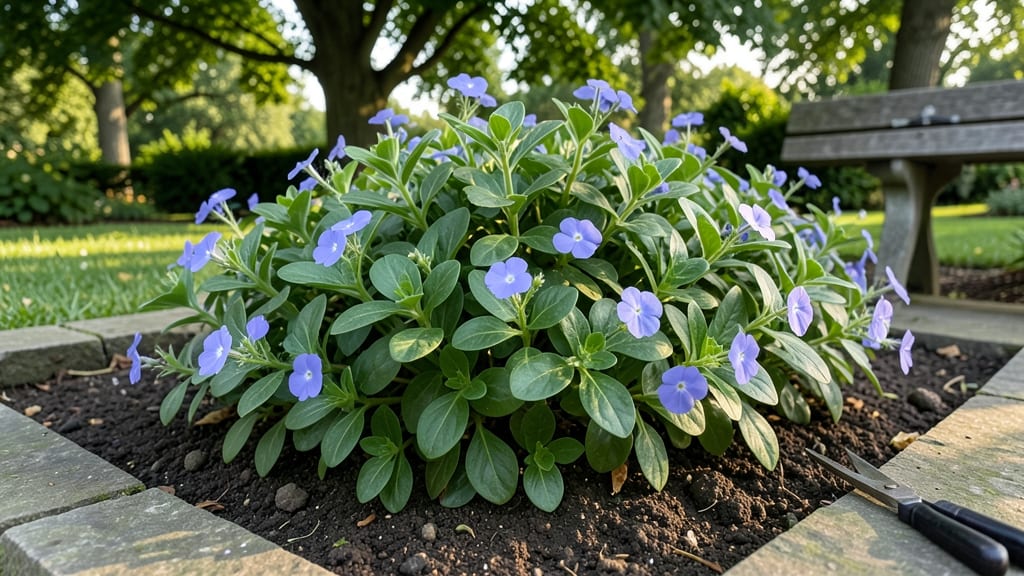
Creating a lush, evergreen vinca perennial ground cover starts with the right soil and sunlight mix—this hardy plant thrives where others struggle. I’ve used vinca to transform shady corners into vibrant, low-maintenance carpets that stay green all year, even through droughts.
The key lies in mimicking its natural woodland habitat while keeping care simple enough for busy gardeners.
Vinca spreads effortlessly in partial to full shade, making it ideal for under trees or along north-facing walls. Plant 12-18 inches apart in well-draining soil amended with compost, and water deeply after planting to encourage root establishment.
Once established, it handles dry spells like a pro, needing water only during prolonged droughts.
By late spring, you’ll see glossy leaves filling gaps between plants, creating a dense mat that chokes out weeds. A light trim in early summer keeps it tidy, and occasional division every few years ensures it doesn’t outgrow its space.
The result? A foolproof, evergreen ground cover that requires almost no upkeep.
Perfect for slopes, borders, or as a living mulch under shrubs, vinca’s versatility makes it a staple in shade gardens. Whether you’re covering bare soil or disguising unsightly areas, this plant delivers year-round color with minimal effort. Let’s get your vinca patch thriving!
📚 In This Guide
- What you need
- Instructions
- Tips and common mistakes
- Wrapping up and next steps
What you need
- ● Vinca plants: 10–20 Vinca minor (less aggressive) or Vinca major (hardier) plants, depending on area coverage (spaced 12–18 inches apart).
- ● OR 1–2 lbs of vinca seeds (slower to establish but cost-effective).
- ● Soil amendments: 5 lbs compost or well-rotted manure per 10 sq ft to improve drainage.
- ○ 1 lb perlite or sand (optional but helpful for heavy clay soils).
- ● Tools: Garden trowel (for planting seeds/transplants).
- ● Hand pruners (for trimming established plants).
- ● Garden rake (to smooth soil after planting).
- ● Watering can or hose with gentle spray nozzle.
- ● Mulch: 2–3 inches of pine straw, shredded bark, or wood chips (to retain moisture and suppress weeds).
- ● Fertilizer: Slow-release 10-10-10 granular fertilizer (1 tbsp per plant at planting time).
- ● Erosion control: Jute netting or biodegradable landscape fabric (for slopes).
- ● Pest deterrent: Neem oil spray (if aphids or spider mites appear).
- ● Edging: Landscape fabric or metal edging (to contain aggressive spreaders like Vinca major).
Step-by-Step instructions for planting vinca perennial ground cover
Here's the method I've used to create lush, evergreen spreads that thrive year after year.
Prepare the Planting Site
Vinca thrives in well-draining soil with 6+ hours of sunlight daily, though it tolerates partial shade in hotter climates. Clear the area of weeds and debris, then loosen the top 6 inches of soil with a garden fork. This improves root penetration and prevents compaction.
If your soil is heavy clay, amend it with 2-3 inches of compost mixed into the top layer. Vinca dislikes soggy roots, so avoid low-lying areas where water pools. A slight slope ensures excess moisture drains away naturally.
Space Plants for Optimal Spread
Dig holes 12-18 inches apart for a dense, carpet-like effect—closer spacing encourages faster ground coverage. The hole should be just slightly wider than the root ball but no deeper. Gently remove the plant from its container and tease the roots if they're circling.
Place each plant so the top of the root ball sits flush with the soil surface. Press the surrounding earth lightly to eliminate air pockets, then water deeply to settle the roots. Vinca establishes quickly, so proper initial spacing prevents overcrowding later.
Mulch and Water for Establishment
Spread 2-3 inches of mulch (such as shredded bark or pine straw) over the soil surface, keeping it 6 inches away from plant stems to prevent rot. Mulch conserves moisture, suppresses weeds, and regulates soil temperature—critical for vinca's first growing season.
Water deeply once a week during the first month, allowing the top 2 inches of soil to dry between waterings. Overwatering is the fastest way to kill vinca; it's far more drought-tolerant than most ground covers once established. You'll know it's thriving when new growth appears within 4-6 weeks.
Maintain for Year-Round Beauty
Vinca requires minimal care after establishment. Fertilize lightly in early spring with a balanced, slow-release fertilizer (10-10-10) to encourage lush growth. Avoid heavy feeding, which can lead to leggy stems and fewer flowers.
Trim back any brown or leggy growth in late winter to maintain a neat appearance. Vinca spreads aggressively, so edge the perimeter occasionally if you prefer defined borders. With proper spacing and care, your vinca will form an impenetrable, evergreen carpet within 2-3 years.
Tips & tricks for perfect vinca perennial ground cover
A few strategic moves will ensure your vinca thrives and spreads beautifully year after year.
Soil Preparation: The 6-inch soil loosening in Step 1 is crucial for root development. If your soil is particularly dense, consider adding a layer of coarse sand mixed with the compost to further improve drainage. This prevents that dreaded root suffocation that can kill vinca before it even establishes. I've seen vinca fail spectacularly in compacted soil despite all other conditions being perfect.
Plant Spacing Secret: While the 12-18 inch spacing in Step 2 creates that lush carpet effect, you can actually plant vinca as close as 6 inches apart if you're aiming for rapid coverage. Just be prepared to do some light thinning in 6-8 months when plants start competing for space. The key is maintaining that flush soil level - any deeper planting risks stem rot while any higher leaves the roots vulnerable to drying.
Mulching Strategy: That 2-3 inch mulch layer in Step 3 serves multiple purposes beyond moisture retention. For hot climates, I recommend using a lighter mulch like pine straw which allows better airflow around the stems. In cooler regions, shredded hardwood bark works better for insulation. Always maintain that 6-inch clearance from stems to prevent moisture buildup that leads to rot.
Watering Wisdom: The once-weekly deep watering in Step 3 might seem counterintuitive for a drought-tolerant plant, but vinca needs this initial moisture to establish its root system. After that first month, you can reduce to every 10-14 days, but always check that top 2 inches of soil first. I've seen vinca recover from drought but never from consistent overwatering - the roots simply suffocate.
Pro Tips for Vinca Perennial Ground Cover
- A few strategic moves will ensure your vinca thrives and spreads beautifully year after year.
- Soil Preparation: The 6-inch soil loosening in Step 1 is crucial for root development.
- Plant Spacing Secret: While the 12-18 inch spacing in Step 2 creates that lush carpet effect, you can actually plant vinca as close as 6 inches apart if you're aiming for rapid coverage.
Frequently asked questions
Got questions about using vinca as your go-to perennial ground cover?
You’re not alone! Here are answers to the most common queries—from planting tips to troubleshooting—so you can create a lush, low-maintenance landscape with confidence.
Can vinca perennial ground cover survive in full sun or shade?
Vinca thrives in both full sun and partial shade, though its color intensity may fade in deep shade. For vibrant foliage, aim for at least 4–6 hours of sunlight daily. In hot climates, afternoon shade helps prevent stress. Pro tip: Mulch around plants to retain moisture and regulate soil temperature!
How long does it take for vinca to spread and fill in an area?
Patience pays off! Vinca spreads slowly at first but gains momentum in 1–2 years. Expect full coverage in 3–5 years, depending on soil quality and care. For faster results, plant 10–12 plants per square foot and keep the soil consistently moist during the first growing season. Divide mature clumps every 3–4 years to rejuvenate growth.
What pests or diseases commonly affect vinca, and how do I prevent them?
Vinca is tough but can face spider mites, aphids, or fungal issues (like leaf spot) in humid conditions. Prevent pests by watering at the base (not overhead) and removing debris. Treat infestations with neem oil or insecticidal soap. For fungal problems, improve airflow with proper spacing and avoid overwatering.
Are there any low-maintenance alternatives to vinca for ground cover?
If vinca isn’t your style, try these hardy, low-maintenance options:
- Creeping thyme – Drought-tolerant, fragrant, and great for sunny spots.
- Sedum (stonecrop) – Succulent-like, thrives in poor soil, and handles heat.
- Ajuga (bugleweed) – Fast-spreading with purple foliage and spring blooms.
- Liriope (monkey grass) – Grass-like texture, tolerates shade, and resists deer.
Does vinca need winter care in cold climates?
Most vinca varieties are hardy to USDA zones 7–11, but young plants or harsh winters may need protection. In zones 6 or colder, mulch heavily (3–4 inches) with shredded leaves or straw. Avoid heavy mulch in mild winters, as it can suffocate roots. Prune back dead foliage in early spring for a fresh start!
Wrapping up and next steps
Transforming your garden into a lush, evergreen oasis with vinca perennial ground cover is simpler than you think! This hardy, low-maintenance plant offers year-round beauty, drought resistance, and effortless spread—perfect for filling gaps, suppressing weeds, and adding vibrant color to any landscape.
Whether you’re a seasoned gardener or just starting out, vinca is your go-to solution for a green thumb with minimal effort.
Ready to take the next step? Grab your supplies, follow the steps, and watch your garden thrive! 🌱 Start small, experiment with placement, and enjoy the rewarding results of your hard work. Happy planting!