
Flowers
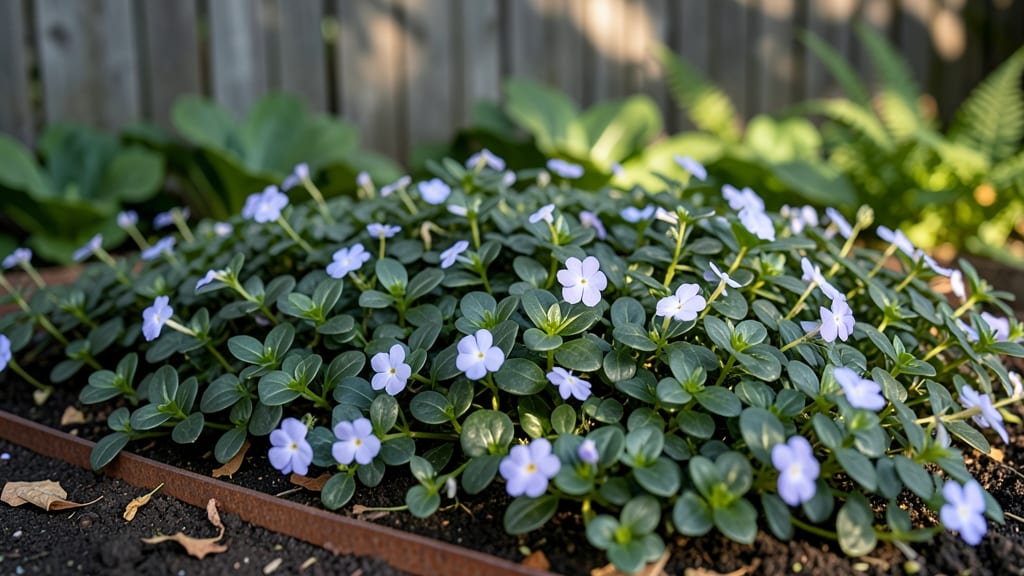
This vinca minor perennial—that tough, evergreen spreader—has saved my shady garden more times than I can count. 🌿 It thrives where nothing else will, smothering weeds and staying lush even when my other plants give up.
If you've got a dark corner that looks like a barren desert, this is your plant.
The secret to happy vinca minor is simple: well-draining soil and partial to full shade. It handles clay, rocky ground, or even poor soil better than most perennials, and once established, it barely needs water.
I've seen it bounce back after weeks of drought, while fussy plants nearby wilted. The key is planting in early spring or fall when roots can settle before extreme weather.
You'll love how it spreads—3-6 inches per year—creating a dense, weed-blocking mat that stays green year-round. The tiny purple or white flowers add a delicate touch in spring, and the glossy leaves keep looking fresh even in winter.
It's the kind of plant that makes neighbors ask, "What's that?" so you can brag about your shade-loving superhero.
Whether you're using it as ground cover, a border, or to fill gaps between stepping stones, vinca minor is impossible to mess up. Let's get yours growing strong—it's one of the easiest perennials I've ever worked with, and it rewards patience with years of effortless beauty.
📚 In This Guide
- What you need
- Instructions
- Tips and common mistakes
- Wrapping up and next steps
What you need
- ● Vinca Minor Plants: 1–3 nursery-grown plants (6–12 inches tall, potted) or
- ● Seeds (if starting from scratch—germination can be slow!)
- ● Soil: Well-draining, moist but not soggy soil (pH 5.0–7.0)
- ● Compost or organic matter (1–2 cups per planting hole)
- ● Location: Partial to full shade (dappled sunlight is ideal)
- ● Protect from strong winds (delicate foliage!)
- ● Gardening Tools: Trowel or hand shovel
- ○ Garden gloves (optional but recommended!)
- ● Measuring tape or ruler (for spacing)
- ● Watering Supplies: Watering can or hose with a gentle spray nozzle
- ● Mulch (2–3 inches of shredded bark or pine needles)
- ○ Optional (But Helpful!): Slow-release fertilizer (balanced 10-10-10)
- ● Edging stones or landscape fabric (to contain spread)
- ● Pruning shears (for shaping after establishment)
Step-by-Step instructions for planting and establishing vinca minor
Here’s how to get your shade-loving vinca minor off to a lush, evergreen start.
🌱 Step 1: Choose the Perfect Planting Spot
Vinca minor thrives in partial to full shade, so pick a location that gets less than 4 hours of direct sun daily. I always test the spot first by observing how much light it gets over a few days—this helps avoid leggy growth later. The soil should drain well but stay moist, so avoid low-lying areas where water pools after rain.
If your garden has heavy clay soil, amend it with 2-3 inches of compost before planting. Vinca minor tolerates a range of soil types, but it spreads best in loose, fertile ground. Press your finger 1 inch deep into the soil—if it feels compacted, add a handful of perlite or coarse sand to improve drainage.
🪴 Step 2: Dig and Plant with Proper Spacing
Dig holes twice as wide as the root ball but only as deep as the container’s base. Vinca minor has shallow roots, so burying it too deep can suffocate the plant. Gently loosen the roots if they’re circling in the pot—this encourages outward growth instead of struggling to break free.
Space plants 12-18 inches apart for a dense ground cover. If you’re planting along a border or under trees, you can space them closer (8-12 inches) for faster coverage. Water each hole deeply before placing the plant in, then fill in with soil while pressing lightly to remove air pockets.
💧 Step 3: Water Deeply and Mulch to Retain Moisture
After planting, water deeply until the soil is moist 6 inches down. Vinca minor is drought-tolerant once established, but young plants need consistent moisture. I like to water in the early morning so the foliage dries quickly, reducing fungal risks. Avoid overhead sprinkling—water at the base instead.
Spread 2-3 inches of mulch (like shredded bark or pine needles) around the plants, keeping it 2 inches away from the stems. Mulch helps retain moisture and suppresses weeds, which is especially helpful in shaded areas where grass struggles to grow. Replenish mulch as it breaks down over time.
☀️ Step 4: Monitor and Encourage Spread
Vinca minor spreads via underground runners, so give it time to establish before expecting full coverage. In the first growing season, focus on keeping the soil evenly moist but not soggy. You’ll notice new shoots appearing along the runners—these are your plant’s way of claiming space.
If you want a neater look, trim back long stems in early spring before new growth starts. For a wild, natural spread, just let it go—it’s tough enough to handle foot traffic once established. Fertilize lightly in early spring with a balanced, slow-release fertilizer (like 10-10-10) if your soil is poor.
Tips & tricks for perfect vinca minor planting
A few simple tricks will help your vinca minor establish beautifully and spread like a pro. These are the lessons I learned after watching my first few plantings struggle—don't make my mistakes!
Soil Test First: Before planting, do a simple soil test by pressing your finger 1 inch deep into the ground. If it feels compacted like wet clay, you'll need to improve drainage. I've found that adding a handful of perlite or coarse sand to the planting hole makes all the difference for vinca's shallow roots. This prevents the classic "waterlogged roots" problem that causes yellowing leaves.
Root Care in Step 2: When removing vinca from its container, gently tease apart any circling roots with your fingers. I used to just plop them in the hole, but now I take the extra 30 seconds to loosen them. This encourages outward growth rather than struggling to break free, which means faster establishment and better coverage. Think of it like giving your plant a good stretch after being cramped in a pot!
Watering Wisdom: The deep watering in Step 3 is crucial—aim for soil that's moist 6 inches down, not just damp at the surface. I've seen vinca plants wilt dramatically when they're only getting surface moisture. Watering in the early morning gives foliage time to dry, which prevents fungal issues that thrive in damp shade. A simple watering can with a narrow spout makes this much easier than trying to use a hose.
Mulch Placement: Keep that 2-3 inches of mulch 2 inches away from plant stems to prevent rot. I learned this the hard way when I piled mulch right against the base—it created a perfect environment for fungal growth. Spread it like a donut around your plants, and you'll maintain that perfect moisture balance without risking disease.
Pro Tips for Vinca Minor Perennial
- A few simple tricks will help your vinca minor establish beautifully and spread like a pro.
- Soil Test First: Before planting, do a simple soil test by pressing your finger 1 inch deep into the ground.
- Root Care in Step 2: When removing vinca from its container, gently tease apart any circling roots with your fingers.
Frequently asked questions
Got questions about Vinca minor? You’re not alone!
Here are some of the most common queries—plus quick, practical answers to help you grow this shade-loving perennial with confidence.
How fast does Vinca minor spread, and can I control it?
Vinca minor spreads aggressively via underground runners, often expanding 1–2 feet per year. To manage it, trim back runners in early spring or use a barrier like edging or landscape fabric. For a contained look, plant in pots or raised beds!
When is the best time to plant Vinca minor?
Plant Vinca minor in early spring or fall for the best root establishment. Avoid extreme heat or frost, as young plants need time to acclimate. If transplanting mature plants, water deeply for the first 2 weeks to reduce shock.
Does Vinca minor attract bees or butterflies?
While Vinca minor isn’t a heavy nectar producer, its small purple flowers may attract bees and butterflies occasionally. For pollinator powerhouses, pair it with heuchera or hostas, which draw more wildlife.
What pests or diseases should I watch for with Vinca minor?
This hardy plant is disease-resistant, but watch for aphids or slugs in damp conditions. Remove affected leaves promptly. Overwatering can cause root rot, so ensure well-draining soil.
Are there shade-tolerant alternatives to Vinca minor?
If you want similar evergreen ground cover, try pachysandra, lamium, or ajuga. For flowering options, heuchera (coral bells) or astilbe thrive in shade too!
Wrapping up and next steps
Vinca minor is a low-maintenance, shade-loving superstar that brings year-round beauty to your garden with minimal effort. Whether you’re a beginner or a seasoned gardener, its hardy nature and vibrant foliage make it a fantastic choice for ground cover, borders, or even container gardening.
Ready to transform your shady spots into lush, green havens? Start planning your planting schedule—spring or early fall are ideal times to get those roots established!
🌱 Pro tip: Snag a few plants (or seeds) and experiment with placement—your garden will thank you!