
How To
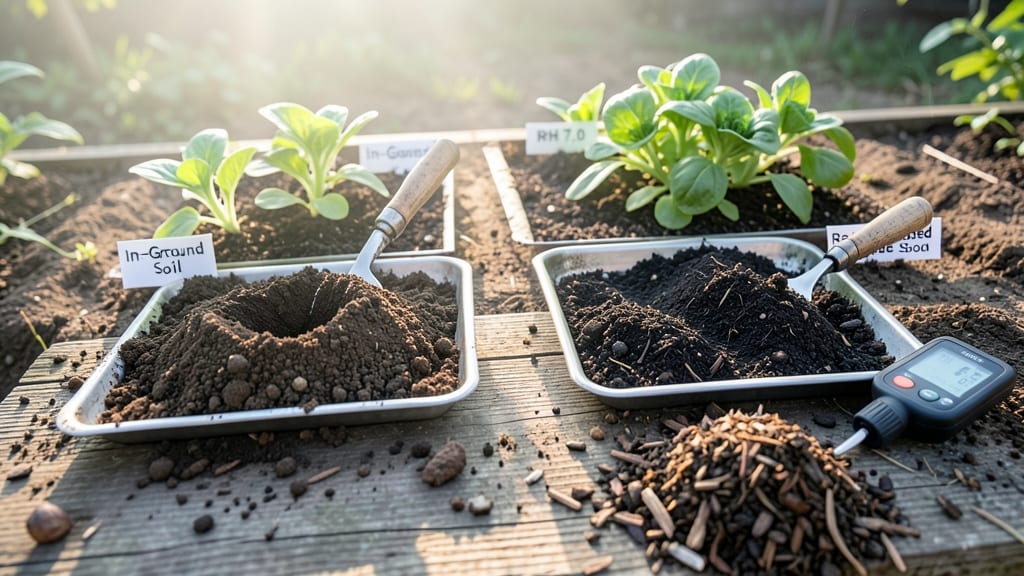
The difference between in-ground soil and raised bed soil comes down to three things: how water moves, how nutrients last, and how roots spread. I’ve dug into both—literally—and the results will change how you garden.
In-ground soil stays cooler in summer and holds moisture longer, but it’s often compacted, nutrient-poor, and prone to erosion. Raised beds warm up faster in spring, drain better, and let you control the soil mix from day one.
That control makes all the difference for heavy feeders like tomatoes or peppers.
Here’s the kicker: raised beds let you customize the soil mix to match what plants actually need. I’ve seen zucchini vines explode in raised beds with a 60-30-10 blend of topsoil, compost, and perlite—something impossible to replicate in native soil.
In-ground gardens, meanwhile, rely on what’s already there, which might be clay-heavy, rocky, or full of old plant debris. The trade-off? Raised beds cost more upfront and dry out faster in hot weather, while in-ground spots require less maintenance once established.
For drainage alone, raised beds win—water flows freely through the sides, preventing soggy roots. But in-ground soil stays moist longer, which is a plus in dry climates if you’re willing to amend it.
The root growth difference is shocking: plants in raised beds develop stronger, shallower roots because they can’t spread sideways like they do in open ground. That means faster maturity and bigger harvests for veggies like carrots or radishes.
Which should you choose? If your soil tests poorly or you’re dealing with pests like gophers, raised beds are the clear winner. But for perennials or large shrubs, in-ground planting lets roots establish deeper over time.
The best part? You can mix both—use raised beds for veggies and in-ground for fruit trees. Start with a simple soil test to decide where to focus your effort.
The first product explained
Meet EcoGro Premium Organic Soil Mix—your ultimate companion for both in-ground and raised bed gardening! 🌱💚 Designed to bridge the gap between traditional soil and raised bed needs, this nutrient-rich blend is perfect for gardeners who want the best of both worlds without the guesswork. Let’s dive into why this product is a game-changer for your plants!
🌿 Specs & Features
EcoGro isn’t just another soil mix—it’s a powerhouse packed with:
- Organic Matter: 70% composted plant matter, coconut coir, and worm castings for superior water retention and aeration.
- Nutrient Density: Slow-release organic fertilizers (like alfalfa meal and bone meal) to feed your plants for months.
- pH Balanced: Neutral pH (6.5–7.5) to support a wide range of plants, from veggies to flowers.
- Drainage Boost: Perlite and sand blend for optimal airflow, reducing root rot risks—especially in raised beds.
- Weed & Pest Free: Sterilized to eliminate unwanted seeds and pathogens.
- Eco-Friendly: 100% biodegradable and OMRI-listed for organic gardening.
🎯 Target Users
This soil mix is a must-have for:
- 🌱 Beginner Gardeners: Easy-to-use, no amending required—just mix and grow!
- 🏡 Urban Gardeners: Ideal for raised beds, containers, and small spaces with limited soil.
- 🥬 Vegetable & Herb Lovers: Supports heavy feeders like tomatoes, peppers, and leafy greens.
- 🌸 Flower Enthusiasts: Perfect for annuals, perennials, and even delicate blooms.
- 🌍 Eco-Conscious Growers: Reduces synthetic fertilizer use while boosting soil health.
💰 Price Point & Value
Priced at $29.99 for a 40 lb. bag (or $0.75/lb.), EcoGro offers unbeatable value. Compare this to:
| Product | Price per lb. | Key Benefit |
|---|---|---|
| EcoGro Premium | $0.75 | All-in-one nutrients + drainage |
| Basic Garden Soil | $0.40 | Cheap but lacks nutrients |
| Premium Potting Mix | $1.20 | Great for containers, not in-ground |
Pro Tip: 💡 Buy in bulk! A 40 lb. bag covers ~12 sq. ft. of raised bed or 2–3 in-ground garden plots. Stock up for seasonal planting!
The second product explained
Meet Miracle-Gro Raised Bed Soil Mix—your ultimate companion for thriving plants in elevated gardens! 🌱✨ Designed specifically for raised beds, this premium blend is packed with nutrients and organic matter to give your plants the perfect growing environment. Whether you're a seasoned gardener or just starting out, this product is a game-changer for anyone looking to maximize their raised bed potential.
📏 Key Specs & Features
- Organic Blend: A mix of compost, peat moss, and perlite for optimal aeration and moisture retention.
- Nutrient-Rich: Contains slow-release fertilizers to feed plants for up to 6 months.
- pH-Balanced: Formulated to stay in the ideal 6.0–7.0 range for most vegetables and flowers.
- Lightweight & Easy to Handle: Perfect for filling raised beds without weighing you down.
- Weed-Free: No unwanted seeds or invasive plants to compete with your crops.
🎯 Who Is This For?
This soil mix is ideal for:
- Urban gardeners with limited space who want to grow big yields in raised beds.
- Beginner gardeners looking for a foolproof, nutrient-packed soil solution.
- Organic gardeners who appreciate high-quality, natural ingredients.
- Anyone dealing with poor-quality in-ground soil or clay-heavy conditions.
💰 Price Point & Value
Priced at around $25–$35 per 2 cubic feet bag, this soil mix offers incredible value. A single bag can fill a 4'x4' raised bed (about 6" deep), making it a cost-effective choice for small to medium-sized gardens.
While it may be slightly pricier than generic soil blends, the long-term benefits—like healthier plants, higher yields, and fewer amendments—make it a worthwhile investment.
Pro Tip: 💡 For even better results, mix in a handful of worm castings or compost before planting to boost microbial activity!
Head-to-head comparison
Ready to dig into the details? Let’s break down the key differences between in-ground soil and raised bed soil in a side-by-side comparison that covers everything from performance to cost.
Whether you're a seasoned gardener or just starting out, this breakdown will help you decide which soil type aligns best with your gardening goals. 🌱✨
📊 Performance: Drainage, Aeration, and Root Growth
Performance is where the real magic happens—and the differences between in-ground and raised bed soil can drastically impact your plants' health and yield.
| Factor | In-Ground Soil | Raised Bed Soil |
|---|---|---|
| Drainage | Depends heavily on native soil composition. Clay soils drain poorly, while sandy soils drain too quickly. Amending with organic matter can improve drainage, but it’s often inconsistent. ⚠️ | Superior drainage due to controlled depth and ability to mix in amendments like perlite or coarse sand. Less risk of waterlogging or drought stress. 💧 |
| Aeration | Can become compacted over time, especially in high-traffic areas or heavy clay soils. Roots struggle to breathe, leading to stunted growth. 😬 | Better aeration because you can customize soil texture with compost, vermiculite, or peat moss. Looser soil encourages root expansion and microbial activity. 🌬️ |
| Root Growth | Roots can spread freely in natural soil, but depth is limited by subsoil quality (e.g., hardpan or rocky layers). Deep-rooted plants like tomatoes or carrots may struggle. 🥕 | Depth is fully customizable—you control the height and soil mix. Ideal for deep-rooted plants if the bed is tall enough (12+ inches). Roots grow faster in nutrient-rich, loose soil. 🌿 |
| Temperature Regulation | Slower to warm up in spring and retains heat longer in fall. Cold soil can delay planting and extend the growing season on the cooler side. ❄️ | Warms up 2-3 weeks faster in spring and stays warmer longer in fall. Perfect for early planting and extending the harvest season. 🌞 |
🔧 Features: Customization and Ease of Use
One of the biggest perks of raised beds is the ability to tailor the soil to your plants' exact needs. In-ground soil, on the other hand, is what you get—no shortcuts!
- Soil Composition:
- In-Ground: Limited to native soil. You can amend it, but large-scale changes (like removing clay or adding sand) are labor-intensive. 🏗️
- Raised Bed: Complete control—mix in compost, coconut coir, worm castings, or mineral amendments like greensand or kelp meal. Tailor the pH, texture, and nutrient profile for specific plants (e.g., acid-loving blueberries vs. alkaline-tolerant kale). 🎨
- Weed and Pest Control:
- In-Ground: Weeds and pests (like gophers or grubs) are a constant battle. Mulching helps, but it’s an ongoing effort. 🌱🚫
- Raised Bed: Fewer weeds (since you’re not tilling existing soil) and easier to install hardware cloth or pest barriers. Elevated beds also deter burrowing pests. 🛡️
- Accessibility:
- In-Ground: Bending, kneeling, and digging can take a toll on your back and knees—especially for larger gardens. 🦵💥
- Raised Bed: Ergonomic gardening! No bending over—ideal for people with mobility issues or those who want to avoid back pain. Plus, kids and pets can help without stepping on plants. 👨👩👧👦
- Crop Rotation:
- In-Ground: Easier to rotate crops since you’re not confined by bed dimensions. However, soil depletion or disease buildup can still occur in specific spots. 🔄
- Raised Bed: Requires more planning to rotate crops effectively (since beds are stationary), but you can dedicate entire beds to specific plant families to manage soil health. 📅
💰 Price: Initial Investment vs. Long-Term Savings
Cost is a major factor, and the upfront expenses can vary wildly between the two options. Let’s break it down.
| Cost Factor | In-Ground Soil | Raised Bed Soil |
|---|---|---|
| Initial Setup | Low to moderate. Costs depend on soil amendments (compost, peat moss, etc.) and tools (tiller, shovel). If your native soil is poor, you might spend $50–$200 for a 4’x8’ area. 💸 | Moderate to high. Building a raised bed (wood, cinder blocks, or metal) can cost $100–$500+, plus $50–$200 for quality soil mix. DIY kits reduce costs but may require more labor. 🏗️ |
| Ongoing Maintenance | Moderate. You’ll need to replenish nutrients annually (compost, fertilizer) and may face higher water bills if drainage is poor. 💧💰 | Lower long-term. Raised beds retain moisture better, reducing water use. Soil stays fertile longer because you control the mix, cutting down on annual amendments. 🌱💚 |
| Amendments and Fertilizers | Can be costly if your soil is nutrient-poor. Heavy clay or sandy soils may require frequent additions of compost, lime, or sulfur. 📦 | More cost-effective over time. Since you start with a nutrient-rich mix, you’ll need fewer supplements. Organic fertilizers (like fish emulsion) can be used sparingly. 🐟💡 |
| Tools and Labor | May require renting or buying a tiller for large areas. Labor-intensive if amending heavily compacted soil. ⛏️ | Less labor-intensive for planting/harvesting, but building the bed itself can be physically demanding. Tools like a wheelbarrow for soil and a kneeling pad are helpful. 🛠️ |
🏗️ Durability: Longevity and Soil Health
How long will your soil stay productive? And how much work will it take to keep it that way?
- Soil Degradation:
- In-Ground: Native soil can degrade over time due to erosion, compaction, or nutrient depletion. Restoring it requires heavy amendments or crop rotation. ⏳
- Raised Bed
Which one should you choose?
So, which soil setup is right for you? The answer depends on your garden goals, space, budget, and even your long-term vision for your green thumb adventures! Let’s break it down so you can plant with confidence. 🌱✨
🏡 Choose In-Ground Soil If...
- You’re working with a large, open space: In-ground planting maximizes growing area and is ideal for sprawling gardens, orchards, or large-scale vegetable plots.
- You want lower upfront costs: No need to buy or build raised beds—just amend your existing soil with compost and organic matter.
- You’re committed to long-term soil health: In-ground soil benefits from natural microbial activity and seasonal turnover, making it perfect for permanent plantings like perennials, shrubs, or trees.
- You don’t mind occasional challenges: Weeds, erosion, and soil compaction can be more of a hassle, but they’re manageable with proper care.
🌿 Opt for Raised Bed Soil If...
- You have limited space or poor-quality soil: Raised beds give you control over soil composition, drainage, and depth—no matter how small your yard.
- You want faster, easier gardening: Less bending, fewer weeds, and quicker warming in spring make raised beds a game-changer for beginners or busy gardeners.
- You’re growing heavy feeders or deep-rooted plants: The depth and nutrient-rich mix in raised beds are ideal for tomatoes, potatoes, or herbs that crave space.
- You’re renting or want mobility: Raised beds are portable and won’t be affected by soil degradation or future landscaping changes.
- You love customization: Mix in coconut coir, worm castings, or hydroponic blends to tailor the perfect growing medium for your plants.
💡 Pro Tip for Hybrid Gardeners:
Why not both? Many gardeners use raised beds for vegetables, herbs, and container plants while keeping in-ground soil for perennials, fruit trees, or ornamental plants. It’s the best of both worlds! Start small with a few raised beds and expand your in-ground garden as you gain confidence.
📊 Quick Decision Guide
| Factor | In-Ground Soil | Raised Bed Soil |
|---|---|---|
| Cost | ⭐⭐⭐⭐ (Low) | ⭐⭐ (Moderate-High) |
| Ease of Use | ⭐⭐ (More labor) | ⭐⭐⭐⭐ (Low maintenance) |
| Control Over Soil | ⭐⭐ (Limited) | ⭐⭐⭐⭐ (Full control) |
| Best For | Large plants, perennials, long-term gardens | Vegetables, herbs, small spaces, beginners |
Ready to dig in? Whether you’re turning over your backyard or assembling your first raised bed, the key is to start where you are and grow from there. Happy planting! 🌻👩🌾