
Flowers
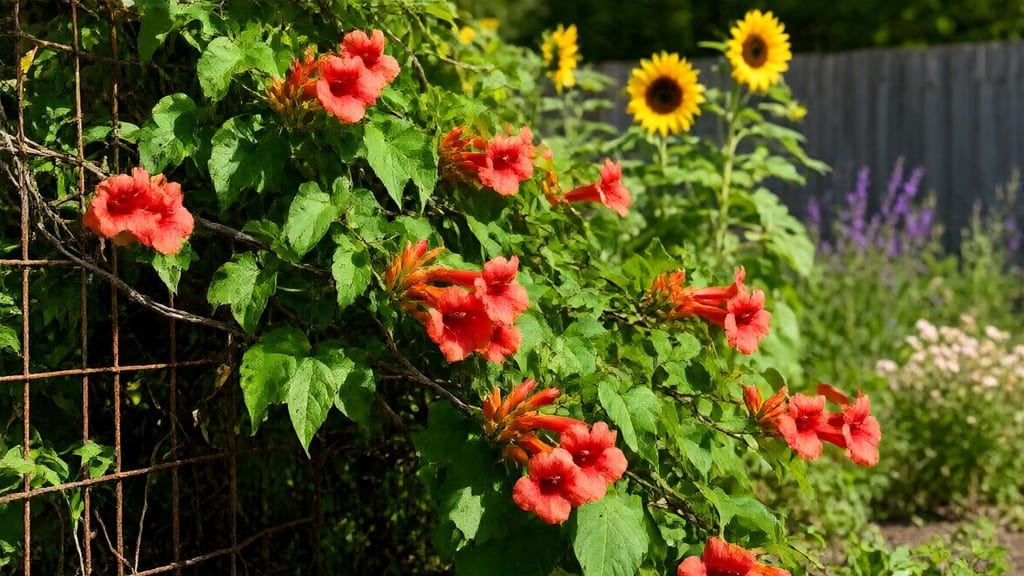
Growing trumpet vine perennials transforms bare walls into vibrant vertical gardens. 🌿 I planted mine last spring, and now it’s a hummingbird magnet with fiery orange trumpet-shaped blooms that last from early summer until frost.
The key is giving it room to climb—this plant grows aggressively, so choose a sturdy trellis or fence that can handle its weight.
The soil doesn’t need to be fancy, but it should drain well—trumpet vines hate soggy roots. Full sun is a must for those bold blooms, and spacing plants 10–15 feet apart prevents overcrowding. Once established, it’s drought-tolerant, but young plants need consistent watering until their roots take hold.
By midsummer, you’ll have a living tapestry of color that keeps blooming until fall. The foliage turns golden in autumn, and with minimal pruning, it returns even stronger next year.
It’s the kind of plant that makes neighbors stop and ask, “What is that?”—and you get to say, “It’s my trumpet vine.”
Works beautifully along fences, arbors, or even old barns—just be prepared for its rapid growth. If you love low-maintenance plants that deliver high-impact color, this is your go-to perennial.
📚 In This Guide
- What you need
- Instructions
- Tips and common mistakes
- Wrapping up and next steps
What you need
- ● Trumpet Vine Seeds or Plants: Seeds: 10–20 seeds (for a fuller display, plant extra)
- ● OR 1–2 healthy nursery-grown plants (mature vines grow 15–20 ft!)
- ● Soil: Well-draining, slightly acidic to neutral (pH 6.0–7.0)
- ● Fertilizer: Balanced 10-10-10 or slow-release granular fertilizer (1–2 tbsp per plant)
- ○ Optional: Compost or organic matter (e.g., aged manure) for nutrient boost
- ● Support Structure: Trellis, arbor, or sturdy fence (minimum 8–10 ft tall for full growth)
- ○ Optional: Wire mesh or twine for guiding young vines
- ● Watering Supplies: Garden hose with adjustable nozzle or watering can
- ○ Optional: Drip irrigation system (for consistent moisture)
- ● Pruning Tools: Sharp bypass pruners (for clean cuts)
- ● Garden shears (for shaping)
- ● Sunlight: Full sun (6+ hours daily) for optimal blooms
- ● Climate: USDA Zones 7–11 (hardy to 0°F with protection)
- ● Space: Minimum 6–10 ft apart (vines spread aggressively!)
- ● Patience: Seeds take 1–2 years to flower; plants bloom first year
- ● 🔥 Soil Test: Check pH before planting—trumpet vines thrive in slightly acidic soil.
- ● ✨ Mulch: Apply 2–3 inches of mulch to retain moisture and suppress weeds.
- ● 🎯 Deadheading: Remove spent blooms to encourage non-stop summer-to-fall color!
Step-by-Step instructions for planting and cultivating trumpet vine
Here's how to establish a stunning, long-lived trumpet vine that thrives for decades.
🌱 Step 1: Choose the Perfect Planting Location
Trumpet vine thrives in full sun, so select a spot that gets at least 6-8 hours of direct sunlight daily. I always check the site in late afternoon when the sun is strongest—this reveals any shaded areas that might limit growth. The vine needs a sturdy support structure like a trellis, fence, or pergola at least 12 feet tall since mature vines can reach 30-40 feet.
Here's the thing—this plant spreads aggressively through roots, so avoid planting near sidewalks, driveways, or structures you don't want it to invade. The roots can push through concrete over time. I like to mark the planting area with stakes to visualize the mature spread before digging.
🪴 Step 2: Prepare the Soil and Plant
Trumpet vine tolerates various soil types but grows best in well-draining, slightly acidic to neutral soil with a pH between 6.0-7.0. Work in 2-3 inches of compost into the top 12 inches of soil to improve fertility and drainage. I always test drainage first by digging a hole, filling it with water, and watching how quickly it drains—if it takes more than 30 minutes, amend with sand or gravel.
Dig a hole twice as wide as the root ball but only as deep as the container's root system. Gently remove the plant from its container, loosen any circling roots with your fingers, and place it in the hole so the top of the root ball sits 1 inch below soil level. This prevents stem rot from sitting too low. Backfill with native soil, tamp lightly, and water deeply to settle everything.
☀️ Step 3: Provide Support and Initial Care
Immediately after planting, install your trellis or support structure within 12 inches of the plant. Trumpet vine grows quickly and needs something to cling to right away. I like to loosely tie the main stems to the support with soft twine or plant ties—this guides growth without restricting it. The vines will naturally twine around any structure as they mature.
Water deeply once weekly for the first 2 months to encourage deep root growth. You'll know it's time to water again when the top 2-3 inches of soil feel dry. Avoid overhead watering once flowers appear—wet blossoms attract disease. I always water at the base in the morning so foliage dries quickly.
✂️ Step 4: Prune for Health and Shape
Prune trumpet vine in late winter or early spring before new growth begins. Remove any dead, diseased, or crossing branches first. Then cut back 1/3 of the previous year's growth to encourage bushier flowering. I always make cuts just above a leaf node or bud—this ensures new growth emerges from the right spot.
Here's what I do for aggressive spreaders: If the vine starts invading unwanted areas, I dig up and remove any root suckers that appear more than 6 feet from the main plant. This keeps the vine where you want it while still allowing it to thrive. Never prune after mid-summer—new growth won't harden off before frost.
🌿 Step 5: Maintain Year-Round Beauty
Trumpet vine blooms from late spring through fall, but with proper care, it stays vibrant year-round. In early spring, apply a 2-3 inch layer of mulch around the base (keeping it 3 inches away from the stem) to retain moisture and suppress weeds. I use shredded bark mulch because it breaks down slowly and improves soil structure over time.
Fertilize lightly in early spring with a balanced 10-10-10 fertilizer—too much nitrogen makes it grow leaves instead of flowers. Watch for aphids on new growth; if you see sticky residue on leaves, spray with soapy water (1 tablespoon mild dish soap per gallon of water). The vine's bold foliage and flowers usually deter most pests naturally.
Tips & tricks for perfect trumpet vine cultivation
Here's what nobody tells you about getting that stunning trumpet vine to thrive for decades without turning into a garden nuisance.
Sunlight Secret: Those 6-8 hours of sunlight in Step 1 are non-negotiable. I've seen trumpet vines struggle in partial shade—leaves turn pale and flowers get sparse. If your yard has afternoon shade, consider planting near a south-facing wall or fence. Morning sun is great, but afternoon sun is what makes the difference for vibrant blooms.
Root Spread Reality: That aggressive root system in Step 1 isn't just talk. I learned this the hard way when my vine cracked my patio stones two years after planting. If you're planting near hardscapes, install a root barrier at least 2 feet deep before planting. It's worth the extra effort to protect your driveway and sidewalks.
Pruning Precision: When you're cutting back 1/3 of last year's growth in Step 4, make those cuts at a 45-degree angle just above a leaf node. This simple technique prevents water from pooling on the cut and reduces disease risk. I always sterilize my pruners with rubbing alcohol between cuts to keep infections at bay.
Soil Test Tip: Before amending your soil in Step 2, grab a soil test kit from your local garden center. Trumpet vines prefer that 6.0-7.0 pH range, but most garden soils are naturally outside this range. If your soil tests acidic, add lime; if it's alkaline, work in peat moss. The 30-minute drainage test is a great DIY check—if water pools after 30 minutes, you definitely need to amend.
Pro Tips for Trumpet Vine Perennial
- Here's what nobody tells you about getting that stunning trumpet vine to thrive for decades without turning into a garden nuisance.
- Sunlight Secret: Those 6-8 hours of sunlight in Step 1 are non-negotiable.
- Root Spread Reality: That aggressive root system in Step 1 isn't just talk.
Frequently asked questions
Got questions about growing and caring for your trumpet vine perennial? You're not alone!
Here are some of the most common queries—plus straightforward answers to keep your bold climber thriving.
Is trumpet vine truly perennial in cold climates?
While trumpet vine (Campsis radicans) is hardy in USDA zones 4-9, it often dies back to the ground in colder winters but regrows from the roots. In zones 4-5, mulch heavily and protect young plants with burlap wraps. For extra insurance, grow it in containers and overwinter indoors—just replant after the last frost!
How fast does trumpet vine grow, and when will it flower?
Trumpet vine is a fast grower, often climbing 10-15 feet per season! With proper care, you’ll see vibrant orange or red flowers by late summer to fall. For earlier blooms, choose established plants (3+ years old) or provide full sun and regular watering—they’ll reward you with dramatic color sooner.
Can I grow trumpet vine in a container, or is it only for trellises?
Trumpet vine thrives in large containers (15+ gallons) with drainage holes. Use a well-draining potting mix and a trellis or sturdy cage for support. Pro tip: Move pots to warmer spots in winter if temps dip below 20°F. Just ensure the container is at least 12 inches wide to accommodate its sprawling roots.
Why aren’t my trumpet vine flowers lasting long, and how can I fix it?
Short-lived blooms often mean overwatering or poor drainage. Trumpet vines prefer moderate watering—let the top inch of soil dry between waterings. Deadhead spent flowers to encourage more blooms, and ensure it gets 6+ hours of sunlight daily. Bonus: Hummingbirds love them, so avoid pesticides!
Are there non-invasive alternatives to trumpet vine?
If you’re concerned about trumpet vine’s aggressive roots, try these equally stunning but less invasive climbers:
- Clematis (varieties like ‘Jackmanii’ or ‘Nelly Moser’)
- Honeysuckle (e.g., Lonicera sempervirens)
- Passionflower (Passiflora incarnata)
- Cobaea scandens (cup-and-saucer vine, annual but fast-growing)
These offer color and charm without the spread—perfect for smaller gardens or containers!
Wrapping up and next steps
Transforming your garden with a trumpet vine perennial is a rewarding way to bring vibrant, long-lasting color and life to any space. Whether you're drawn to its striking blooms, easy care, or versatility as a climber, this plant offers a bold and low-maintenance solution for year-round beauty.
Ready to take the next step? Start by selecting the perfect spot in your garden, gather your supplies, and watch as your trumpet vine thrives and flourishes! 🌿✨