
Flowers
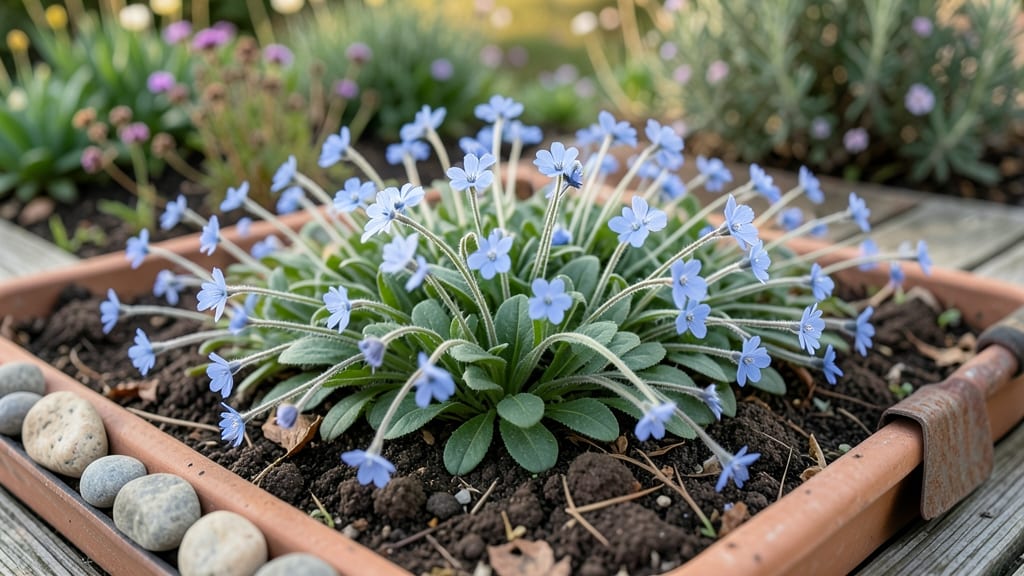
Tiny blue perennial flowers are the secret weapon for gardens that look effortlessly polished. 💙 I discovered them after my neighbor’s rock garden became the talk of the neighborhood—those delicate sprays of blue against silver foliage stopped every passerby.
These aren’t just pretty faces; they’re pollinator magnets that keep blooming from spring through fall, with some even lingering into winter.
The magic happens when you pair them with the right companions. Try tucking them alongside silver-leaved plants like lamb’s ear or dusty miller—the contrast makes the blues pop. White blooms from alyssum or sweet alyssum create a dreamy, airy effect, while deep purple salvias add drama.
For containers, mix them with trailing lobelia or creeping thyme to soften edges and create a cascading effect.
Place them where they’ll shine: along borders, in crevices of rock gardens, or spilling over container edges. Their low-maintenance nature means you’ll spend more time admiring them than fussing over them.
Just ensure they get the right light—most thrive in partial shade, though some like full sun—so check their tags before planting. The result? A garden that feels alive, textured, and impossibly inviting.
Here’s the best part: they layer beautifully. Start with early bloomers like aubrieta for spring color, then let myosotis (forget-me-nots) take over in late spring, followed by lobelia for summer.
By autumn, you’ll have a seamless transition of color that keeps your garden looking fresh all season long. Ready to transform a corner of your yard into a blue-hued paradise?
📚 In This Guide
- What you need
- Instructions
- Tips and common mistakes
- Wrapping up and next steps
What you need
- ● Tiny blue perennial flowers: Choose from varieties like Myosotis sylvatica (Forget-me-not), Nemophila menziesii (Baby Blue Eyes), or Ajuga reptans (Bugleweed). Buy 5–10 plants (or seeds) for a vibrant display.
- ● Well-draining potting mix: 1–2 cubic feet (for containers) or enough to fill garden beds (amend with compost for fertility).
- ● Containers or garden beds: Containers: 5–10-inch pots with drainage holes (1–2 plants per pot).
- ● Garden beds: Partial to full sun (6+ hours/day) with moist, well-drained soil.
- ● Slow-release fertilizer: Balanced 10-10-10 or organic options like fish emulsion (follow package rates).
- ● Mulch: 2–3 inches of organic mulch (e.g., shredded bark or straw) to retain moisture.
- ● Garden trowel or transplant spade (for digging holes).
- ● Watering can or hose with a gentle spray nozzle (avoid overwatering!).
- ○ Gloves (optional but handy for messy soil).
- ● Pruners (for trimming spent blooms or overgrown foliage).
- ○ pH test kit (optional but helpful—ideal soil pH: 6.0–7.0).
- ● Pollinator-friendly companions: Plant lavender, bee balm, or yarrow nearby to attract more bees and butterflies!
- ● Decorative stones or pebbles (for container gardens to enhance drainage).
- ● Compost tea or liquid fertilizer (for a nutrient boost during growing season).
- ● Stakes or small flags (to mark new plantings if you’re forgetful like us!).
How to create a pollinator-friendly blue perennial border
Here’s how to design a vibrant, low-maintenance perennial border that thrives year-round.
🌱 Step 1: Select the Right Blue Perennials for Your Climate
Start with a mix of 4-6 varieties that bloom at different times for continuous color. I recommend 4 plants per serving—catmint (Nepeta), salvia (Salvia nemorosa), lobelia (Lobelia erinus), and blue fescue grass (Festuca glauca)—since they all thrive in similar conditions and attract pollinators relentlessly. Check your USDA hardiness zone to ensure cold tolerance; most of these handle zones 3-9 with ease.
For full sun spots, catmint and salvia are unbeatable—they’ll bloom from late spring to fall with minimal care. If you have partial shade, lobelia and blue flag iris (Iris versicolor) will fill gaps beautifully. I always group plants by height: tall salvia at the back, mid-height catmint in the middle, and low lobelia or creeping thyme at the front.
☀️ Step 2: Prepare the Soil for Long-Term Health
Amend your native soil with 2-3 inches of compost and 1 part perlite to improve drainage—blue perennials hate soggy roots. I dig in 1 gallon of compost per 4 square feet of bed, mixing it down 8-10 inches deep to encourage deep root growth. Test your soil’s pH; most of these prefer 6.0-7.0, but blue flag iris tolerates slightly acidic soil.
If your soil is heavy clay, add 1 part coarse sand to improve aeration. I like to sprinkle 1 cup of bone meal at planting time to boost phosphorus for strong root development. Water the amended soil deeply 2-3 days before planting so it’s moist but not waterlogged—this helps roots establish faster.
🪴 Step 3: Plant for Pollinator Success
Space plants 12-18 inches apart for airflow and easy maintenance. Dig holes twice as wide as the root ball but only as deep—planting too deep can suffocate stems. I always loosen the roots slightly before placing them in the hole to encourage spreading. Press soil firmly around the base but leave a 1-inch watering well at the center.
Mulch with 2 inches of shredded bark (not dyed mulch—it’s toxic to soil) to retain moisture and suppress weeds. Keep mulch 3 inches away from stems to prevent rot. Water deeply right after planting, then again in 3-5 days to settle the soil. You’ll know it’s right when water drains through in 10-15 minutes—no puddling.
💧 Step 4: Water and Feed for Year-Round Blooms
Water deeply once a week in established beds, but check the top 2 inches of soil—if it’s dry, water again. Drip irrigation is ideal; it delivers moisture directly to roots without wetting foliage (which reduces disease). I fertilize lightly in early spring with 5-10-10 at ½ the recommended rate—too much nitrogen makes plants leafy but flowerless.
Deadhead spent blooms monthly to encourage reblooming, but leave some seed heads for winter interest and food for birds. In late fall, cut back tall perennials by ⅓ to prevent flopping in spring. The blue fescue grass can stay upright all winter—it’s a stunning contrast against snow.
✂️ Step 5: Prune and Divide for Longevity
Divide clumps every 3-4 years in early spring before new growth starts. Dig up the entire plant, separate sections with a clean knife, and replant the healthiest pieces. I’ve found that catmint and salvia divide easily—just snap them apart if they’re not root-bound. Replant divisions immediately in fresh soil to minimize stress.
Prune aggressive spreaders like creeping thyme in early fall to keep them contained. For woody stems (like salvia), cut back to 4-6 inches tall in late winter. You’ll see fresh, vibrant growth within 3-4 weeks—that’s your sign the plants are recovering well.
Tips & tricks for perfect pollinator-friendly blue perennial borders
These simple yet game-changing strategies will help your blue perennial border thrive year-round while maximizing pollinator appeal.
The Plant Layering Secret: In Step 1, when arranging your 4-6 varieties by height, I recommend adding a final layer of creeping thyme at the very front—its fragrant blooms attract bees while preventing erosion. The key is to stagger heights by 3-4 inches between each tier. This creates visual depth and ensures no plant gets overshadowed, which is especially important for the lobelia that needs some light to bloom properly.
Soil Science Tip: For Step 2's soil prep, don't just amend the top layer—dig down 8-10 inches to break up compacted soil. I use a broadfork to loosen the subsoil before adding compost. This deep aeration prevents root-bound plants and helps establish strong foundations for your salvia and catmint, which have deep taproots. The 1 gallon of compost per 4 square feet should be mixed thoroughly to avoid pockets of rich soil that can cause uneven growth.
Watering Wisdom: The 10-15 minute drainage test in Step 3 is crucial—if water pools after 15 minutes, your soil is too dense. Add more perlite or coarse sand to improve aeration. I water deeply right after planting and again in 3-5 days to establish roots before switching to the weekly schedule. For established beds, I use a moisture meter to check the top 2 inches—this prevents both underwatering and overwatering, which can leach nutrients from the soil.
Pollinator Power-Up: In Step 4, leave 20-30% of seed heads on your perennials after deadheading. These provide food for birds and overwintering insects while maintaining the border's aesthetic. For extra pollinator appeal, consider adding optional purple coneflower or black-eyed Susan to your mix—they complement the blues beautifully and attract even more beneficial insects.
Pro Tips for Tiny Blue Perennial Flowers
- These simple yet game-changing strategies will help your blue perennial border thrive year-round while maximizing pollinator appeal.
- The Plant Layering Secret: In Step 1, when arranging your 4-6 varieties by height, I recommend adding a final layer of creeping thyme at the very front—its fragrant blooms attract bees while preventing erosion.
- Soil Science Tip: For Step 2's soil prep, don't just amend the top layer—dig down 8-10 inches to break up compacted soil.
Frequently asked questions
Got questions about tiny blue perennial flowers? You’re not alone! Here are some of the most common queries—and their answers—to help you grow a thriving pollinator haven with ease.
What are the easiest tiny blue perennials for beginners?
Start with Ajuga reptans (bugleweed) or Myosotis sylvatica (forget-me-nots)—both are hardy, low-maintenance, and bloom reliably. Phacelia campanularia (phacelia) is another great choice for its drought tolerance and pollinator appeal.
How long does it take for tiny blue perennials to establish and bloom?
Most tiny blue perennials take 1–2 years to fully establish from seed, with some (like Ajuga) blooming in their first year if planted as starts. Patience pays off—once rooted, they’ll reward you with years of color with minimal effort!
Are these flowers truly great for pollinators, or is it just marketing hype?
Not hype! Tiny blue perennials like Lobelia and Salvia varieties are pollinator magnets. Their nectar-rich blooms attract bees, butterflies, and hummingbirds. Pair them with native species (e.g., Baptisia) for a supercharged ecosystem boost.
Do tiny blue perennials need lots of water, or are they drought-tolerant?
Most thrive on moderate watering once established. Drought-tolerant picks like Phacelia or Ceratostigma plumbaginoides (leadwort) handle dry spells beautifully. Pro tip: Mulch to retain moisture and suppress weeds!
What’s the best way to keep tiny blue perennials from spreading too aggressively?
For spreaders like Ajuga or Creeping Phlox, trim back foliage after blooming or divide clumps every 2–3 years. Deadhead spent flowers to encourage tidier growth. Bonus: Their ground-cover habit suppresses weeds naturally!
Can I grow tiny blue perennials in containers or just in gardens?
Dwarf varieties like Nemophila menziesii (baby blue eyes) or Iberis sempervirens (candy tuft) thrive in containers. Use well-draining soil and ensure pots get 6+ hours of sun. Just monitor moisture—containers dry out faster!
Wrapping up and next steps
Tiny blue perennial flowers aren’t just a delightful addition to your garden—they’re a powerhouse for pollinators and year-round beauty! Whether you’re drawn to their whimsical charm or their low-maintenance resilience, these little blooms prove that big impact comes in small packages. 🌸
Ready to transform your space? Start by picking one or two varieties that thrive in your climate, then experiment with placement—whether in borders, containers, or wildflower meadows. Your garden (and the bees!) will thank you.