
Flowers
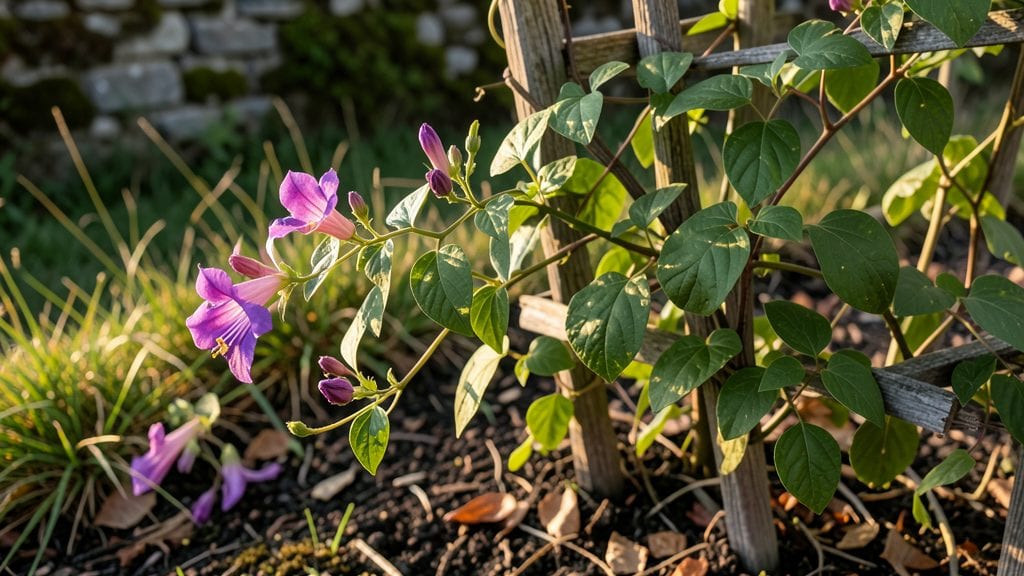
Growing purple perennial honeysuckle transforms your garden into a fragrant, hummingbird magnet without the fuss of chemical repellents. 🌿 I planted mine along a trellis last spring, and now it’s a lush, purple-blushed privacy screen that blooms from late spring until early fall.
The key is mimicking its wild habitat—moist but well-drained soil, partial shade, and a sturdy support structure for its twining vines.
This hardy climber thrives in zones 4-8, so it’s perfect for northern and southern gardens alike. Start with a sunny spot that gets at least 4-6 hours of morning sun—afternoon shade prevents wilting in hot climates.
Space plants 3-5 feet apart if training them on a fence or trellis, or let them sprawl naturally for a wild, cottage-garden look. Mulch with wood chips to retain moisture and deter pests organically.
By midsummer, you’ll have clusters of tubular purple flowers that hummingbirds can’t resist, followed by red berries that birds adore. Prune back leggy growth in early spring to encourage bushier blooms, and deadhead spent flowers to prolong the season.
The humane twist? Its natural pest-repelling properties keep aphids and Japanese beetles away—no sprays needed.
Works as a privacy screen, trellis climber, or ground cover in shady areas. Once established, it’s nearly maintenance-free and spreads reliably. Here’s how to get yours thriving from day one.
📚 In This Guide
- What you need
- Instructions
- Tips and common mistakes
- Wrapping up and next steps
What you need
- ● Purple perennial honeysuckle plants: 3–5 healthy nursery-grown plants (check for sturdy stems and lush foliage).
- ● Well-draining potting mix: 10–15 gallons (or enough to fill 3–5 planting holes, ~12" deep).
- ● Compost or organic fertilizer: 5 lbs (balanced 10-10-10 or slow-release option).
- ○ Mulch (optional but recommended): 2–3 yards of shredded bark or pine straw to retain moisture.
- ● Garden trowel or shovel: For digging planting holes (6" wide, 12" deep per plant).
- ○ Gloves (optional): To protect hands from thorns or rough soil.
- ● Watering can or hose with nozzle: For gentle, deep watering (1–2 gallons per plant post-planting).
- ○ Pruning shears (optional): For shaping or trimming after planting.
- ● Sunlight: A spot with partial shade to full sun (6+ hours/day ideal).
- ● Soil pH: Slightly acidic to neutral (6.0–7.5). Test with a soil kit if unsure.
- ● Space: 3–6 feet between plants for airflow and growth.
- ● Patience: These beauties thrive with time—expect blooms in 1–2 years!
Step-by-step instructions for planting purple perennial honeysuckle
Here's how I plant these tough, fragrant shrubs—no fuss, just reliable growth.
🌱 Step 1: Pick the Perfect Spot
Purple perennial honeysuckle thrives in partial shade to full sun, but I always choose a location with at least 4-6 hours of morning sunlight. The key is avoiding hot afternoon sun in dry climates—this plant wilts easily when stressed. Look for a spot where the soil stays moist but well-drained, like near a tree line or under a deciduous canopy that filters harsh rays.
I dig a hole twice as wide as the root ball but only as deep—burying too deep suffocates the roots. Loosen the sides of the hole with a shovel to encourage root spread. If your soil is heavy clay, mix in 2-3 inches of compost from the ingredients list into the bottom of the hole. This improves drainage without overwhelming the plant.
☀️ Step 2: Plant at the Right Time and Depth
Spring is ideal, but I've planted in early fall too—just finish 6-8 weeks before your first frost. The secret to depth is simple: plant the root ball just below soil level. You'll see a natural flare where the roots meet the trunk—this should sit 1 inch above the surrounding ground after backfilling. If you plant too deep, the stem rots; too shallow, and it dries out.
Place the plant in the hole and fill around the roots with the amended soil, pressing gently to remove air pockets. Water deeply until moisture reaches 6 inches down—you'll know it's enough when the surface looks dark and damp, not puddled. Mulch with 2-3 inches of wood chips (from the ingredients list) to retain moisture and block weeds.
💧 Step 3: Water and Monitor Early Growth
Keep the soil consistently moist for the first 30 days, but don't drown it. I water every 2-3 days in hot weather, checking by sticking my finger 2 inches deep—if it's dry, water again. Overwatering is the fastest way to kill honeysuckle, so I always let the top inch dry out between waterings. Purple honeysuckle has shallow roots, so shallow watering encourages them to spread outward.
You'll see new growth within 2-3 weeks—look for dark green leaves unfolding along the stems. If the leaves yellow or wilt, it's a sign of either too much water or not enough. Here's the thing: don't fertilize yet. The plant needs time to establish roots before absorbing nutrients. Wait until you see 4-6 inches of new growth before adding a balanced fertilizer.
✂️ Step 4: Prune and Maintain for Pest-Repelling Beauty
Prune in late winter or early spring before new growth starts. Cut back one-third of the oldest stems to encourage fresh growth and keep the shrub compact. I use clean, sharp shears to make cuts just above a leaf node—this prevents disease and promotes bushier growth. Remove any dead or crossing branches first; they compete for resources and attract pests.
The real magic happens when the plant matures. Purple honeysuckle naturally repels pests like aphids and Japanese beetles with its strong fragrance. To boost this effect, I lightly trim the tips of new growth in early summer—this encourages more blooms and denser foliage. Watch for tiny white flowers in late spring; they'll attract pollinators and set the stage for next year's growth.
Tips & tricks for perfect purple perennial honeysuckle planting
Here's what I've learned after years of growing these fragrant, pest-repelling shrubs—tricks that make all the difference between struggling plants and thriving ones.
Location Intelligence: The 4-6 hours of morning sunlight I mention isn't just about light—it's about timing. Early morning sun gives the plant energy without the afternoon heat stress that causes wilting. I've found the best spots are on the east side of buildings or under deciduous trees that provide afternoon shade automatically. If you're in a hot climate, consider a north-facing location entirely—this plant is surprisingly shade-tolerant once established.
Root Ball Rescue: When handling the root ball, I always untangle any circling roots gently with my fingers before planting. This prevents girdling as the plant grows. Also, if you're planting in clay soil, don't skip that 2-3 inches of compost mix—I've seen plants double in size their first year when planted in amended soil versus unamended. The key is mixing it into the bottom of the hole, not just scattering it around.
Watering Wisdom: That 30-day consistently moist period is crucial, but I've learned to adjust my watering based on weather. In summer heat, I water every 1-2 days instead of every 2-3 days. The finger test works best—stick your finger 2 inches deep at the base of the plant. If it feels dry, water until moisture reaches 6 inches down. Overwatering is worse than underwatering for these plants, so I always check for puddles after watering.
Pruning Precision: When pruning those one-third of oldest stems in Step 4, I make my cuts at a 45-degree angle just above a leaf node. This angle helps water run off instead of pooling at the cut. I've also found that pruning in late winter gives the plant a head start for spring growth. For early summer trimming to boost blooms, I only cut back about 10% of the new growth—not the full third—to maintain the plant's shape while encouraging more flowers.
Pro Tips for Purple Perennial Honeysuckle
- Here's what I've learned after years of growing these fragrant, pest-repelling shrubs—tricks that make all the difference between struggling plants and thriving ones.
- Location Intelligence: The 4-6 hours of morning sunlight I mention isn't just about light—it's about timing.
- Root Ball Rescue: When handling the root ball, I always untangle any circling roots gently with my fingers before planting.
Frequently asked questions
How fast does purple perennial honeysuckle grow, and when will it bloom?
This hardy vine grows 3–5 feet per year under ideal conditions, reaching 15–20 feet with proper support. Blooms typically appear in late spring to early summer (May–June in most U.S. zones), with fragrant purple flowers that attract hummingbirds and butterflies. Patience pays off—full coverage may take 2–3 years!
Does it really repel pests, and which bugs does it keep away?
Purple honeysuckle (Lonicera periclymenum) deters aphids, Japanese beetles, and even some deer due to its strong scent and sticky leaves. While it won’t eliminate all pests, it’s a natural, humane barrier when planted near gardens. For best results, pair it with lavender or rosemary for extra pest control.
Can purple perennial honeysuckle survive winter in cold climates?
Yes! This vine is hardy in USDA zones 4–9, making it perfect for northern gardens. In colder regions, mulch the base with 3–4 inches of organic matter (like shredded leaves or straw) to insulate roots. Prune back dead growth in early spring—new shoots will emerge once temperatures rise above 40°F.
What’s the best way to prune it to encourage more flowers?
Prune in late winter or early spring before new growth starts. Cut back 1/3 of the oldest stems to the ground to rejuvenate the plant and stimulate more vigorous blooming. Avoid heavy pruning after summer, as it removes next year’s flower buds. Use clean, sharp shears to prevent disease!
Are there non-invasive alternatives if I’m worried about spread?
If you prefer low-maintenance options, consider these pest-repelling vines:
- Clematis (e.g., Clematis ‘Jackmanii’) – Fast-growing, deer-resistant, and blooms all summer.
- Passionflower (Passiflora incarnata) – Deters pests and attracts pollinators (but may need winter protection in zone 5).
- Virginia Creeper (Parthenocissus quinquefolia) – Non-toxic, shade-tolerant, and great for trellises.
For a purple alternative, try ‘Purple Smoke’ bush honeysuckle (Weigela florida), which stays compact and blooms reliably.
Wrapping up and next steps
Ready to transform your garden into a fragrant, pest-repelling paradise? Purple perennial honeysuckle isn’t just a stunning addition—it’s a natural, humane solution for keeping unwanted critters at bay while adding beauty and charm.
With the right care, this hardy plant will thrive, offering years of blooms and benefits with minimal effort.
Now that you’re armed with the how-to, take the next step: plant a few vines this season and watch your garden flourish—both in color and function! 🌿✨