
Planting
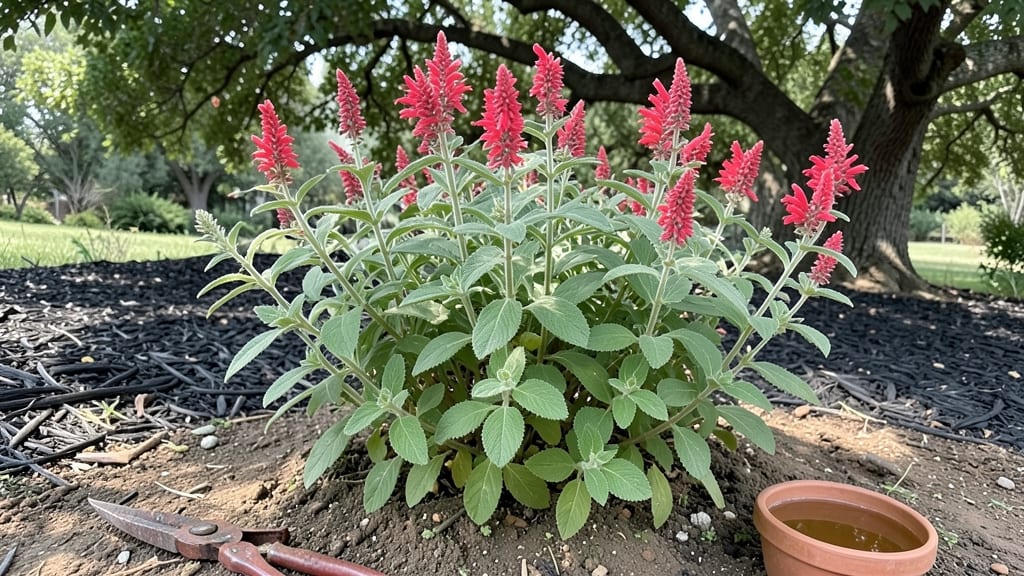
A pineapple sage plant acts as a perennial in warm climates, typically living for 3-5 years in USDA zones 8-11, though it often dies back during cold winters before regrowing from its roots when temperatures warm. Mulching and winter protection help it thrive longer in borderline climates.
This tropical-looking herb actually behaves like a cold-sensitive perennial, meaning it can survive multiple growing seasons in ideal conditions but needs protection when temperatures dip below 15°F. 🌱 The key to its longevity lies in its robust root system, which stores energy to fuel regrowth once frost passes.
In my experience, plants in zones 7-8 often survive winters if properly insulated with thick mulch or moved to containers for indoor overwintering.
What sets pineapple sage apart is its ability to bounce back stronger each year when given the right care. Unlike true perennials that endure harsh winters, this plant rewards gardeners with even more vibrant foliage and fragrance after its annual dormancy cycle.
The secret? Treating it like a semi-perennial—combining perennial growing techniques with annual winter precautions.
💡 In This Article
- Pineapple Sage Cold Tolerance and Winter Survival Tips
- Extending Pineapple Sage Lifespan in Marginal Climates
Pineapple sage cold tolerance and winter survival tips
Pineapple sage's behavior as a perennial stems from its native tropical origins, where it thrives in USDA zones 8-11 with winter temperatures rarely dropping below 15°F.
The plant's cold sensitivity triggers a survival mechanism: when exposed to frost, its above-ground growth dies back, but the thick, woody root system remains dormant underground.
This root system stores carbohydrates and nutrients, acting like a biological battery that powers regrowth when spring temperatures return. 🌿 The roots can survive brief exposures to 10°F, though prolonged cold below 15°F increases mortality risk.
The science behind this regrowth involves apical dominance—a plant growth regulation process where the main root system suppresses side growth until environmental conditions improve. When temperatures rise, the roots send out new shoots from lateral buds near the base, creating that familiar bushy regrowth.
This process explains why pineapple sage often appears more vigorous after its first winter compared to annual plantings. In my garden, I've seen plants recover from 90% dieback to full regrowth within 4-6 weeks of spring's arrival, provided the roots remained intact.
For gardeners in zones 7-8, the key to extending this plant's lifespan lies in protecting those critical roots. A 4-6 inch layer of organic mulch (straw or shredded leaves) creates an insulating blanket that maintains soil temperatures 5-10°F warmer than ambient air.
This mulch layer also prevents soil heaving—a winter phenomenon where freezing/thawing cycles push roots out of the ground. In zone 7, I've successfully overwintered plants by combining mulch with burlap wraps around the base, which adds an extra 5°F of protection during cold snaps.
What most gardeners don't realize is that pineapple sage's cold tolerance varies by cultivar. The classic 'Red Pineapple Sage' handles 18°F better than some newer varieties bred for milder climates.
Here's a quick zone-specific guide: In zone 8, minimal protection suffices; in zone 7, combine mulch with row covers; and in zone 6, container growing with winter indoor placement becomes essential. The root system's depth matters too—planting 12-18 inches deep ensures more insulation from ground heat.
An often-overlooked survival strategy is the plant's photosynthetic memory. Even dormant roots continue low-level energy production when exposed to light through snow or thin mulch layers. This pre-winter photosynthesis stores additional energy for spring regrowth.
I've observed that plants receiving partial winter sunlight (through 30% coverage) regrow 2-3 weeks earlier than those in complete darkness. This explains why some gardeners report better survival rates with living mulches like clover rather than completely opaque covers.
The most critical winter preparation involves soil moisture management. While you might think dry soil offers better insulation, slightly moist (but not soggy) soil conducts heat better than dry soil. Aim for 30-40% soil moisture before winter—this creates microscopic ice crystals that form insulating pockets around roots.
Watering in late fall (before hard frosts) ensures this optimal moisture level without risking root rot. In my zone 7b garden, I water deeply when soil temps hit 45°F, then apply mulch immediately after to lock in moisture.