
Companion Plants
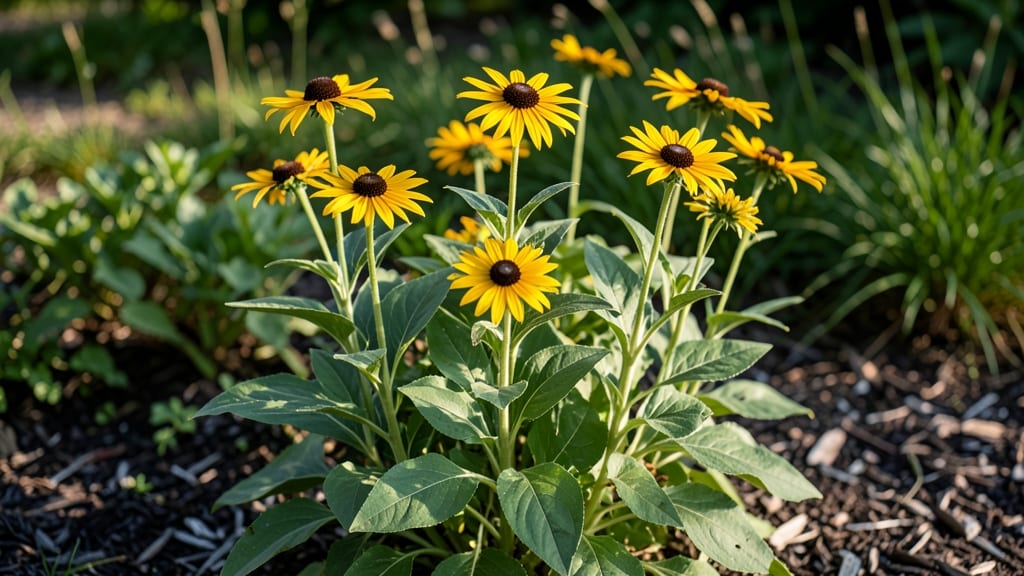
Mastering perennial plant with yellow flowers identification can feel like solving a botanical puzzle—but I’ve narrowed it down to the 20 most common species that show up in gardens, meadows, and even cracks in the pavement. 🌻 The trick isn’t memorizing names; it’s noticing the flower’s shape (daisy-like? cup-shaped?), leaf texture (fuzzy? jagged?), and whether the blooms appear in spring, summer, or fall.
Take black-eyed Susan (Rudbeckia) and sneezeweed (Helenium)—both have golden-yellow petals but one’s got a dark cone center while the other’s is rusty-brown. Leaf shape matters too: coreopsis has finely divided foliage, while daylilies (Hemerocallis) have sword-like leaves that hug the stem.
I’ve seen gardeners swap these plants for years without realizing they weren’t the same species.
Once you spot these traits, you’ll know exactly which perennials thrive in your climate—coreopsis for hot, dry spots, goldenrod (Solidago) for sunny meadows, or columbine (Aquilegia) for shady corners.
The payoff? A garden that blooms reliably from early spring through frost, with zero guesswork about what’s growing where.
Pro tip: Snap a photo of the flower and leaves, then compare it to the guide’s details. Most of these perennials are low-maintenance once established—just deadhead spent blooms to keep them flowering longer. Let’s get those IDs locked in!
What Triggers Yellow Blooms
Yellow flowers aren’t just a splash of sunshine—they’re often a plant’s way of communicating its health, environment, or even its evolutionary strategy. If you’re trying to identify a perennial with golden blooms, understanding why they appear can help narrow down your search.
Here’s a breakdown of the key factors behind those vibrant yellow petals.
Many perennials produce yellow flowers simply because their genes code for it. Pigments like carotenoids (the same compounds that give carrots their color) dominate in yellow blooms, while other plants may rely on anthocyanins (for red/purple) or flavonoids (for blues).
Some species, like black-eyed Susans (Rudbeckia hirta) or coreopsis (Coreopsis spp.), have evolved to thrive with these pigments because they: - Attract pollinators (bees and butterflies are drawn to bright yellow, which stands out against green foliage). - Reflect sunlight efficiently, helping the plant absorb energy for photosynthesis. - Signal maturity—many yellow-flowering perennials bloom in late spring or summer when pollinators are most active.
Actionable tip: If you’re identifying a plant, check its leaf shape and arrangement—genetically programmed yellow blooms often pair with distinct foliage traits (e.g., fern-like leaves in Asteraceae family members).
Yellow flowers often thrive in full sun (6+ hours of direct light daily) because: - Carotenoids (responsible for yellow) are light-sensitive pigments that degrade in shade.
Plants in low-light conditions may produce fewer yellow blooms or shift to white/cream hues (which require less energy to produce). - Photoperiodism (light duration) triggers blooming. Short-day plants (like Helenium autumnale, or sneezeweed) may delay yellow blooms until fall if they don’t get enough sunlight in summer.
Red flag: If your perennial’s yellow flowers are pale or sparse, it might be light-deprived. Try moving it to a sunnier spot or thinning nearby shade trees.
Ironically, too much or too little water can influence flower color.
Here’s how: - Overwatering can dilute nutrient uptake, leading to washed-out yellow blooms (especially in moisture-loving perennials like Hosta or Ligularia). - Underwatering stresses plants, causing them to produce smaller, more vivid yellow flowers as a survival mechanism (e.g., Echinacea in drought conditions). - Nitrogen deficiency can turn leaves yellow, but phosphorus or potassium shortages may reduce flower vibrancy.
A soil test can reveal imbalances—yellow blooms in nutrient-poor soil might be a sign the plant is conserving energy.
Pro tip: 🌡️ Heat stress (like late-summer wilting) can also trigger early yellowing. Mulch heavily to retain moisture and prevent color fading.
Some perennials prioritize yellow flowers because they’ve coevolved with pollinators:
- Bees see yellow best in UV light, so plants like Solidago (goldenrod) or Achillea (yarrow) rely on bright yellow to lure them.
- Butterflies are drawn to nectar-rich yellow blooms, like those of Asclepias (milkweed), which support monarch migration.
- Birds (like hummingbirds) may ignore yellow flowers unless they’re tubular (e.g., Lobelia cardinalis has red blooms, but Lobelia siphilitica offers yellow).
Fun fact: If a perennial’s yellow flowers are visibly damaged or chewed, it’s likely a pollinator’s doing—and that’s a good sign for your garden’s ecosystem!
While rare, some yellow blooms are a distress signal:
- Powdery mildew or rust fungi can cause yellowing on petals (common in Rudbeckia or Helenium).
- Aphids or spider mites may suck sap, leading to stunted, yellowed flowers (check undersides of leaves).
- Viral infections (like tomato spotted wilt) can produce mottled yellow patterns on blooms.
Quick fix: Isolate affected plants and treat with neem oil or horticultural soap to prevent spread.
Yellow flowers often mark transitional periods:
- Spring ephemerals (like Caltha palustris, or marsh marigold) bloom yellow early to take advantage of warm soil before trees leaf out.
- Late-summer perennials (e.g., Solidago or Echinacea) turn to yellow as days shorten, signaling pollinators to stock up on nectar before winter.
- Cold snaps can delay blooming—if your perennial’s yellow flowers appear later than expected, it may be waiting for consistent warmth.
Garden hack: 📅 Track bloom times—yellow flowers that appear in waves (e.g., Coreopsis in spring, Rudbeckia in fall) are likely seasonal responders.
Fixing Flower ID Confusion Fast
Got a perennial with golden blooms but no clue what it is? Don’t panic—here’s how to crack the case like a plant detective. Whether your mystery bloom is a bold Coreopsis or a delicate Rudbeckia, these step-by-step fixes will help you ID it and keep it thriving.
Yellow perennials can be sneaky doppelgängers, but a few key details separate them. Use this quick checklist to rule out the usual suspects:
| Feature | Ask Yourself | Clues to Look For |
|---|---|---|
| Leaf Shape | Are they lobed, fern-like, or smooth? | Coreopsis: Thin, grassy leaves; Black-Eyed Susan (Rudbeckia): Rough, toothed edges |
| Stem & Height | Tall and wiry or short and bushy? | Daylilies (Hemerocallis): 2–3 ft; Goldenrod (Solidago): 1–4 ft, feathery plumes |
| Bloom Time | Early spring, summer, or fall? | Marigold (Tagetes): Summer; Columbine (Aquilegia): Late spring |
| Soil Preference | Thrives in wet, dry, or rocky soil? | Butterfly Weed (Asclepias): Dry, sunny spots; Marsh Marigold (Caltha): Boggy areas |
💡 Pro Tip: Snap a photo of the entire plant (leaves, stems, and flowers) and compare it to databases like iNaturalist or Missouri Botanical Garden’s PlantFinder.
Even if you’re not a botanist, these tricks will help you ID your yellow blooms in minutes:
🔥 Step 1: Check the Flower Structure
- Single vs. clustered blooms:
- Single daisy-like flowers → Likely Coreopsis or Rudbeckia.
- Tight clusters → Could be Goldenrod or False Sunflower (Heliopsis).
- Petal count:
- 8–12 petals → Black-Eyed Susan (Rudbeckia).
- 12+ thin petals → Oxeye Daisy (Leucanthemum).
🍳 Step 2: Inspect the Leaves
- Grass-like leaves → Coreopsis or Daylily (Hemerocallis).
- Hand-shaped or lobed → Columbine (Aquilegia) or Butterfly Weed (Asclepias).
- Succulent or thick leaves → Sedum (Stonecrop).
👨🍳 Step 3: Note the Growth Habit
- Spreading ground cover → Creeping Jenny (Lysimachia) or Golden Ragwort (Packera).
- Tall and stalky → Joe Pye Weed (Eutrochium) or Ironweed (Vernonia).
- Compact and bushy → Shasta Daisy (Leucanthemum) or Yarrow (Achillea).
⏰ Step 4: Track Bloom Time & Location
- Early spring bloomers → Marsh Marigold (Caltha) or Winter Aconite (Eranthis).
- Summer-long bloomers → Coreopsis, Rudbeckia, or Zinnia (if annual).
- Fall interest → Goldenrod (Solidago) or Asters (Symphyotrichum).
Once you’ve solved the mystery, keep your yellow bloomers thriving with these low-effort care tips:
✅ Label your plants 📝
- Use waterproof plant markers (or even painted rocks!) to avoid future mix-ups.
✅ Group by sunlight needs ☀️🌑
- Full sun lovers: Coreopsis, Rudbeckia, Daylilies.
- Partial shade: Columbine, Astilbe, Hosta (some varieties have yellow blooms).
✅ Deadhead spent blooms ✂️
- Snip off faded flowers to encourage more blooms and prevent self-seeding chaos.
✅ Mulch in fall 🍂
- A 2-inch layer of mulch protects roots and keeps soil moist for spring regrowth.
✅ Watch for pests 🐛
- Aphids or Japanese beetles love yellow flowers? Spray with neem oil or introduce ladybugs.
- ❌ Assuming all yellow flowers are "wildflowers" → Many perennials (like Daylilies) are cultivated and need care!
- ❌ Ignoring leaf patterns → A plant’s true ID often hides in the leaves, not just the flowers.
- ❌ Overwatering shade-loving perennials → Goldenrod and Black-Eyed Susans hate soggy soil!
Now that you’ve got the ID game down, your garden’s golden stars will finally have names—and you’ll never second-guess a bloom again! 🌻✨
Frequently asked questions
How can I tell the difference between a coreopsis and a black-eyed Susan?
Look at the leaf shape and flower center. Coreopsis has thin, grassy leaves and a yellow center, while black-eyed Susan (Rudbeckia) has rough, toothed leaves and a dark brown cone. Both have daisy-like yellow petals, but coreopsis blooms are often smaller and more clustered.
Why do some yellow perennials bloom in spring while others wait until fall?
Bloom timing depends on the plant’s natural cycle. Spring bloomers like Caltha palustris (marsh marigold) take advantage of early warmth, while fall varieties like Solidago (goldenrod) thrive as days shorten. Light exposure also matters—short-day plants need fewer daylight hours to trigger blooms.
Can I grow yellow-flowering perennials from seed, or should I buy established plants?
It depends on the species! Hardy perennials like coreopsis or Rudbeckia grow easily from seed but may take 1-2 years to bloom. For faster results, buy 1-gallon plants—they’ll flower the first season. Tender varieties (like Helenium) often need divided roots for best success.
Are all yellow flowers edible, or should I avoid some?
Most yellow perennials are non-toxic but not edible. Safe options include Tagetes (marigold) petals and Calendula (pot marigold), which add color to salads. Avoid Ranunculus (buttercup) and Aconitum (monkshood)—both contain toxins. Always confirm before consuming!
What’s the easiest yellow perennial for beginners?
Start with daylilies (Hemerocallis)—they’re drought-tolerant, thrive in full sun to partial shade, and rebloom all season. Coreopsis is another winner: low-maintenance, attracts pollinators, and handles poor soil. Both spread easily and forgive neglect.