
Landscaping
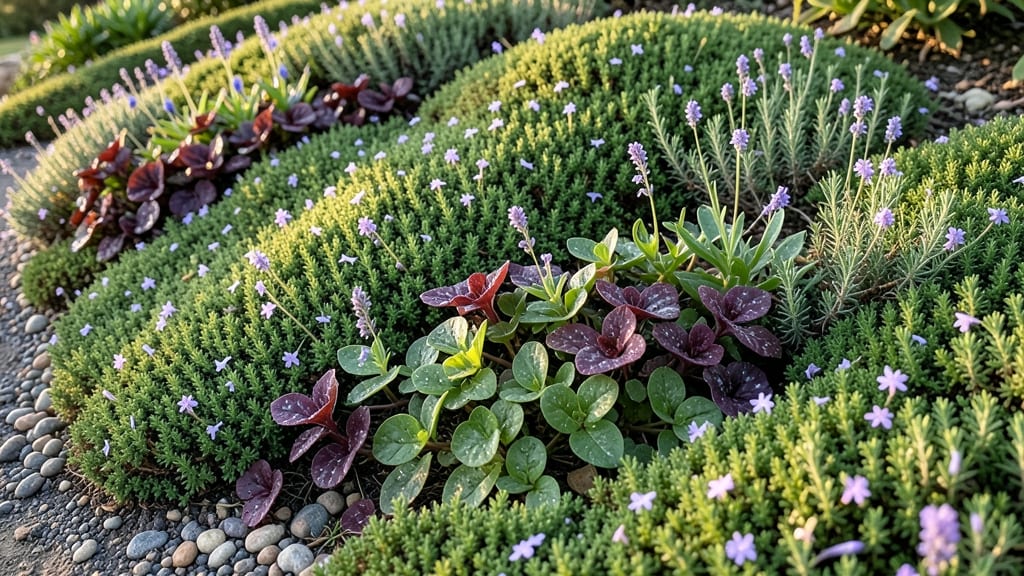
Transform your garden with these 10 pea gravel flower bed ideas that combine durability, beauty, and minimal upkeep. Perfect for borders, pathways, and modern landscapes, these designs thrive year-round with the right plant pairings.
Classic Lavender and Rosemary Gravel Border
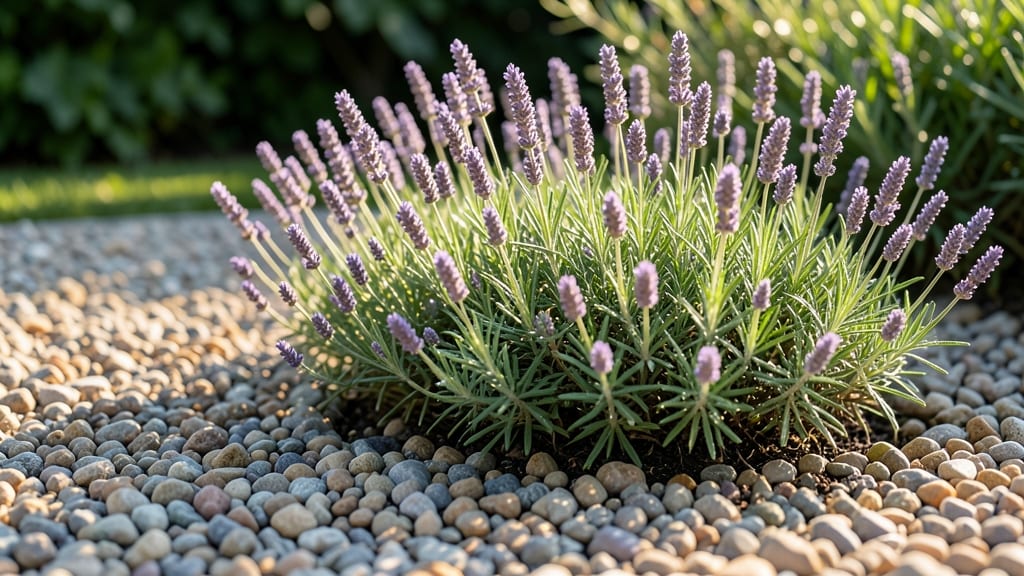
Want a garden that smells amazing, attracts pollinators, and practically takes care of itself? A lavender and rosemary gravel border delivers all three with almost no effort. This drought-resistant duo thrives in full sun, repels pests naturally, and stays lush with minimal watering once established.
Plant English lavender and rosemary in well-draining pea gravel (3–4 inches deep) along borders or pathways. Both plants love hot, dry conditions and hate soggy soil, making gravel the perfect partner. After the first year, they’ll spread enough to crowd out weeds, and their fragrant foliage will keep mosquitoes away. Prune lightly in spring to encourage bushiness, but otherwise, enjoy their year-round greenery and summer blooms.
This design is perfect for fragrance lovers and pollinator-friendly gardeners who want a low-maintenance, high-impact look. Plus, the clean lines of gravel make it ideal for modern or cottage-style landscapes. 🌿
Sunny Succulent and Sedum Gravel Garden
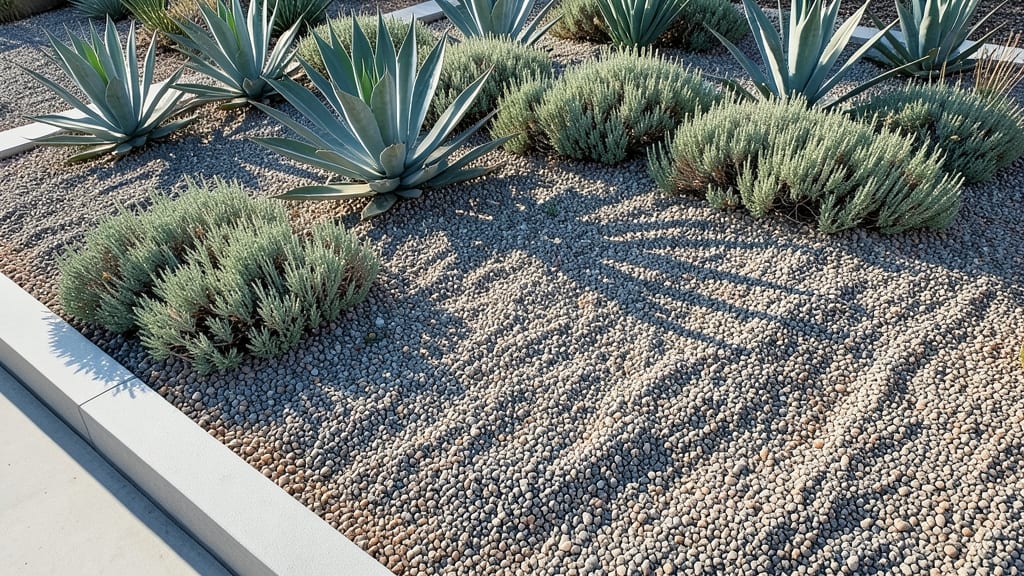
Turn your hot, dry garden into a striking oasis with a succulent and sedum gravel bed that thrives on neglect. This design combines bold architectural plants with trailing sedum to create a modern, water-wise landscape that stays vibrant even in scorching summers.
Start with a 3-4 inch layer of pea gravel over landscape fabric to prevent weeds, then plant echeveria, haworthia, or sempervivum for structure, paired with trailing sedum 'Angelina' or 'Dragon's Blood'. These plants love full sun (6+ hours daily) and need watering only every 2-3 weeks once established—perfect for busy gardeners or water-restricted areas.
This design is ideal for urban courtyards, desert landscapes, or modern minimalist gardens, offering year-round interest with minimal effort. The gravel reflects sunlight, keeping roots cool while the plants' varied textures create a dynamic visual display. 🌻
Wildflower Meadow Pea Gravel Transition
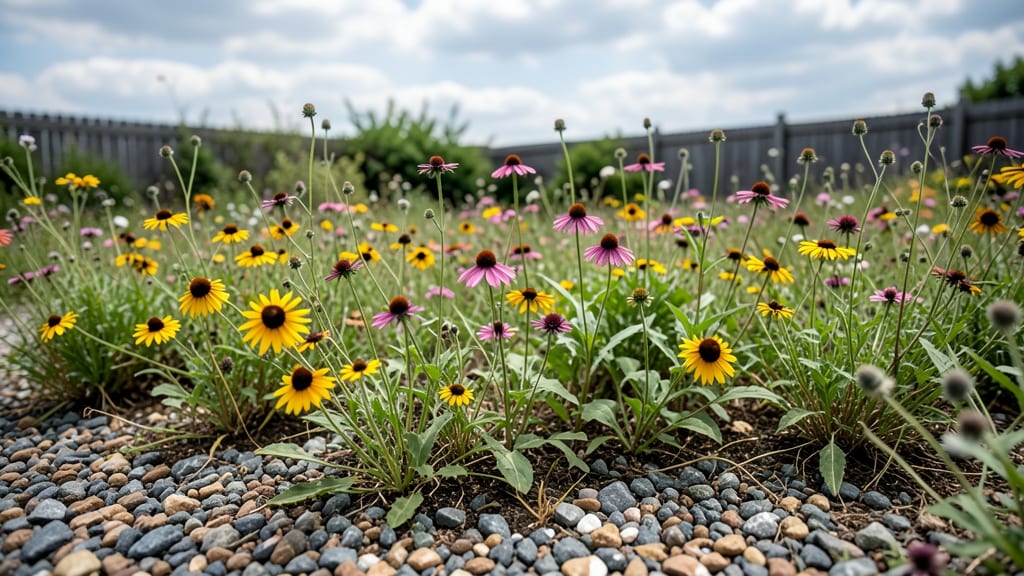
Skip the manicured look—wildflower meadows in pea gravel bring wild beauty to your garden while supporting local ecosystems. This effortless design thrives on neglect, requiring only occasional deadheading to keep blooms coming.
Plant native wildflowers like black-eyed Susans, coneflowers, and milkweed directly into pea gravel for a pollinator paradise. The gravel drains excess water while suppressing weeds, and the mix of heights creates natural movement. For best results, choose a sunny spot with well-draining soil—no amendments needed!
This design is perfect for eco-conscious gardeners who want to reduce water use while creating a low-maintenance habitat for bees and butterflies. 🌻
Modern Ornamental Grass and Gravel Mix
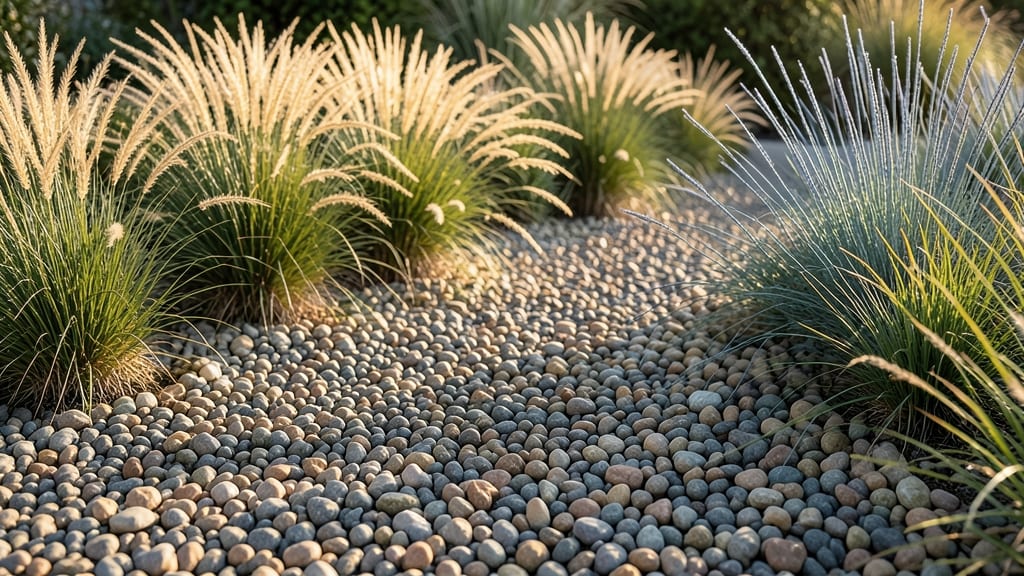
Tired of static flower beds that look the same year-round? A modern ornamental grass and gravel mix brings dynamic movement and architectural interest to contemporary spaces with almost no fuss. The combination of fountain grass and blue fescue creates a striking contrast against pea gravel, while their airy plumes add texture that dances in the breeze.
Plant fountain grass (like Pennisetum varieties) at the back for height (3–4 feet) and blue fescue (Festuca glauca) in clusters for a soft, silvery-blue accent. Spread 3–4 inches of pea gravel between plants to suppress weeds and improve drainage—no mulch needed! These grasses thrive in full sun to partial shade and only need watering when the soil feels bone-dry. Shear back fountain grass in late winter to encourage fresh growth, while blue fescue stays tidy on its own.
This design is perfect for urban gardeners and minimalist landscapers who want a polished look with zero daily upkeep. The neutral tones of gravel let the grasses shine year-round, from spring's fresh shoots to winter's dried seed heads. 💚
Edible Herb and Gravel Kitchen Garden
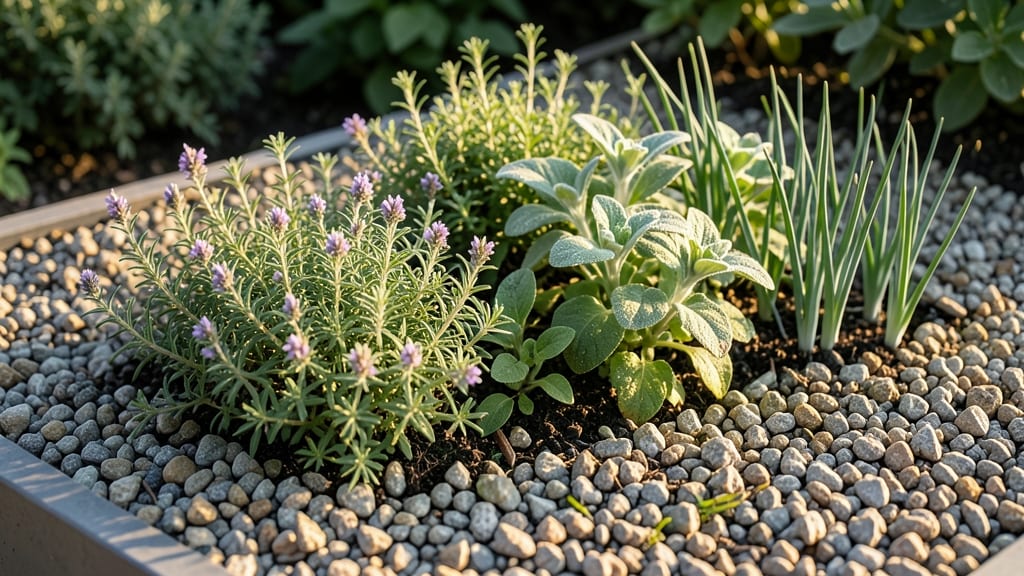
Turn your kitchen garden into a fragrant, pest-resistant powerhouse with a pea gravel herb bed that keeps weeds at bay while giving you fresh thyme, oregano, and chives at your fingertips. This clever setup combines the practicality of edible plants with the low-maintenance benefits of gravel, creating a dual-purpose space that protects nearby veggies from pests like slugs and snails.
Start by layering 3–4 inches of pea gravel over a weed barrier to prevent unwanted growth. Plant hardy herbs like thyme (drought-tolerant and pest-repellent) and oregano (which deters cabbage moths) in clusters, leaving space for chives to spread. Water deeply but infrequently—gravel drains excess moisture, so herbs stay healthy without soggy roots. The gravel also warms up faster in spring, giving you an earlier harvest.
This design is a game-changer for urban gardeners, small-space growers, and busy cooks who want fresh herbs without the hassle. Plus, the clean lines of gravel make it look intentional and polished—no messy mulch in sight! 🌱
Color-Blocked Annuals in Gravel Beds
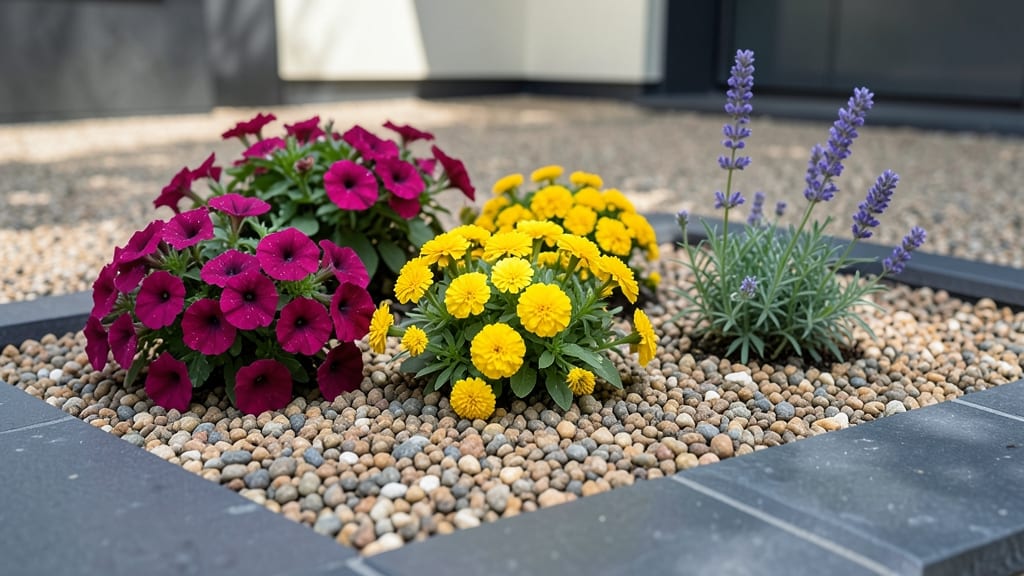
Tired of static flower beds that feel stuck in one season? Color-blocked annuals in gravel beds let you swap out petunias, snapdragons, or marigolds every few months for a fresh, vibrant look—without the hassle of replanting perennials. This design is ideal for renters, small balconies, or urban gardeners who want big impact with minimal commitment.
Start by dividing your gravel bed into geometric sections (squares, rectangles, or curves) using edging or simply by spacing plants in clusters. Plant heat-loving annuals like zinnias or lantana in summer, swap for cool-season pansies or violas in spring/fall, and even tuck in hollyhocks or sweet peas for a vertical pop. The gravel stays weed-free, drains excess water, and keeps roots cool—just water when the top inch feels dry.
This flexible approach works in containers too, making it perfect for small spaces or patios. Plus, the seasonal swaps keep your garden feeling new all year without the work of digging or mulching. 🌻
Shade-Loving Fern and Hostas in Gravel
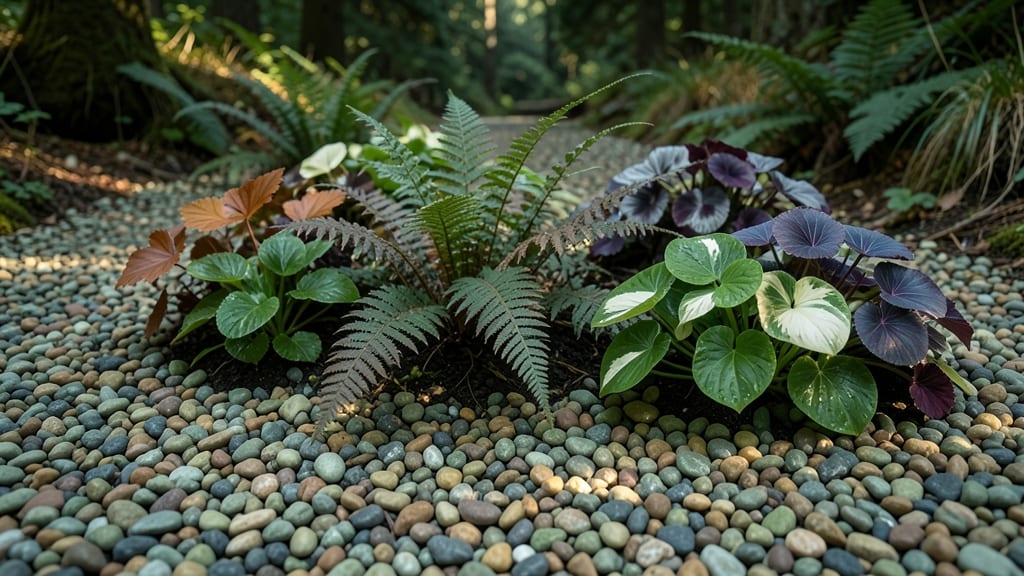
Bring life to your shady spots with a fern and hosta gravel bed that thrives where sunlight is scarce. This woodland-inspired design combines lush ferns, hostas, and heuchera in pea gravel for a serene, low-maintenance look that mimics nature’s own forest floor.
Start with a 3-inch layer of pea gravel over landscape fabric to prevent weeds, then plant Japanese painted ferns for delicate texture, hostas like 'Blue Angel' for bold foliage, and heuchera for vibrant color contrast. These plants love dappled shade to partial sun and need watering only when the top inch of gravel feels dry—perfect for busy gardeners. The gravel keeps roots cool while suppressing weeds naturally.
This design is ideal for woodland gardeners, urban courtyards with shade, or beginners who want a tranquil, high-impact bed with minimal effort. The soft greens and purples create a calming atmosphere that’s easy on the eyes and the maintenance schedule. 🌿
Rock Garden with Alpine Pea Gravel Accents
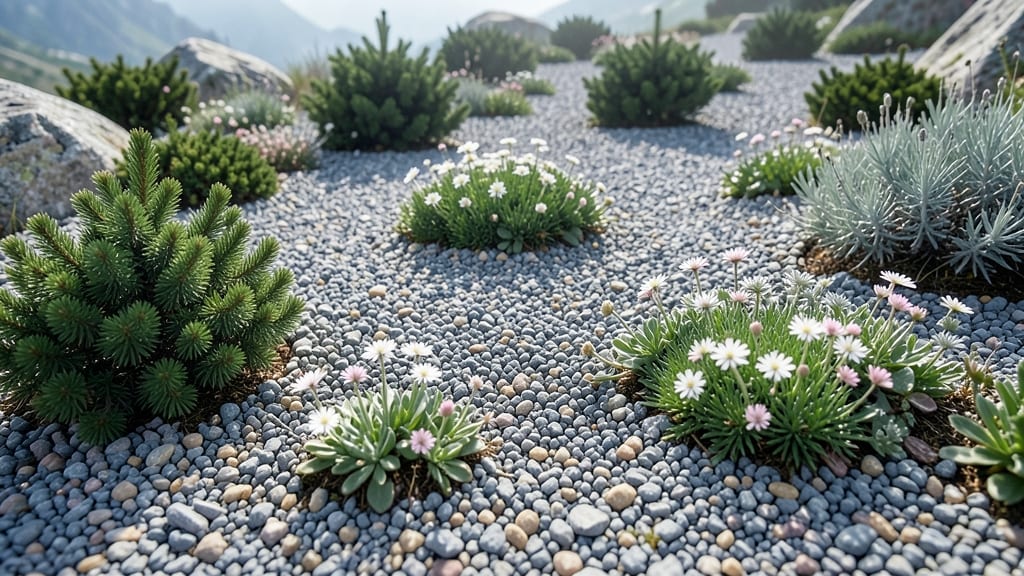
Bring the crisp elegance of alpine meadows to your garden with a rock garden featuring pea gravel accents—a perfect fit for small spaces or rockery enthusiasts. This design mimics rugged mountain landscapes using dwarf conifers, saxifrage, and other alpine plants that thrive in well-draining gravel while adding year-round structure.
Start by arranging flat rocks and boulders as a base, then fill crevices with 3-4 inches of pea gravel to mimic natural alpine soil. Plant dwarf junipers, creeping thyme, or saxifrage in the gravel—these plants love partial sun to full shade and need minimal watering once established. The gravel reflects sunlight, keeping roots cool while preventing erosion. For a polished look, edge the bed with small stones or metal borders to contain the gravel.
This design is ideal for urban balconies, fairy gardens, or miniature landscapes, offering a low-maintenance way to create drama in tight spaces. The combination of textured rocks and delicate alpine blooms delivers a serene, high-altitude escape without the high-altitude hassle. 🌷
Seasonal Bulb and Gravel Combination
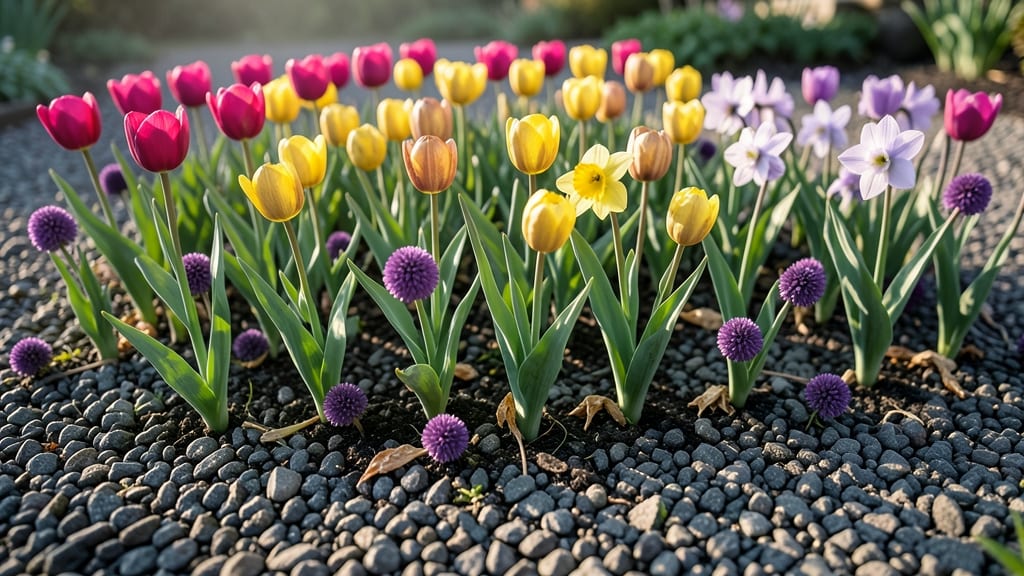
Want a garden that bursts with spring color without the mess of deadheading or mulching? A seasonal bulb and gravel combination delivers early-season blooms that fade cleanly, leaving your bed looking tidy all season. This clever pairing lets tulips, daffodils, and alliums shine while the gravel keeps roots cool and prevents weeds.
Start by planting bulbs in clusters (like 10-15 tulips per square foot) in a 3-4 inch layer of pea gravel over landscape fabric. The gravel improves drainage, preventing soggy roots that rot bulbs, while the bulbs' natural cycle means no fading foliage to hide. For best results, choose early-blooming varieties that finish by late spring—just as summer annuals can take over the space. The gravel stays weed-free and reflects sunlight, keeping roots cool during hot summers.
This design is perfect for first-time gardeners, small-space growers, and busy homeowners who want seasonal color with zero fuss. The clean, minimalist look also makes it ideal for modern landscapes where you want to highlight the natural beauty of the bulbs without competing foliage. 🌷
Low-Maintenance Ground Cover Gravel Mix

Struggling with bare spots or erosion on slopes or high-traffic paths? A ground cover gravel mix with creeping thyme, ajuga, and vinca creates a living carpet that thrives in pea gravel while crowding out weeds naturally. This trio forms a dense, drought-tolerant mat that handles foot traffic and stabilizes soil, making it perfect for tricky areas where other plants fail.
Start by spreading 3–4 inches of pea gravel over a weed barrier, then plant creeping thyme (for fragrance and sun tolerance) in clusters, ajuga (with its striking purple foliage) along edges, and vinca (for shade adaptability) in between. All three spread aggressively, filling gaps within a season. Water lightly for the first month to establish roots, then let the gravel regulate moisture—these plants need minimal care after that.
This design is a lifesaver for busy gardeners, slope repair, or pathways where traditional mulch would wash away. The gravel keeps roots cool while the plants suppress weeds, creating a permanent, low-maintenance solution that looks intentional and polished. 💪