
Orchid Care
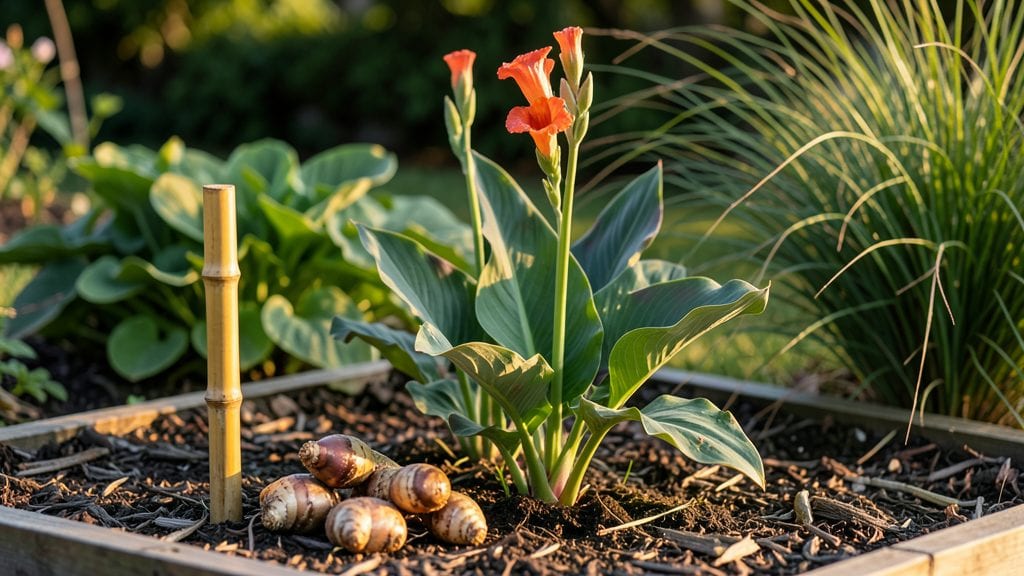
Whether cannas are annuals or perennials depends entirely on your climate zone—these tropical beauties thrive as perennials in USDA Zones 8-11 but freeze out in colder regions (Zones 7 and below), forcing gardeners to treat them as annuals. Their hardy underground rhizomes store energy to regrow each spring in mild winters, while frost kills back foliage in colder areas.
This dual nature comes down to biology: cannas evolved in warm climates where temperatures rarely dip below freezing. 🔥 In frost-free zones, their rhizomes remain dormant but viable underground, ready to burst back to life when conditions warm up.
Gardeners in colder areas often dig up rhizomes before the first frost, store them in dry peat moss or sand, and replant them in spring—effectively turning annuals into perennials with minimal effort.
What's fascinating is how quickly cannas rebound when given the right conditions. Even in colder climates, a single healthy rhizome can produce multiple shoots in just a few weeks once replanted. The key is protecting those roots—whether through natural ground insulation or your own overwintering efforts.
💡 In This Article
- Canna Plant Lifespan: How Climate Affects Perennial vs. Annual Growth
- Extending Canna Plant Life: Overwintering Tips for Cold Climates
Canna plant lifespan: how climate affects perennial vs. annual growth
Here's what's actually happening underground: canna plants store their energy in thick, starchy rhizomes that function like nature's own energy reserves. These underground stems can survive temperatures down to 25°F for short periods, but prolonged exposure to below 20°F triggers irreversible damage.
In USDA Zones 8-11, where winters rarely drop below freezing for extended periods, these rhizomes enter a natural dormancy state—similar to how tulip bulbs survive winter—ready to regrow when soil temperatures reach 55°F in spring.
The key difference lies in frost duration. In Zones 8-11, cannas experience what botanists call "winter quiescence"—a temporary pause in growth rather than true dormancy.
The rhizomes maintain their viability through a process called "cold hardening," where they accumulate protective sugars and proteins that prevent cellular damage. 🌱 Meanwhile, in Zones 7 and below, even brief frosts below 28°F can kill back the foliage, though the rhizomes themselves may survive if protected by mulch or snow cover.
This is why gardeners in colder regions often see their cannas return year after year despite above-ground dieback.
What most people don't realize is how quickly cannas rebound when conditions improve. In frost-free zones, new shoots emerge from the rhizomes within 2-3 weeks of soil warming, while in colder climates, properly stored rhizomes can sprout just as vigorously when replanted in spring.
The science behind this involves hormonal signals—specifically, gibberellins—that trigger regrowth when temperatures rise. This explains why cannas in Zones 8-11 can reach 6-8 feet tall in a single season, while those in colder zones may take 4-6 weeks longer to reach maturity after replanting.
Consider these biological thresholds that determine canna behavior:
- Zone 8-11 (Perennial): Rhizomes survive winter with 0-10°F minimum temps; foliage may yellow but regrows from roots
- Zone 7 (Transitional): Rhizomes survive with 0-10°F but may need mulch protection; foliage dies back completely
- Zone 6 and below (Annual): Rhizomes typically die at below 20°F without protection; requires overwintering
The visual difference between perennial and annual growth becomes apparent in early spring. In frost-free zones, you'll see multiple shoots emerging simultaneously from the same rhizome cluster, creating dense foliage within 6 weeks.
In colder zones, even overwintered rhizomes may produce slightly fewer shoots initially, though they'll compensate with larger leaves once established. The trade-off is that cannas in colder climates often develop 10-20% thicker stems as a survival adaptation to shorter growing seasons.
This biological flexibility makes cannas uniquely adaptable. While they're classified as perennials in warm climates, their ability to regenerate from rhizomes means they can technically be treated as perennials anywhere—given proper overwintering care.
The 30°F temperature threshold serves as the critical dividing line between natural perennial behavior and the need for human intervention in colder regions. 💫