
Aphids
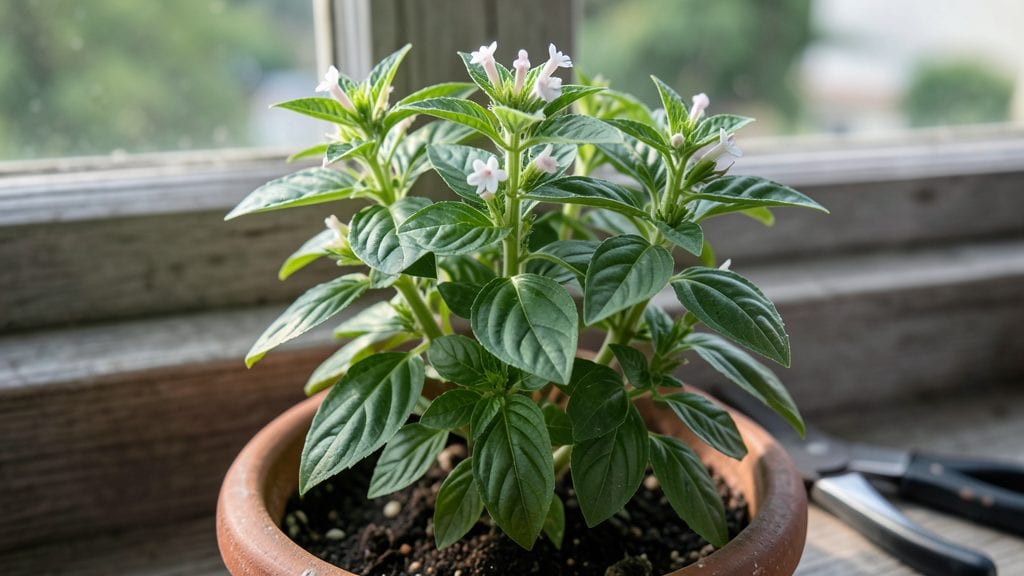
Thai basil is not a true perennial in most climates, but it thrives as an annual in temperate zones and can overwinter in USDA zones 9-11 with proper care. Its delicate stems often die back in frost, but regrowth may occur in mild winters.
Thai basil's behavior as a warm-weather plant stems from its tropical origins, where consistent warmth keeps it growing year-round.
Unlike hardy herbs, its stems freeze at 30°F or below, but the roots often survive, allowing regrowth when temperatures rise. 🌱 This makes it behave like a perennial in frost-free zones, while in colder areas, gardeners treat it as an annual or take steps to protect it through winter.
In practice, this means you can extend its life in cooler zones by bringing potted plants indoors before frost or harvesting and drying leaves before the first freeze.
The key is understanding its heat requirements—Thai basil won't tolerate cold snaps, but with the right care, you can enjoy its distinctive anise flavor for multiple seasons.
💡 In This Article
- Thai Basil’s Hardiness Zones and Cold Tolerance
- Overwintering Thai Basil in Cooler Climates
Thai basil’s hardiness zones and cold tolerance
Thai basil’s behavior as a perennial in warm climates comes from its tropical heritage. Native to Southeast Asia, it evolved in regions with consistent temperatures above 60°F and thrives in USDA zones 9-11 where frost never occurs.
In these areas, its woody stems and roots remain active year-round, allowing it to regrow after pruning or light damage—much like its cousin, sweet basil, but with less cold resilience. 🌿
The critical difference lies in its cold tolerance threshold. While sweet basil can handle brief dips to 25°F without permanent damage, Thai basil’s stems begin dying at 30°F or below.
This is because its leaves contain higher concentrations of volatile oils (like linalool) that become brittle in cold air, causing cellular damage. The roots, however, often survive in mild winters (40-50°F), which explains why regrowth occurs in spring.
Here’s what happens when temperatures drop: The plant’s vascular system freezes, blocking water flow to leaves, which turn black within 24-48 hours. Unlike hardy perennials (e.g., rosemary or thyme), Thai basil lacks the anti-freeze proteins that protect woody stems.
Its tropical growth habit prioritizes rapid leaf production over cold resistance—a trade-off for its intense flavor and aroma. 💫
In practice, this means gardeners in zones 9-11 can treat Thai basil as a semi-perennial: prune aggressively in late winter to stimulate new growth, and it’ll bounce back. But in colder zones, even a single frost can kill the plant to the ground.
The solution? Grow it as an annual or use containers to move it indoors before temperatures dip below 50°F.
For comparison, sweet basil’s stems can survive 20-25°F because its leaves contain fewer volatile oils and its stems are more lignified. Thai basil’s delicate structure is an adaptation for fast growth in warm, humid conditions, not cold survival.
This is why it’s often grown from cuttings in cooler climates—its seeds struggle to germinate in temperatures below 70°F. 🌡️
Understanding this helps explain why Thai basil thrives in Southern California or Florida gardens but struggles in New England.
The plant’s entire biology is optimized for heat and humidity, making it a seasonal star rather than a true perennial in most of the U.S. With the right care, however, you can stretch its growing season by 3-6 months in cooler zones.