
Flowers
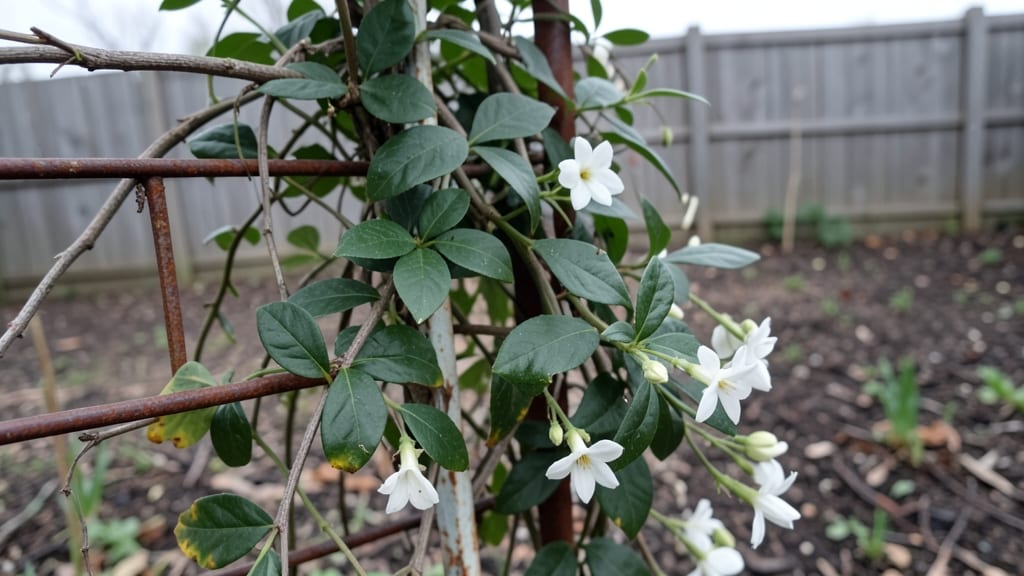
Star jasmine is a perennial in USDA zones 7-10, thriving year-round with proper care, though it may die back in colder climates only to regrow from its hardy root system in spring. Its true lifespan extends for decades with ideal conditions.
This evergreen vine isn't just a seasonal showstopper—it's built to last. 🌿 While it loves warm climates, its deep root system acts like a survival anchor, letting it bounce back even after winter dieback.
Many gardeners in zones 6-5 treat it as a semi-perennial, using mulch and pruning tricks to coax it back each spring. The key? Understanding its dormancy patterns and how to protect those roots.
Unlike annuals that start fresh every year, star jasmine's roots store energy like a battery, fueling its rapid regrowth when conditions improve. This resilience makes it a favorite for trellises and fences, where it can spread beautifully over time.
Just give it well-draining soil and consistent moisture, and you'll have fragrant blooms for years to come.
💡 In This Article
- Star Jasmine’s Cold Tolerance and Root System
- Cultivating Star Jasmine as a Perennial in Cooler Climates
Star jasmine’s cold tolerance and root system
The secret to star jasmine's survival in cooler climates lies in its fibrous, deep-rooted system that can extend 3-5 feet below the soil surface. These roots act as a biological storage unit, accumulating starches and nutrients during warmer months to sustain the plant through dormancy.
Unlike tropical climbers like bougainvillea, which typically die back to the ground in cold weather, star jasmine's roots remain protected in the soil's deeper layers where temperatures stay more stable—often 10-15°F warmer than surface levels.
When temperatures drop below 20°F, the above-ground growth of star jasmine enters a state of dormancy, curling up and appearing dead. However, the root system remains metabolically active at reduced levels, maintaining cellular integrity until spring.
This is possible because star jasmine's roots contain higher concentrations of sugars and antioxidants that prevent ice crystal formation in cells—a survival mechanism similar to how some trees like oaks endure winter.
The root system can even regenerate new shoots from multiple points, ensuring the plant's revival even if only 20-30% of roots survive the cold.
What sets star jasmine apart from other tropical climbers is its adaptive growth cycle. While plants like hibiscus may suffer complete dieback in zone 7 winters, star jasmine's roots can endure 15-20°F for extended periods.
The key difference lies in the root's ability to osmoregulate—adjusting internal water balance to prevent dehydration and frost damage. This biological process allows the roots to remain hydrated even in frozen soil, giving the plant a head start on regrowth once temperatures rise above 40°F in spring.
In colder zones (6 and below), star jasmine's growth pattern shifts dramatically. Instead of continuous vine growth, the plant focuses energy on root expansion and storage during the first 2-3 years of establishment. This delayed flowering phase ensures the root system is robust enough to support winter survival.
Gardeners in these zones often report that established plants (over 3 years old) handle winter better because their roots have developed extensive lateral spread, creating a natural insulation layer against temperature fluctuations.
For comparison, consider how star jasmine's cold tolerance stacks up against other popular climbers: bougainvillea typically dies back to the ground in zone 8, while clematis varieties like 'Jackmanii' can survive to zone 3 but require heavy mulching.
Star jasmine's zone 7-10 hardiness makes it uniquely adaptable for regions with mild winters, where it can maintain evergreen foliage year-round with proper care. The plant's ability to regenerate from multiple root nodes also gives it a survival advantage over species that rely on a single growing point.
Here's what this means for gardeners: the deeper the root system becomes, the more resilient the plant. In zone 7, where winters can dip to 0°F for short periods, star jasmine's roots often survive because they're insulated by 12-18 inches of soil.
This natural protection eliminates the need for elaborate winter covers that tropical plants in similar zones might require. The plant's true longevity—often 20-30 years with proper care—comes from this root-driven survival strategy.