
Diseases
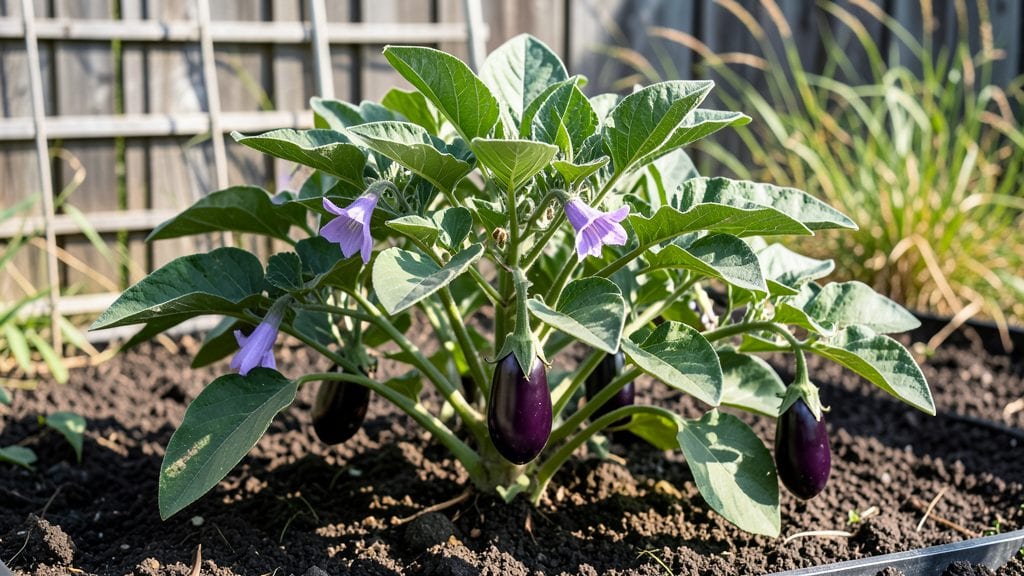
Eggplant is not a true perennial in most climates, as it dies back after frost and must be replanted annually. However, in frost-free zones (USDA 11-12), it can survive multiple years with proper care and protection from extreme heat or cold.
Eggplant's perennial nature depends entirely on your climate.
In temperate zones, these tropical plants act like annuals because they can't survive freezing temperatures—anything below 50°F (10°C) will kill them. 🌱 What's fascinating is how eggplants behave differently in warm regions: with consistent warmth and protection from heat stress, they'll regrow year after year, sometimes producing for 5+ seasons.
This explains why gardeners in Florida or Southern California can keep the same plants thriving while Northern growers must replant each spring.
Here's the key distinction: eggplants are perennial by nature but annual by necessity in most gardens. Their ability to regrow stems from their tropical origins—when you provide the right conditions (like greenhouse overwintering or container protection), you're essentially recreating their natural habitat.
That's why I always recommend trying container growing for cold climates: it gives you that perennial experience without risking frost damage.
💡 In This Article
- Why Eggplants Die in Cold Climates
- How to Overwinter Eggplants in Cold Regions
Why eggplants die in cold climates
Eggplants originate from tropical regions of South Asia, where temperatures rarely drop below 65°F (18°C). Their delicate cell structure contains high moisture content—about 92-94% water—which freezes at 32°F (0°C), causing irreversible damage.
When frost hits, ice crystals form within the plant's vascular system, rupturing cell membranes and blocking nutrient flow. This is why even a light frost (30°F/-1°C) can kill an eggplant plant within hours.
The plant's metabolic processes also shut down below 50°F (10°C). Eggplants rely on consistent warmth to photosynthesize efficiently, and cooler temperatures slow this process dramatically.
Their large, broad leaves—designed to maximize sunlight absorption in warm climates—become energy drains in cold weather. 🌡️ What's fascinating is how their growth habit changes: in tropical conditions, they can grow continuously for years, but in temperate zones, they focus all energy on fruit production before dying back.
Botanically, eggplants are classified as short-day plants, meaning they flower and fruit in response to shorter daylight hours—typically 12 hours of daylight triggers blooming. However, this adaptation doesn't help them survive cold snaps.
Their roots, which grow shallowly to access warm surface soil, are particularly vulnerable to temperature drops. Even mulching only provides 2-4°F (1-2°C) of protection, which isn't enough for frost events.
Here's what happens at the cellular level: frost causes oxidative stress in eggplant tissues, where free radicals damage proteins and lipids. The plant's natural defenses can't keep up with this rapid cellular destruction.
In contrast, true perennials like asparagus have evolved to withstand -20°F (-29°C) through specialized compounds that protect cell membranes. Eggplants lack these adaptations because their evolutionary history never required cold tolerance.
What most gardeners don't realize is how quickly eggplants decline in cool weather. Even before frost, temperatures below 60°F (15°C) cause:
- Stunted growth: New leaves emerge smaller and more slowly
- Poor fruit set: Flowers drop off instead of developing into eggplants
- Bitter flavor: Secondary compounds increase as the plant stresses
The key insight is that eggplants are perennial in nature but annual in practice for most gardeners. Their tropical origins mean they can't handle the temperature fluctuations of temperate climates.
However, this doesn't mean you can't grow them successfully—it just requires understanding their limitations and working with their natural growth patterns. 🌱