
Flowers
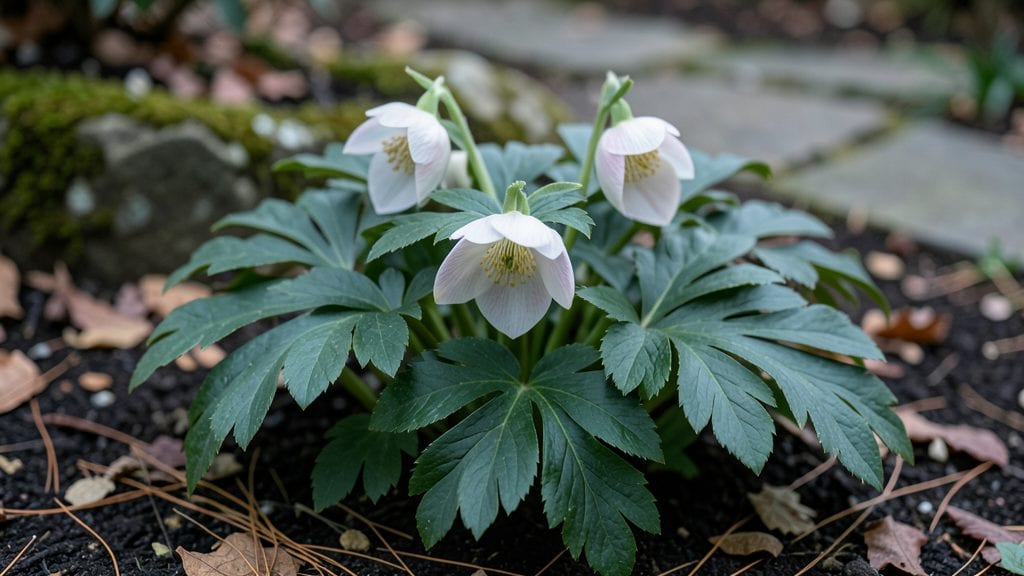
Yes, hellebore is a perennial plant that thrives for decades with minimal care, thanks to its deep root system and evergreen foliage that survives harsh winters.
Hellebore's perennial nature comes from its ability to store energy in thick, fibrous roots that extend deep into the soil. 🌱 Unlike annuals that complete their life cycle in one season, hellebore enters a dormant phase in winter but emerges stronger in spring.
This hardiness makes it a favorite for gardeners in USDA zones 4-9, where it can bloom reliably for 10+ years with proper soil drainage and partial shade.
The key to its longevity isn't just cold tolerance—it's how these plants balance growth and conservation, adapting to seasonal challenges while maintaining their signature dark green leaves year-round.
What sets hellebore apart is its evergreen habit—most perennials lose foliage in winter, but hellebore keeps its leaves, providing winter interest. This trait, combined with its early spring blooms, makes it a standout in gardens.
I've seen hellebores in my own garden that were planted by previous owners over 25 years ago—they've simply been divided and transplanted, proving how low-maintenance these plants truly are when given the right conditions.
💡 In This Article
- Hellebore’s Perennial Lifespan and Growth Habits
- Best Practices for Cultivating Long-Lived Hellebore
Hellebore’s perennial lspan and growth habits
Hellebore's perennial survival strategy begins with its deep, fibrous root system that can extend up to 24 inches below ground. These roots act like natural water and nutrient reservoirs, allowing the plant to store carbohydrates during dormancy—similar to how a squirrel stores nuts for winter.
The root structure also enables hellebore to access moisture from deeper soil layers, making it drought-tolerant once established. Unlike annuals that rely on rapid growth and reproduction in a single season, hellebore's roots grow slowly but continuously, building resilience over time.
The plant's evergreen foliage plays a crucial role in its perennial success. While most perennials lose leaves in winter, hellebore's dark green leaves persist year-round, performing photosynthesis even at 32°F temperatures. This allows the plant to continue producing energy during mild winters, giving it a head start in spring growth.
The leaves also protect the crown from freezing temperatures, acting like a natural insulation layer. What's fascinating is how hellebore's leaves develop a waxy coating that repels water, preventing ice formation that could damage delicate plant tissues.
Hellebore's seasonal growth cycle demonstrates its adaptation to temperate climates. In late winter or early spring, before most garden plants emerge, hellebore sends up flower stalks from its crown. These blooms appear when soil temperatures reach 40-45°F, signaling the plant's ability to detect subtle environmental changes.
After flowering, the plant focuses on foliage production and root expansion during the growing season, storing energy for winter. This cyclical pattern—bloom, grow, store—explains why hellebore can live for decades while annuals complete their entire life cycle in just months.
When comparing hellebore to other perennials, its cold tolerance stands out. While many perennials struggle in USDA zone 4 winters, hellebore thrives there thanks to its antifreeze proteins that prevent ice crystal formation in cells.
These proteins, similar to those found in winter wheat, allow hellebore to survive temperatures as low as -25°F without damage. The plant's ability to enter a state of dormancy—where metabolic processes slow dramatically—while maintaining cellular integrity is what truly sets it apart from annuals and even many biennials.
One often-overlooked factor in hellebore's longevity is its symbiotic relationship with mycorrhizal fungi in the soil. These beneficial fungi form a network around hellebore roots, extending the plant's reach for water and nutrients by up to 50% more than its roots alone.
This fungal partnership helps hellebore establish quickly in new planting sites and recover from minor stress. The result? A plant that not only survives but thrives with minimal intervention, making it one of nature's most resilient perennials.
What most gardeners don't realize is how hellebore's growth habits change with age. Young plants focus primarily on root development, while mature specimens (5+ years old) allocate more energy to flowering and foliage production.
This shift explains why hellebore often produces its most spectacular displays after 10-15 years of establishment—a stark contrast to annuals that peak in their first season. The plant's ability to "age gracefully" while continuously improving its vigor is what makes it such a prized garden perennial.