
Vegetables
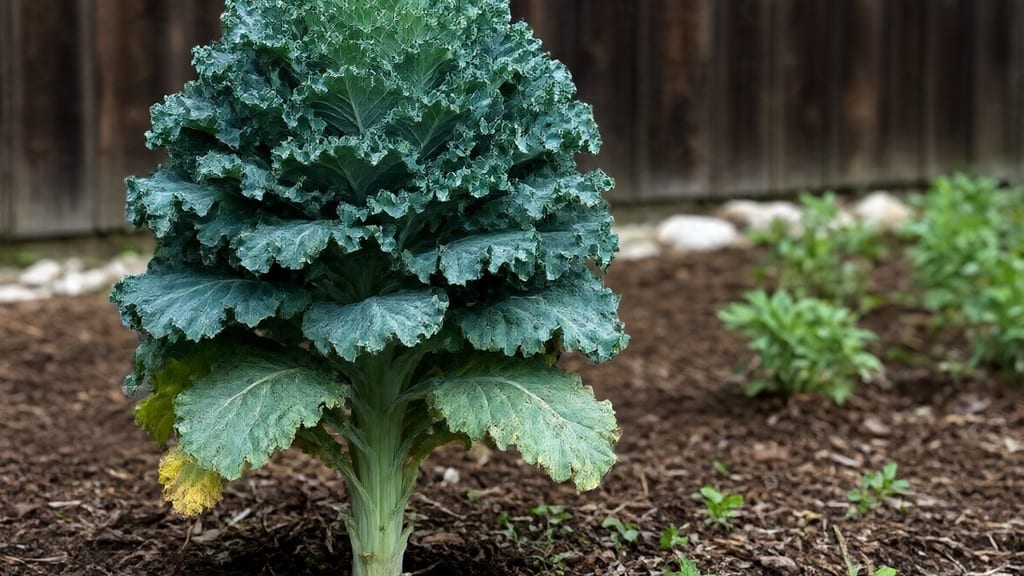
Ornamental kale isn’t a perennial—it behaves as a cold-hardy annual or biennial, surviving frost but typically dying back after winter. Some varieties may regrow in mild climates, though their lifespan hinges on temperature and hardiness zones, with optimal conditions extending it to two years.
Ornamental kale’s classification as a biennial means it follows a two-year lifecycle in ideal conditions: the first year focuses on leaf growth, while the second prepares for flowering and seed production. 🌱 Unlike true perennials, it doesn’t regenerate from the same root system—its resilience comes from cold tolerance and rapid regrowth after frost damage.
This makes it perfect for gardeners in zones 5-9 who want winter color but aren’t committed to long-term perennials.
What sets ornamental kale apart is its ability to handle sub-freezing temperatures down to 15°F, thanks to natural antifreeze proteins in its cells.
This frost resistance is why it’s often called a "winter superstar," but true perennials like rhubarb or asparagus will return year after year without this seasonal reset. The key to maximizing its lifespan?
Choosing varieties bred for cold endurance, like ‘Russian Red’, and protecting the crown with thick mulch during harsh winters.
💡 In This Article
- Ornamental Kale Growth Cycles and Cold Tolerance
- Extending Ornamental Kale’s Season with Gardening Hacks
Ornamental kale growth cycles and cold tolerance
Ornamental kale follows a biennial lifecycle, meaning it completes its growth cycle in two years under ideal conditions. During its first year, the plant focuses on developing a robust rosette of leaves, storing energy in its roots and crown.
This stage is critical for survival—when temperatures drop below 32°F, the plant enters dormancy, but its cells remain viable thanks to specialized proteins that prevent ice crystal formation.
Unlike true perennials, which regenerate from established root systems, ornamental kale relies on this stored energy to regrow after frost damage. 🌟
The science behind its cold tolerance lies in its cellular structure. Ornamental kale produces natural antifreeze compounds that lower the freezing point of its cell sap to around 15°F, allowing it to survive light frosts.
However, prolonged exposure to temperatures below 0°F can cause irreversible damage, especially to the crown. This is why gardeners in colder zones (like USDA Zone 5) often use thick mulch—it insulates the soil, maintaining temperatures just above freezing and preserving the plant's viability.
The key difference from true perennials is that ornamental kale doesn't have the same deep root system to sustain it through harsh winters.
Vernalization—the process of exposing plants to cold temperatures to trigger flowering—plays a surprising role in extending ornamental kale's lifespan. When subjected to 4-6 weeks of temperatures between 35-50°F, the plant's internal clock shifts from vegetative growth to reproductive mode.
This means that in mild winters (like those in Zone 8 or 9), ornamental kale may survive its first winter, store energy, and produce a second flush of growth in spring.
Some varieties, such as ‘Rosette’, are bred to handle this cycle better, making them more reliable for biennial performance. 💫
What most gardeners don't realize is how temperature fluctuations during winter can either save or doom their ornamental kale. Rapid freeze-thaw cycles—where temperatures swing between 20°F and 40°F—can cause moisture in the plant's cells to expand and contract, leading to cell rupture.
This is why consistent cold (like a steady 25°F for weeks) is less damaging than erratic temperature swings. True perennials, such as hostas or lavender, have evolved to handle these fluctuations better because they've developed thicker, more insulated root systems over centuries of adaptation.
For those in warmer climates (Zones 9-10), ornamental kale behaves more like an annual because it can't tolerate the heat of summer. In these areas, it thrives as a cool-season crop, bolting (flowering prematurely) when temperatures exceed 80°F.
This heat sensitivity is another reason it's classified as a biennial in cooler regions—it needs the winter chill to reset its growth cycle. The trade-off is that in milder winters, you might get two growing seasons from a single planting, whereas in hot climates, you'll need to replant annually. ✨
One often-overlooked factor is light exposure during dormancy. Even in winter, ornamental kale benefits from some sunlight, which helps maintain chlorophyll production and keeps the plant's metabolism active enough to survive.
This is why gardeners in cloudy climates (like the Pacific Northwest) often see better regrowth than those in areas with long, dark winters. The combination of cold tolerance, vernalization, and light exposure creates a delicate balance that determines whether your ornamental kale will return the following year—or not. 🌱