
Plants
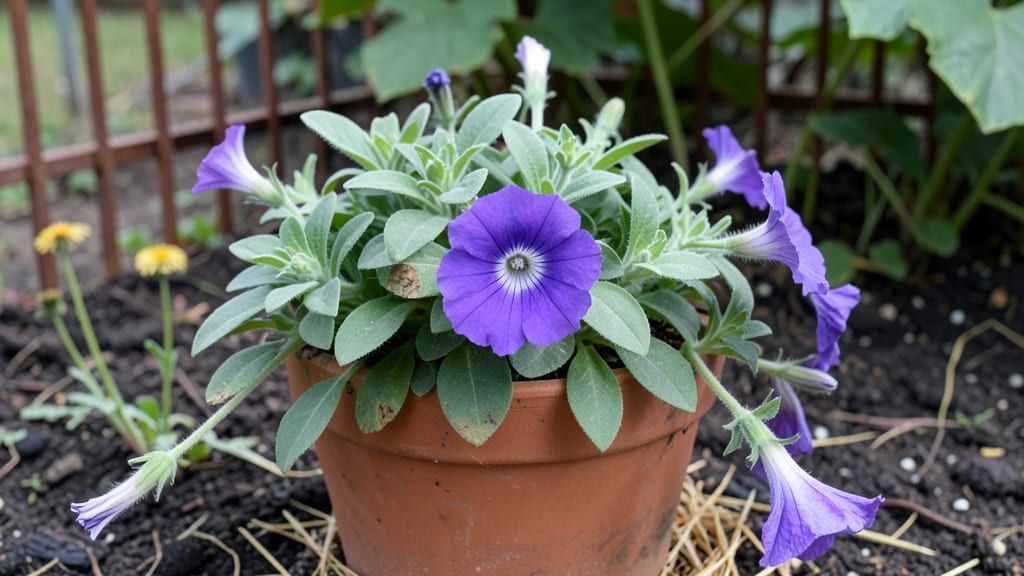
Supertunias are not true perennials but behave as annuals or short-lived perennials in most climates, dying back to the ground in winter and often requiring replanting yearly. Their hardiness varies by variety, with some surviving mild winters in zones 9-11.
Supertunias are bred for vibrant blooms and heat tolerance, not cold endurance. 🌱 Unlike true perennials that regrow from the same root system year after year, these plants treat winter like a death sentence unless you're in a frost-free zone.
The key difference lies in their hybrid genetics—most are crosses designed for summer color rather than winter survival. Even in zone 10, where some varieties might persist, they often look ragged after winter and rarely recover as robustly as established perennials.
What this means for gardeners is that treating them as annuals (replanting each spring) is the safest bet unless you're willing to invest in overwintering strategies like container protection or mulching. The trade-off? Their nonstop blooms make them worth the effort for seasonal displays.
💡 In This Article
- Supertunia Cold Hardiness and Winter Survival Guide
- Extending Supertunia Lifespan: Year-Round Care Tips
Supertunia cold hardiness and winter survival guide
Supertunias aren't built for frost—their hybrid genetics prioritize heat tolerance and vibrant blooms over winter resilience. The critical threshold is 30°F; when temperatures drop below this, their cells begin to freeze, causing irreversible damage to the delicate petunia-based genetics.
Unlike true perennials (like hostas or daylilies), supertunias lack the hardy root systems or dormant buds that allow them to regrow after winter. Their roots are shallow and fibrous, designed for rapid summer growth rather than deep soil insulation.
The science behind their frost sensitivity lies in their cellular structure. Petunias (their parent plant) contain high water content in their leaves and stems—ideal for summer blooms but disastrous in freezing conditions.
When temperatures hit 25°F or lower, ice crystals form within these cells, rupturing membranes and killing the plant tissue. 🌡️ This is why even a light frost can turn a thriving supertunia into a crispy brown skeleton overnight.
Traditional petunias share this vulnerability, but supertunias' hybrid vigor doesn't translate to cold tolerance—it's all about summer performance.
Here's where zones come into play: In zone 9-11, some supertunia varieties might survive mild winters with minimal damage, especially if protected by microclimates (like near south-facing walls). However, their recovery is often weak—they'll sprout new growth but rarely reach their summer glory.
In colder zones (7 and below), they behave like true annuals, dying completely and requiring full replanting each spring. The root system's inability to store enough energy for winter regeneration is the core issue.
What makes this especially frustrating is how supertunias' parent plant, petunias, handles winter differently in their native South America. Wild petunias have adapted to seasonal dry periods but still avoid freezing temperatures.
The commercial supertunia hybrids simply haven't evolved this cold resistance—breeders focused on bloom size and color rather than hardiness. This genetic trade-off explains why you'll see supertunias thriving in summer containers but struggling to persist through winter, even in supposedly "mild" climates.
For comparison, consider how traditional perennials like salvia or lantana survive winters: they develop woody stems and deep root systems that store carbohydrates. Supertunias lack both adaptations.
Their energy goes into producing those show-stopping blooms, not winter survival structures. 🌿 This biological focus explains why they're often marketed as "seasonal splashes" rather than long-term garden investments.