
Flowers
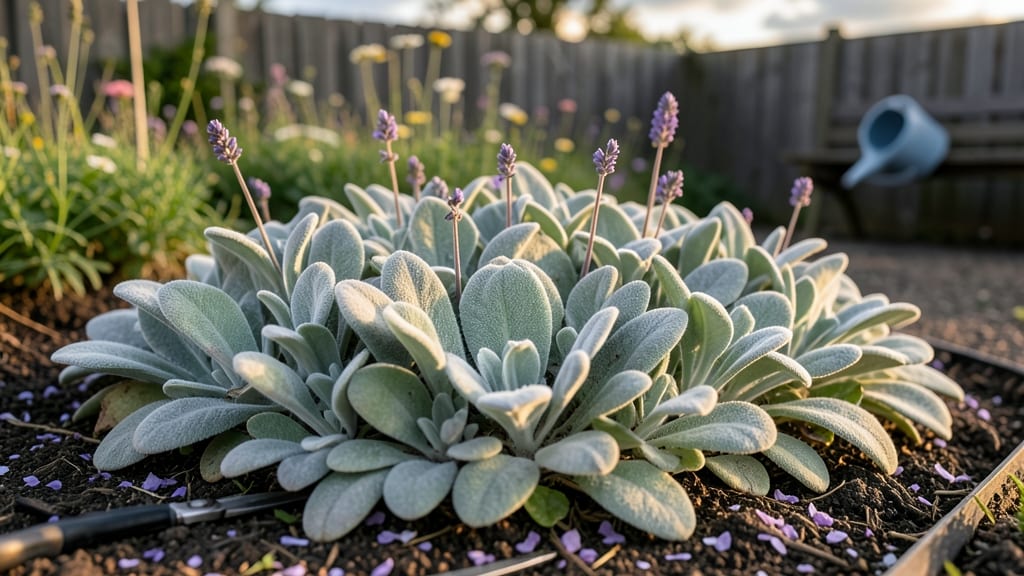
This fuzzy-leafed plant earns its perennial status through its robust root system, which stores energy to bounce back each spring—even after winter dieback. 🌱 In colder regions like zones 3-5, lamb's ear often looks dead in winter but survives underground, while zones 6-8 may see it persist year-round with minimal care.
The key difference in warmer climates is heat stress: without shade or mulch, it won't regenerate, making it behave like an annual.
What sets lamb's ear apart is its adaptability—it thrives in full sun to partial shade, handles drought once established, and even self-seeds in ideal conditions.
This resilience makes it a favorite for gardeners who want low-maintenance beauty, though proper planting depth (roots should sit 1-2 inches below soil) and well-draining soil are critical to preventing root rot, which can turn a perennial into a one-season wonder.
💡 In This Article
- Lamb’s Ear Perennial Growth Patterns by Climate
- Tips for Extending Lamb’s Ear’s Lifespan in Gardens
Lamb’s ear perennial growth patterns by climate
Lamb’s ear survives as a perennial thanks to its deep, fibrous root system that extends 12-18 inches below the soil surface. This root structure stores carbohydrates and nutrients during dormancy, allowing the plant to regenerate even after winter dieback.
In USDA zones 3-5, where temperatures drop below -20°F, the roots remain protected by insulating soil, while the above-ground foliage browns and dies back completely. 🌱 The plant’s ability to regrow from these roots—rather than from seed—is what classifies it as a true perennial, even when it appears dormant.
In warmer zones like 6-8, lamb’s ear typically retains its velvety foliage year-round, though growth slows during winter months. The key difference lies in heat tolerance: temperatures above 90°F for extended periods can stress the plant, causing leaf scorch unless it receives afternoon shade.
Unlike true annuals, which complete their lifecycle in one season, lamb’s ear’s deep roots allow it to persist through multiple growing seasons—provided soil moisture and drainage remain consistent.
The plant’s cold-hardiness is remarkable—it can tolerate temperatures as low as -30°F when properly established, thanks to a process called cold acclimation. During fall, the roots convert stored sugars into antifreeze-like compounds that protect cellular structures.
This adaptation explains why lamb’s ear thrives in northern climates while struggling in hot, dry southern regions without protection. 🥶 In contrast, zones 9-11 often see lamb’s ear behave like an annual because extreme summer heat (combined with poor soil moisture) prevents root regeneration.
What most gardeners overlook is how planting depth affects perennial behavior. Roots planted too shallow (<1 inch deep) are vulnerable to freeze-thaw cycles in winter, while too deep planting (>2 inches) restricts root expansion. The ideal depth is 1-2 inches, allowing roots to access moisture while staying insulated.
In regions with freeze-thaw cycles, this depth difference can mean the difference between a perennial that returns year after year and one that fails to regenerate.
Another critical factor is soil composition. Lamb’s ear prefers well-draining, slightly alkaline soil (pH 6.0-7.5)—poor drainage causes root rot, which mimics the behavior of an annual by killing the plant in its first season.
In heavy clay soils, adding organic matter (like compost) improves aeration and water retention, supporting the root system’s resilience. This soil adaptation explains why lamb’s ear thrives in rock gardens (where drainage is excellent) but struggles in waterlogged areas.
The plant’s ability to self-seed also plays a role in its perennial classification. While not all seedlings survive, those that establish in favorable conditions create a natural ground cover, reinforcing the plant’s presence year after year.
This trait is most noticeable in zones 5-7, where mild winters allow seeds to germinate while still providing enough cold to harden the roots. 🌿 In contrast, zones with harsh winters (3-4) or extreme summers (9-11) require human intervention (like mulching or shading) to maintain perennial growth.