
Flowers
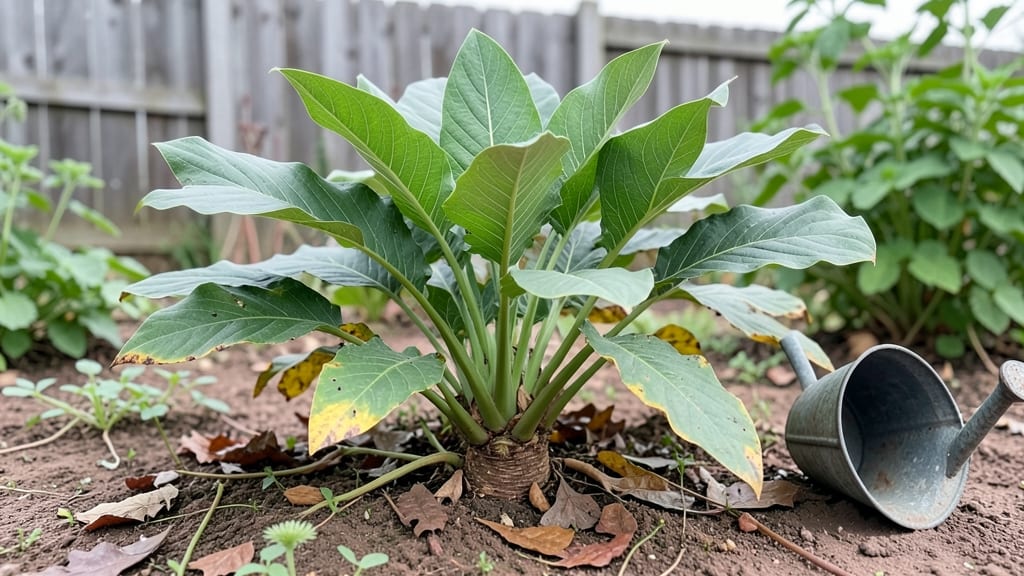
Curcuma ginger (Curcuma zanthorrhiza) is not a true perennial in most climates, since its rhizomes can't withstand freezing below 20°F (-6°C). In zones 9-11, it acts like a perennial, but elsewhere it requires winter protection or indoor storage. Successful regrowth depends entirely on protecting those rhizomes during cold months.
This tropical plant behaves more like a short-lived perennial in ideal conditions, where its thick rhizomes store enough energy to sprout new growth each season. 🌱 The key difference from true perennials is its cold sensitivity—even a light frost can kill the above-ground parts and damage rhizomes if not properly insulated.
I've seen gardeners in zone 7 successfully overwinter it by digging up rhizomes and storing them in damp peat moss, which mimics its natural tropical environment.
What's fascinating is how curcuma ginger's growth cycle mirrors other tropical rhizomatous plants like ginger itself. The rhizome system is its lifeline—when protected from freeze damage, it can produce new shoots year after year.
However, unlike hardy perennials such as turmeric (Curcuma longa), which tolerates cooler temperatures, curcuma ginger demands consistent warmth to maintain its perennial nature.
💡 In This Article
- Curcuma Ginger’s Growth Cycle and Cold Tolerance Limits
- How to Extend Curcuma Ginger’s Lifespan in Cold Climates
Curcuma ginger’s growth cycle and cold tolerance limits
Curcuma ginger (Curcuma zanthorrhiza) is classified as a herbaceous rhizomatous plant, meaning its survival depends entirely on the underground rhizomes that store carbohydrates and nutrients. These rhizomes act like natural batteries, converting sunlight into stored energy during the growing season.
In tropical climates (zones 9-11), where temperatures rarely drop below 50°F (10°C), the plant behaves like a true perennial, sending up new shoots each year from the same rhizome system. 🌿 The key difference from hardy perennials is its lack of cold acclimation—its biological systems haven't evolved to handle frost.
The rhizomes themselves are thick and fleshy, typically measuring 1-3 inches (2.5-7.5 cm) in diameter and containing high starch concentrations (up to 40% dry weight). This stored energy allows regrowth when conditions improve, but the trade-off is extreme cold sensitivity.
Unlike turmeric (Curcuma longa), which can tolerate brief exposures to 25°F (-4°C), curcuma ginger's rhizomes begin suffering damage at 32°F (0°C) and die when exposed to 20°F (-6°C) for more than a few hours. The cell membranes within the rhizomes rupture at these temperatures, causing irreversible damage.
What triggers dormancy in curcuma ginger isn't just temperature—it's the combination of declining daylight hours and cooling soil. In its native Indonesia, the plant experiences consistent warmth year-round, so its natural dormancy cycle is minimal.
When grown outside this range, the plant enters a forced dormancy state when nights consistently drop below 60°F (15°C).
This explains why gardeners in zone 8 can sometimes keep it alive for multiple years with heavy mulching: the rhizomes remain viable but in a suspended state until spring warmth reactivates growth.
Comparing curcuma ginger to true perennials reveals its limitations. Plants like hostas or daylilies have evolved antifreeze proteins that protect cellular structures during winter. Curcuma ginger lacks these adaptations—its survival strategy relies entirely on rhizome insulation. In nature, this works perfectly in tropical soils where temperatures remain stable.
But in temperate climates, even a 2-inch (5 cm) layer of mulch only provides 5-10°F (3-6°C) of protection—far from enough to prevent freeze damage during prolonged cold snaps.
The plant's growth cycle follows a predictable pattern: vigorous above-ground growth during 80-90°F (27-32°C) days, followed by leaf dieback as temperatures drop. What most gardeners miss is that the rhizomes continue metabolizing until soil temperatures fall below 55°F (13°C).
This is why even well-mulched plants may fail to regrow—if the rhizomes were exposed to freezing, their stored energy reserves become unusable. The solution lies in mimicking tropical conditions: maintaining soil temperatures above 60°F (15°C) year-round through containers or protected beds. ✨
Interestingly, curcuma ginger's sensitivity makes it behave more like an annual in cold climates than a perennial. Each year, gardeners must essentially "restart" the plant by replanting fresh rhizomes or carefully reviving stored ones.
This explains why commercial growers in cooler regions often treat it as an ornamental annual, despite its perennial classification in warm zones. The distinction matters because it determines whether you'll get multiple harvests or just one season's growth from each planting.