
Flowers
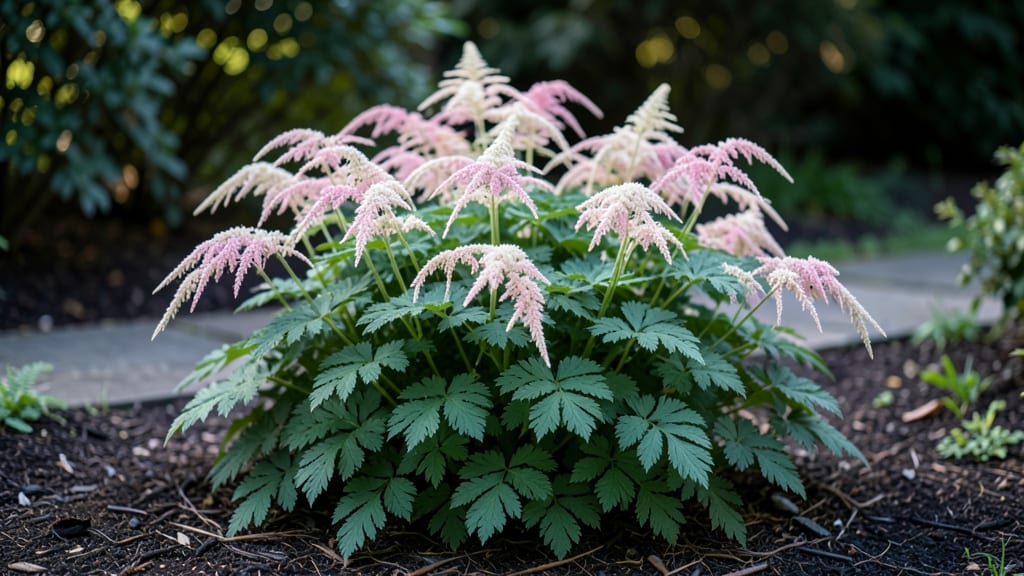
Yes, astilbe is a perennial that thrives for multiple seasons, returning year after year with vibrant plumes, though its foliage often dies back in winter. It’s cold-hardy in USDA zones 3–8, making it a reliable garden staple when planted correctly.
This hardy plant survives winter by storing energy in its rhizomes—thick, underground stems that act like natural batteries. 🌱 Once spring arrives, those rhizomes send up fresh foliage and flowers, proving why astilbe earns its reputation as a low-maintenance garden workhorse.
The key to keeping it happy? Planting in moist, well-draining soil with partial shade—conditions that mimic its native woodland habitats.
What sets astilbe apart from other perennials is its foliage dieback during winter dormancy. While the above-ground stems may brown and collapse, the roots remain alive beneath the soil, ready to burst back to life when temperatures rise.
This natural cycle makes astilbe perfect for gardeners who want year-round structure without annual replanting.
💡 In This Article
- Astilbe’s Lifecycle: Why It Returns Yearly
- Planting Astilbe for Long-Term Success
Astilbe’s lifecycle: why it returns yearly
Here's what's actually happening underground that makes astilbe a true perennial: its survival depends on a specialized rhizome system. Unlike annuals that complete their entire lifecycle in one season, astilbe stores carbohydrates in these thick, fleshy roots during summer and fall.
These rhizomes can grow 2-3 inches deep and contain enough energy reserves to sustain the plant through winter's dormancy period. Think of them as nature's version of a rechargeable battery—when spring arrives, they'll power new growth without needing to start from scratch. 🌿
The key difference between astilbe and annuals lies in its response to cold temperatures. When frost arrives, astilbe's above-ground foliage turns brown and appears dead, but the rhizomes remain dormant yet alive.
This is where the magic happens: cells in the rhizome produce antifreeze proteins that prevent ice crystals from forming, protecting vital tissues. Most annuals lack this adaptive mechanism, which is why they can't survive winter.
In fact, studies show astilbe rhizomes can withstand temperatures down to -30°F when properly protected, explaining its hardiness in zones 3-8.
What most people don't realize is how the timing of regrowth works. The cold period actually triggers a hormonal shift in the rhizomes, signaling them to break dormancy when soil temperatures reach 50-55°F in spring.
This precise timing ensures new shoots emerge just as daytime temperatures become warm enough for photosynthesis. The foliage that appears isn't random—it follows a carefully programmed sequence where the rhizome first produces roots, then stems, and finally the signature feathery plumes.
This layered growth pattern gives astilbe its distinctive seasonal performance.
There's an important distinction between astilbe's leaf dieback and true plant death. The brown stems you see in winter aren't dead—they're simply senescing (aging) as part of the plant's survival strategy. This process conserves energy by shutting down non-essential functions.
Meanwhile, the rhizome maintains cellular activity at reduced levels, ready to resume full function when conditions improve. Even in harsh winters, these underground structures can remain viable for 3-5 years with proper care, making astilbe one of the most resilient perennials for gardeners.
Consider this comparison: while annuals like marigolds complete their entire lifecycle in one season (seed to flower to seed), astilbe's lifecycle spans multiple years. The plant's ability to photosynthesize during its growing season allows it to build up reserves that annuals never accumulate.
This biological advantage explains why astilbe can produce those showy plumes year after year without needing to be replanted. The trade-off? Its slower initial establishment compared to annuals that bloom quickly in their first season. 💫
One fascinating aspect is how astilbe's growth cycle adapts to its environment. In cooler northern climates (zones 3-5), the plant may enter dormancy earlier and stay dormant longer, while in milder southern zones (6-8), it might show some winter greenery.
This flexibility is built into its genetic makeup, allowing astilbe to thrive across a wide range of conditions. The secret lies in its ability to balance growth and dormancy through seasonal cues like daylight length and temperature fluctuations.