
Pests and Diseases
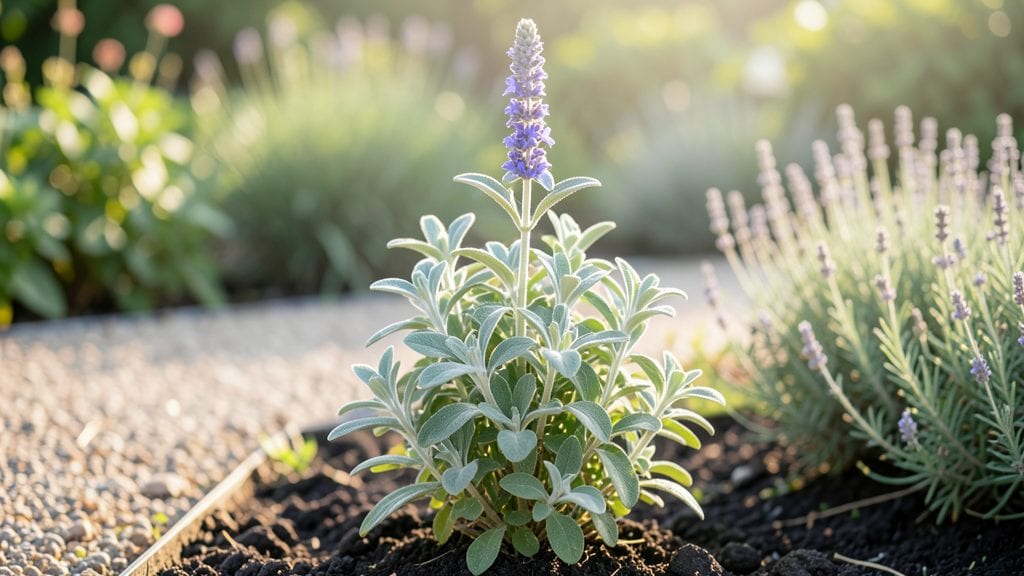
Texas sage is a perennial in USDA zones 7-10, thriving as a hardy shrub with evergreen foliage that survives mild winters but may die back in colder climates, regrowing from the base each spring.
Texas sage (Leucophyllum frutesens) earns its perennial status by adapting to seasonal changes, but its resilience depends heavily on climate. 🌿 Unlike annuals that complete their life cycle in one season, Texas sage returns year after year in warm zones by entering a dormant state during cold snaps.
The key difference from Mediterranean natives is its ability to regenerate from the root crown even after foliage damage—something that sets it apart from many drought-tolerant plants.
For gardeners in marginal zones, understanding this regrowth pattern means you can safely prune back damaged stems in early spring without sacrificing the plant's long-term survival.
What truly makes Texas sage unique is how it balances hardiness with adaptability. While it won't survive freezing temperatures indefinitely, its deep root system acts like an anchor, allowing it to bounce back stronger each season. This makes it perfect for landscapes where you want low-maintenance color without annual replanting.
The trade-off? In zones below 7, you'll need to treat it more like a short-lived perennial or use container growing to protect roots from prolonged cold snaps.
💡 In This Article
- Texas Sage Cold Hardiness and Winter Survival Strategies
- Growing Texas Sage Perennially in Cooler Climates
Texas sage cold hardiness and winter survival strategies
Texas sage's survival in cold climates hinges on its semi-evergreen nature and deep root system. Unlike true evergreens that maintain foliage year-round, Texas sage sheds leaves in freezing conditions but keeps its woody structure intact.
The roots, which can extend 3-5 feet deep, store carbohydrates that fuel regrowth when temperatures rise above 20°F. This adaptation explains why it thrives in Mediterranean climates but struggles in prolonged sub-zero conditions where roots freeze.
The plant's dormancy mechanism works like a natural hibernation: as temperatures drop below 32°F, cellular processes slow dramatically, preserving moisture and energy. Studies show Texas sage can tolerate 15°F for short periods, but prolonged exposure below 10°F often kills the top growth.
The key difference from Mediterranean sages? Texas sage's leaves contain higher wax coatings that reduce water loss during dormancy, allowing it to survive 3-4 months of winter conditions without irrigation.
Sun exposure and soil type dramatically influence survival rates. In full sun (6+ hours daily), Texas sage develops thicker bark and more robust root systems, giving it a 5°F cold tolerance advantage over shaded plants.
Well-draining soil (sandy loam with 60% porosity) prevents root rot during freeze-thaw cycles, while heavy clay soils trap moisture and accelerate cold damage.
Gardeners in marginal zones (like zone 6) often report success by planting on south-facing slopes, where afternoon sun warms the roots by 5-10°F compared to flat areas.
What most gardeners overlook is how Texas sage's regrowth pattern differs from true perennials. While roses regrow from dormant buds, Texas sage regenerates from the root collar—the thickened stem base.
This means even if 90% of foliage dies back, the plant can resprout from just 2-3 inches of remaining stem. The trade-off? First-year growth is slower in cold climates, as energy goes toward rebuilding the root system rather than foliage.
Comparing Texas sage to other drought-tolerant perennials reveals its unique cold strategy. Unlike rosemary (which dies back to ground level in zone 8), Texas sage maintains its woody structure year-round, making it more resilient to late spring frosts.
However, its slow recovery in cold zones means it's better suited for landscape accents than edible gardens where quick regrowth matters. For example, a 3-foot-tall plant in zone 7 might take 6-8 weeks to regain full height after winter dieback, compared to 3-4 weeks in zone 9.
Here's the practical takeaway: Texas sage's perennial status depends on three critical factors—root protection, microclimate selection, and proper pruning. In zones 6-7, focus on mulching with 4-6 inches of straw around the base to insulate roots, while in zones 8-10, minimal winter care suffices.
The plant's ability to self-prune damaged branches in spring is nature's way of conserving energy for regrowth. 💫