
Succulent
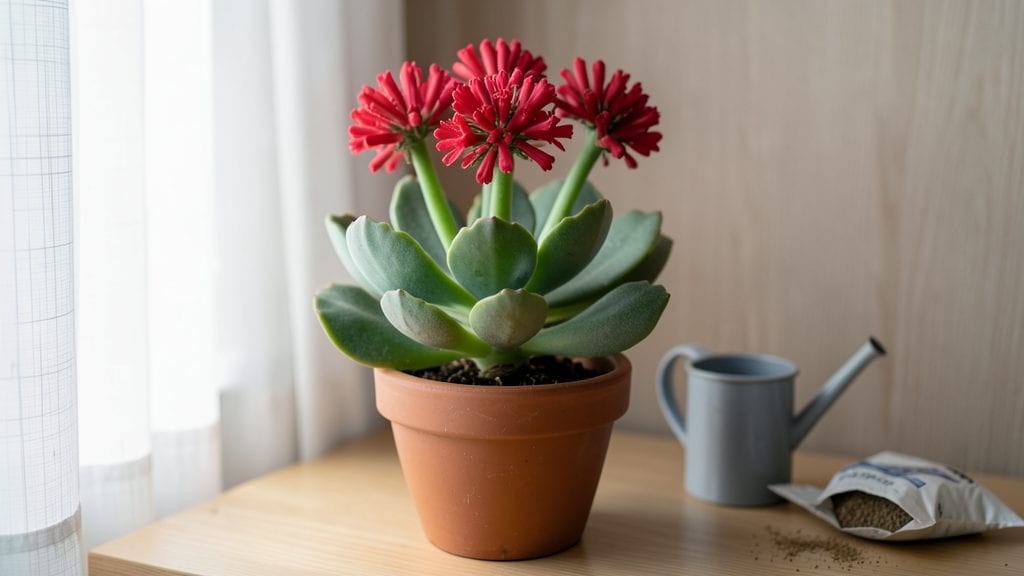
A kalanchoe is a perennial in warm climates but behaves as an annual in colder regions, thriving best in USDA zones 10-12 where frost-free conditions persist year-round. Most varieties die back in freezing temperatures but regrow from seed or cuttings when conditions warm again.
A kalanchoe's perennial nature depends entirely on climate.
In frost-free zones like Southern California or Florida, these succulents happily return year after year, blooming reliably when conditions are ideal. 🌵 However, when temperatures dip below 30°F, the plants either go dormant or perish completely—just like frost-sensitive perennials such as bougainvillea. The key difference?
Kalanchoes can often bounce back from cuttings or seeds once spring arrives, making them more resilient than many gardeners realize.
What's fascinating is how their growth cycle mirrors tropical plants—they thrive on consistent warmth and bright light, but their survival strategy shifts dramatically in colder areas.
Even in zones 9 and below, gardeners can extend their lifespan by bringing them indoors during winter, effectively turning a "lost" annual into a long-lived houseplant.
💡 In This Article
- Kalanchoe Cold Hardiness Explained
- How to Overwinter Kalanchoe Indoors
Kalanchoe cold hardiness explained
Kalanchoe plants belong to the Crassulaceae family, a group of succulents native to Madagascar and other tropical regions where temperatures rarely drop below 50°F. Their botanical classification as perennials stems from their ability to regrow from dormant structures—whether roots, stems, or even seeds—when conditions become favorable again.
This resilience mirrors other tropical perennials like hibiscus, which also succumb to frost but can regenerate from cuttings in warmer seasons. 🌿 The key difference lies in their cold tolerance: while hibiscus may survive brief 28°F dips, kalanchoe typically begins cellular damage at 30°F or lower, triggering irreversible tissue death in most varieties.
The science behind their cold sensitivity involves cellular water content and membrane integrity. Succulents like kalanchoe store water in their thick leaves, but when temperatures plummet, these cells freeze and rupture due to ice crystal formation. At 32°F, the damage accelerates—similar to how a frozen water balloon shatters.
This process explains why even a light frost can kill a mature kalanchoe plant overnight, unlike hardier perennials like lavender, which can tolerate 15°F without issue. The plant's tropical origins mean it lacks the antifreeze proteins found in cold-hardy species, making it vulnerable to winterkill.
What most gardeners overlook is how kalanchoe's growth cycle adapts to seasonal changes. In zones 10-12, they bloom reliably year-round, but in colder zones, they enter a state of dormancy when nights grow chilly. This isn't true dormancy like bulbs experience—it's more akin to a survival shutdown.
Leaves may yellow and drop, stems shrivel, and roots become inactive, but the root system often remains viable underground until spring warmth reactivates growth. 🌱 This explains why kalanchoe can "come back" from what appears to be death, especially if roots are protected from freezing.
Comparing kalanchoe to other frost-sensitive perennials reveals its unique survival strategy. Bougainvillea, for example, dies back to the ground in frost but can regrow from the base if the root crown survives. Kalanchoe, however, lacks this robust root system—its survival hinges on either underground protection or propagation from cuttings.
This is why gardeners in zones 8-9 often treat kalanchoe as an annual, even though it's technically a perennial in ideal conditions. The threshold for perennial behavior is consistent warmth, not just the ability to regrow.
Here's what happens at the cellular level when temperatures drop: at 30°F, kalanchoe's cell membranes begin to stiffen due to lipid phase transitions, disrupting nutrient flow. Below 28°F, intracellular ice formation occurs, destroying organelles like chloroplasts—this is why leaves turn black and mushy after frost.
The plant's inability to produce protective sugars (like those in cold-hardy succulents) makes this process irreversible. 🧊 This biological response explains why even a brief cold snap can be fatal, unlike perennials that gradually acclimate to cooler temps through hardening-off processes.
For gardeners in marginal zones (9-10), the distinction between perennial and annual behavior comes down to winter protection. A kalanchoe potted and moved indoors during winter can live for decades, proving its perennial nature. Left outside, it behaves like an annual—hence the confusion.
This dual nature is why kalanchoe is often called a "tender perennial," a term botanists use for plants that thrive as perennials only in specific conditions. 🌡️ Understanding this threshold helps gardeners make informed decisions about overwintering strategies.