
Tools
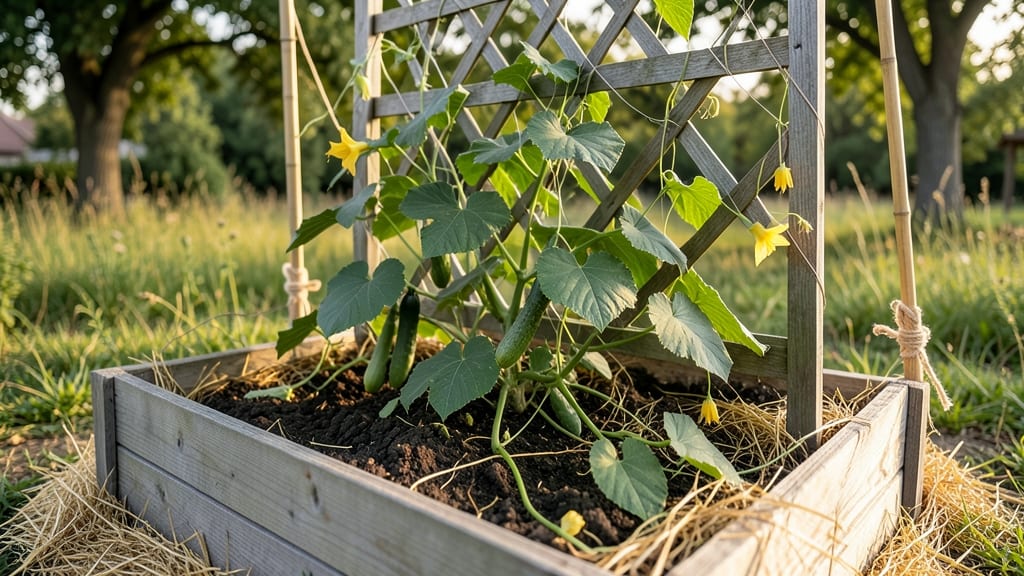
Growing cucumbers in a raised bed garden transforms your backyard into a bursting vine paradise—and the secret isn’t just good soil, it’s the right spacing. 🌱 I learned this the hard way after my first season when crowded vines smothered each other, leaving me with bitter, stunted fruit.
The key? Giving each plant 18-24 inches of space (yes, even for bush varieties) so they stretch toward the sun without competing for air or nutrients.
Start with well-draining soil mixed with compost—cucumbers hate soggy roots—and plant seeds 1 inch deep, 3-4 per hill. Thin to the strongest seedling once sprouts hit 2 inches tall. Trellising is non-negotiable: without support, vines sprawl, inviting pests and disease.
A 5-foot-tall cage or sturdy netting keeps them vertical, saving space and making harvests effortless. Water at the base (never overhead) to prevent mildew, and watch those vines climb toward sun-drenched productivity.
By mid-summer, you’ll be snipping crisp, sweet cucumbers straight from the vine—no grocery store detour needed. The real magic? One well-spaced raised bed can produce 50+ pounds of cucumbers, enough to share with neighbors or pickle for winter.
Just avoid over-fertilizing with nitrogen (it boosts leaves, not fruit) and keep an eye out for cucumber beetles—handpick them early, or they’ll ruin your harvest.
This method works in any climate—just adjust planting time (spring after frost, or late summer for fall crops). Whether you’re growing slicers, picklers, or heirlooms, the same spacing rules apply. Ready to turn that raised bed into a cucumber powerhouse? Let’s get those seeds in the ground.
📚 In This Guide
- What you need
- Instructions
- Tips and common mistakes
- Wrapping up and next steps
What you need
- ● Raised bed kit (4’x8’ recommended for spacing; height: 6–12” for drainage) or pre-built raised bed (ensure it has drainage holes).
- ● Quality garden soil: 2–3 cubic yards of well-draining, fertile mix (compost, peat moss, and perlite in a 60/30/10 ratio).
- ● Cucumber seeds or seedlings: Seeds: 3–5 plants (bush varieties) or 1–2 plants (vining types, if trellising).
- ● Seedlings: 2–3 healthy starts (transplant after last frost).
- ○ Trellis or stakes (optional but recommended for vining varieties): 6–8 ft. tall cattle panel trellis, bamboo stakes, or netting.
- ● Twine or soft plant ties for securing vines.
- ● Organic mulch: Straw, shredded leaves, or grass clippings (2–3 inches thick to retain moisture).
- ● Drip irrigation or soaker hose (for consistent watering; ¼” tubing, 1–2 emitters per plant).
- ● Fertilizer: Balanced organic fertilizer (10-10-10) or compost tea at planting.
- ● Side-dress with fish emulsion or kelp meal mid-season (every 3–4 weeks).
- ● Gloves & hand trowel (for planting and weeding).
- ● Pruners or scissors (to trim yellow leaves or encourage bushier growth).
- ● Sunlight: Full sun (6–8+ hours daily)—cucumbers are sun-worshippers! 🌞
- ● Spacious bed: Minimum 3 ft. spacing between plants (or 12–18” for bush varieties).
- ● Drainage: Ensure your raised bed has holes at the bottom (or elevate it).
- ● Warm soil: Wait until soil temps reach 60°F+ (use a soil thermometer if unsure).
- ● Row covers (to protect from pests like cucumber beetles).
- ● Compost thermometer (to monitor soil warmth).
- ● Plant markers (to track varieties).
- ● Epsom salt (1 tbsp per plant in early growth for magnesium boost).
Step-by-Step instructions for growing cucumbers in a raised bed
Let’s build a thriving cucumber patch with proper spacing and care—your vines will thank you.
🪴 Step 1: Prepare the Raised Bed for Planting
Start by filling the raised bed with 4-6 inches of compost mixed into the top 12 inches of soil. Cucumbers are heavy feeders, so this ensures they get the nutrients they crave. I like to add a 5-10-10 fertilizer at the rate of 1 pound per 100 square feet—this balances nitrogen for leafy growth with phosphorus for strong roots.
Raised beds drain faster than in-ground gardens, so mix in 1-2 inches of perlite or coarse sand to improve aeration. Test the soil’s moisture by squeezing a handful—it should hold together but not feel soggy. If your bed is new, water it thoroughly 24 hours before planting so the soil settles evenly.
🌱 Step 2: Plant Seeds or Transplants with Proper Spacing
For seeds, plant 3 seeds per hill, spaced 12-18 inches apart in rows 3-4 feet apart. Cucumbers need room to sprawl, and crowding leads to poor airflow—this is how powdery mildew takes hold. If using transplants, dig holes just deep enough to bury the root ball but keep the stem above soil level.
Here’s the thing—bury the seeds only 1 inch deep. Planting too deep slows germination, and cucumbers are sensitive to soil temperature. After planting, water gently to settle the soil, but avoid soaking the seeds. You’ll see sprouts in 5-10 days if the soil stays 65-75°F—warmer soil speeds things up.
☀️ Step 3: Train Vines and Provide Support Early
Cucumbers are vigorous climbers, so install trellises, cages, or strong stakes right after planting. I use 5-foot tall tomato cages for bush varieties and 8-foot tall trellises for vining types. Train the main stem along the support, tying it loosely with soft plant ties—tight bindings can damage stems as they thicken.
Prune side shoots (suckers) when they’re 3-4 inches long to focus energy on the main vine. This might seem counterintuitive, but it prevents overcrowding and improves airflow, reducing disease risk. You’ll notice stronger, straighter vines that produce more fruit if you keep up with this weekly.
💧 Step 4: Water and Fertilize for Maximum Yield
Water cucumbers deeply 1-2 times per week, aiming for 1-1.5 inches of water. Let the top 2 inches of soil dry out between waterings—consistent moisture prevents bitter fruit and blossom-end rot. I water in the early morning to reduce fungal diseases, and I always water at the base, not the leaves.
Feed plants with a balanced liquid fertilizer (10-10-10) every 2-3 weeks once vines start running. Look for yellowing leaves or stunted growth—this is your cue to boost nutrients. Mulch with straw or shredded leaves to retain moisture and keep soil temperatures steady.
✂️ Step 5: Harvest and Maintain Through the Season
Harvest cucumbers when they’re 6-8 inches long for best flavor—waiting too long makes them seedy and bitter. Use pruning shears to cut stems cleanly, leaving a small stub. This encourages more fruit to set. I harvest every 2-3 days during peak production to keep the plants motivated.
Watch for yellow leaves or wilting—these can signal overwatering, underfeeding, or pests like cucumber beetles. Remove damaged leaves immediately and treat with neem oil if you spot chewing. With proper care, your raised bed can produce pounds of cucumbers through the season.
Tips & tricks for perfect raised bed cucumber growth
A few strategic moves can transform your raised bed into a cucumber powerhouse—here's what I've learned after years of trial and error.
Soil Temperature is Everything: Those 65-75°F soil temperatures in Step 2 aren't arbitrary—they're the sweet spot for germination. I've found that using a soil thermometer for a few days before planting helps me time everything perfectly. If your soil runs cooler (below 65°F), consider using black plastic mulch a week before planting to warm the soil naturally. This simple step can shave days off your germination timeline and give your cucumbers a stronger start.
Support Systems Save Space: When installing your trellises or cages in Step 3, don't just slap them in—think vertically from day one. I install my 8-foot trellises at a 45-degree angle against the bed's side to maximize vertical growth while keeping the base stable. This creates a natural funnel for watering and makes harvesting from the sides much easier. The key is using soft plant ties that can stretch as the vines thicken—nylon strips work perfectly and won't girdle the stems as they grow.
Watering Wisdom: That 1-1.5 inches of water in Step 4 is crucial, but timing matters just as much. I've developed a system where I water deeply in the morning and again in the late afternoon during peak summer heat. The afternoon watering gives roots time to absorb moisture before evening, while morning watering prevents fungal issues. Pro tip: Use a rain gauge or measuring cup to track exactly how much water you're applying—eyeballing it often leads to either underwatering or waterlogging.
Harvesting Hack: For that 6-8 inch harvest window in Step 5, I've found that harvesting with pruning shears actually stimulates more production than twisting stems. The clean cut prevents disease entry points and encourages the plant to focus energy on producing more fruit rather than healing damaged tissue. I also recommend harvesting first thing in the morning when cucumbers are crispest and coolest—this gives you the best quality and makes storage last longer in your fridge.
Pro Tips for Growing Cucumbers In A Raised Bed Garden
- A few strategic moves can transform your raised bed into a cucumber powerhouse—here's what I've learned after years of trial and error.
- Soil Temperature is Everything: Those 65-75°F soil temperatures in Step 2 aren't arbitrary—they're the sweet spot for germination.
- Support Systems Save Space: When installing your trellises or cages in Step 3, don't just slap them in—think vertically from day one.
Frequently asked questions
Got questions about growing cucumbers in a raised bed?
You’re not alone! Here are answers to the most common concerns—from spacing to pests—to help you grow lush, productive vines with confidence.
How close can I plant cucumber seeds in a raised bed?
Space cucumber seeds 1–2 inches apart in rows that are 2–3 feet apart to allow airflow and sunlight. Once seedlings sprout, thin them to 12–24 inches apart (closer for bush varieties, wider for vining types). Overcrowding leads to disease and poor fruit production.
When is the best time to plant cucumbers in a raised bed?
Wait until the soil is at least 60°F (15°C) and all frost risk has passed. In warm climates, plant in early spring; in cooler zones, start seeds indoors 4–6 weeks before the last frost or use black plastic mulch to warm the bed. Cucumbers thrive in 70–90°F (21–32°C) soil.
What are the most common pests for raised-bed cucumbers, and how do I prevent them?
Watch for cucumber beetles, aphids, and squash bugs. Use row covers early in the season, neem oil sprays, or introduce beneficial insects like ladybugs. Interplanting with nasturtiums or marigolds can deter pests naturally. Remove yellowing leaves promptly to reduce beetle eggs.
Can I grow cucumbers in a raised bed without trellising?
Yes! Bush cucumber varieties (like ‘Bush Champion’) stay compact (2–3 feet tall) and don’t need trellises. For vining types, let them sprawl—but expect smaller yields and more soil-borne diseases. If space allows, add a small trellis or cage to improve air circulation and fruit quality.
Why are my cucumber flowers falling off, and how do I fix it?
Dropping flowers often signal stress from heat, poor pollination, or uneven watering. Hand-pollinate by gently shaking vines or using a small brush to transfer pollen. Ensure consistent 1–2 inches of water weekly and mulch to retain moisture. If temps exceed 90°F (32°C), provide afternoon shade.
Wrapping up and next steps
Growing cucumbers in a raised bed garden is a rewarding way to enjoy fresh, homegrown produce with minimal space and effort! By following the sun-loving spacing secrets—like maximizing vertical growth, optimizing soil health, and keeping pests at bay—you’ll be well on your way to a thriving vine.
The key takeaway? Patience and proper planning lead to a bountiful harvest, even in a small garden.
Ready to dive in? Start by sketching your raised bed layout—mark those sunniest spots and get your materials ready. Then, grab your gloves and let’s grow those cucumbers! 🌱✨