
Plants
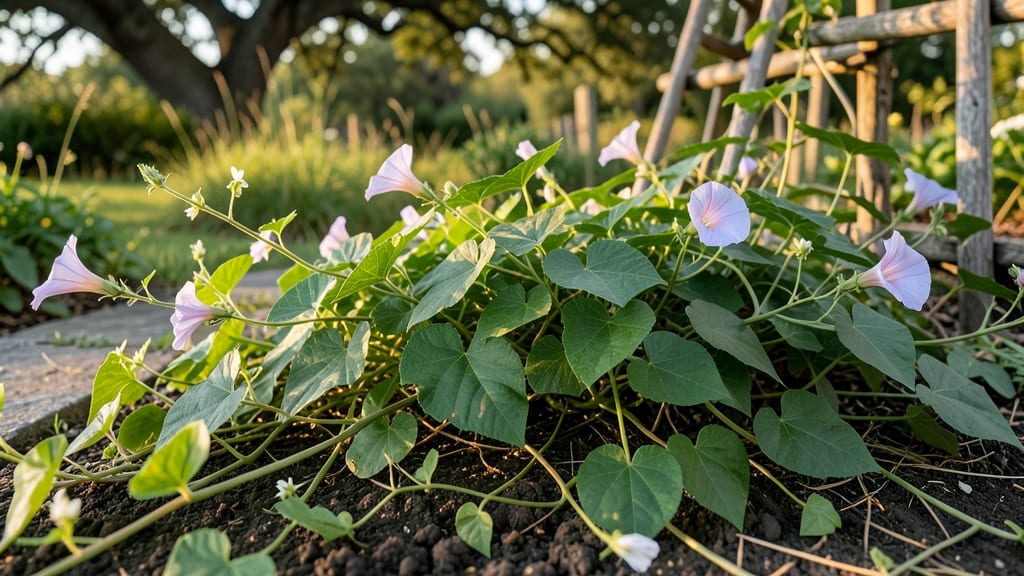
Watching a morning glory with three-lobed leaf vine unfurl is like seeing a living watercolor bloom before your eyes. 🌿 This fast-climbing vine (Ipomoea tricolor) transforms bare trellises into cascades of blue, purple, or white blooms by midsummer—if you give it the right start.
The key difference? Those signature trifoliate leaves (three leaflets per stem) set it apart from other morning glories, and its sun-loving nature means it thrives where many vines struggle.
You’ll need a sturdy trellis or fence (6+ feet tall), well-draining soil, and a sunny spot with at least 6 hours of direct light daily. Direct-sow seeds after your last frost date—no need for transplanting, as these vines germinate quickly in warm soil.
The real secret? Consistency. Keep the soil evenly moist but not soggy, and watch those tendrils latch onto supports within 2-3 weeks.
By late summer, you’ll be harvesting armfuls of blooms that open at dawn and fade by afternoon—hence the name. The vines grow aggressively (up to 10 feet per season), so regular pruning keeps them manageable and encourages bushier growth.
Deadhead spent flowers to prolong blooming, and you’ll enjoy color until the first frost. In warmer climates, it may reseed itself, but most gardeners treat it as an annual.
Common mistakes? Overwatering (roots rot easily) and letting it sprawl unchecked (it’ll smother nearby plants). For extra vibrancy, fertilize lightly with a balanced formula at planting and again when blooms appear.
Whether you’re training it up a pergola or letting it spill over a raised bed, this vine delivers dramatic results with almost no effort—just sun, space, and a little patience.
📚 In This Guide
- What you need
- Instructions
- Tips and common mistakes
- Wrapping up and next steps
What you need
- ● Seeds: Ipomoea tricolor (3-lobed leaf variety) – 10–20 seeds (adjust based on desired coverage).
- ● Potting Mix: Well-draining, organic potting soil (10–15 lbs for containers or 1–2 bags for in-ground planting).
- ○ Containers (Optional for Starts): 4–6 small biodegradable pots (3–4 inches deep) or
- ● 1 large container (10+ inches deep) for direct sowing.
- ● Trellis or Support: A sturdy trellis, fence, or obelisk (6+ feet tall for optimal climbing).
- ● Watering Can or Hose: With a gentle spray nozzle for seedlings.
- ● Fertilizer: Balanced, slow-release granular fertilizer (e.g., 10-10-10) or liquid seaweed extract.
- ● Pruners: Sharp, clean pruning shears (for trimming and training vines).
- ● Mulch (straw or shredded leaves) to retain moisture and suppress weeds.
- ● Compost or worm castings for nutrient-rich soil amendments.
- ● Plant markers or labels to track varieties (if mixing seeds).
- ● Garden gloves to protect hands during planting.
- ● Shade cloth (for seedlings if starting indoors in hot climates).
Step-by-step instructions for cultivating the morning glory 3-Lobed leaf vine
This vigorous climber thrives with minimal fuss—just sun, patience, and a sturdy support.
🌱 Step 1: Choose the Perfect Planting Location
Morning glories demand full sun—at least 6-8 hours daily—to produce their iconic trumpet-shaped blooms. I always scout locations where the trellis or fence receives unobstructed morning sunlight, as the name suggests. Avoid spots where afternoon shade lingers, as this slows flowering and weakens vines.
Test your site for a week before planting: mark where the sun hits by 10 AM and where it fades by 4 PM. The ideal spot will show full sun coverage during these hours. If your yard lacks natural sun, supplement with a south-facing grow light for 12+ hours daily—this vine won’t tolerate neglect.
🌿 Step 2: Prepare the Soil and Support Structure
These vines grow 10-15 feet tall in a single season, so install a strong trellis, fence, or arbor before planting. I use metal or wooden lattice panels buried 18 inches deep for stability, especially in windy areas. Avoid flimsy string or wire—it’ll snap under the weight of blooms.
Amend the soil with 2-3 inches of compost mixed into the top 6 inches of dirt. Morning glories tolerate poor soil but reward richer conditions with faster growth and more flowers. Test drainage by digging a 12-inch hole, filling it with water, and watching how quickly it drains. If water pools after 30 minutes, raise the planting bed or add sand or perlite to improve aeration.
🌱 Step 3: Sow Seeds Directly After Last Frost
Morning glories hate transplanting, so sow seeds directly outdoors once soil warms to 60°F and nighttime temperatures stay above 50°F. Plant seeds ½ inch deep and 6 inches apart in rows 18 inches apart—this spacing prevents overcrowding and fungal issues. I like to scatter seeds every 4-6 inches along the base of the trellis for a lush, continuous climb.
Press seeds lightly into soil with your thumb—don’t bury them deeper, or germination slows. Water gently until the soil feels moist but not soggy to the touch. Germination takes 7-14 days, depending on warmth. Thin seedlings to 6 inches apart once they develop first true leaves (the 3-lobed signature leaves), snipping weaker stems at soil level with clean scissors.
☀️ Step 4: Train Vines and Maintain Vigorous Growth
As vines reach 6 inches tall, gently weave them through the trellis or tie them with soft twine to encourage upward growth. Avoid plastic ties—they can girdle stems as vines thicken. I check daily for new tendrils (the curly tips) and guide them upward immediately. Without support, vines sprawl and produce fewer blooms.
Water deeply 1-2 times weekly, aiming for 1 inch of water per week. Let the top 2 inches of soil dry between waterings to prevent root rot. Fertilize lightly with a balanced 10-10-10 formula at planting and again when vines hit 3 feet tall. Over-fertilizing leads to leafy growth at the expense of flowers—this vine prioritizes blooms over foliage.
✂️ Step 5: Deadhead and Prepare for Next Season
Remove faded blooms daily by pinching them off at the base. This redirects energy to new flowers and extends the blooming season. I use finger pressure to snap stems cleanly—no tools needed. If vines yellow or wilt by late summer, trim back one-third to rejuvenate growth. Morning glories are annuals, so they’ll die back with frost.
After the first hard frost, cut vines down to 6 inches tall and compost the debris (unless disease was present, then discard). Mark the spot—these seeds self-sow aggressively, and you’ll likely see volunteers the following spring. For guaranteed returns, collect seeds from dried pods (they’ll split open when ripe) and store them in a cool, dry place until next year’s planting.
Tips & tricks for perfect morning glory 3-Lobed leaf vine cultivation
Here's what nobody tells you about growing these sun-loving climbers—details that make all the difference between a scraggly vine and a showstopping display.
Location Intelligence: Pay extra attention to that 6-8 hour daily sun requirement during summer months. Morning glories can handle afternoon shade in cooler climates, but in hot regions, afternoon sun actually helps prevent wilting. I've noticed the most vibrant blooms get direct morning sun paired with partial afternoon shade—this creates the perfect balance of energy for flowering without stressing the plants in peak heat.
Support System Strategy: Don't wait until the vine is already climbing to install your trellis! These plants grow 10-15 feet in a single season, so bury those lattice panels 18 inches deep right from the start. I've seen too many gardeners struggle when the vine outgrows its support mid-season. For windy areas, consider adding stakes at 4-foot intervals along the trellis for extra stability—this prevents the entire structure from toppling when blooms get heavy.
Germination Timing: The 7-14 day germination window can feel like an eternity, but there's a trick to speed things up. After sowing your seeds ½ inch deep, place a clear plastic dome or even a cut-open plastic bottle over the area to create a mini greenhouse effect. This maintains consistent moisture and warmth, often bringing germination down to 5-7 days. Just remember to remove the cover once sprouts appear to prevent fungal issues.
Deadheading Discipline: That daily pinch-off of faded blooms might seem tedious, but it's the secret to continuous flowering. I've found that morning glories will actually produce 20-30% more blooms throughout the season if you're consistent with deadheading. The key is to do it first thing in the morning—this gives the plant maximum daylight to redirect its energy into new growth. Use your fingernails to gently crush the stem at the base rather than pulling—this prevents damaging the main stem.
Pro Tips for Morning Glory 3 Lobed Leaf Vine
- Here's what nobody tells you about growing these sun-loving climbers—details that make all the difference between a scraggly vine and a showstopping display.
- Location Intelligence: Pay extra attention to that 6-8 hour daily sun requirement during summer months.
- Support System Strategy: Don't wait until the vine is already climbing to install your trellis!
Frequently asked questions
How fast does the 3-lobed morning glory vine grow?
The 3-lobed leaf morning glory is a speedster! Under ideal conditions (full sun, warm soil, and consistent moisture), it can grow 6–10 inches per week during peak season. With proper support, it can cover a trellis or fence in just 3–4 months.
Can I grow this vine in partial shade?
While it loves full sun (6+ hours daily), this vine tolerates partial shade—especially in hotter climates. In shadier spots, expect slower growth and fewer blooms. If growing in partial shade, choose a spot with at least 4–6 hours of morning sun for best results.
What pests should I watch out for?
Common pests include aphids, spider mites, and Japanese beetles, which can weaken the vine. Ladybugs and lacewings are natural predators, but for severe infestations, use neem oil or insecticidal soap. Check undersides of leaves regularly for early signs.
Why aren’t my morning glory flowers opening?
If blooms refuse to open, it’s often due to lack of sunlight, overcrowding, or excessive nitrogen. Ensure the vine gets full sun**, prune nearby competitors, and fertilize with a low-nitrogen, high-phosphorus blend to encourage flowering.
Can I overwinter the 3-lobed morning glory?
This annual vine dies back in frost, but you can save seeds for next year! Harvest mature seed pods (they’ll turn brown and split open), dry them, and store in a cool, dark place. No need to dig up the roots—just replant seeds in spring.
Wrapping up and next steps
Growing the morning glory 3-lobed leaf vine is a rewarding way to add vibrant color and fast-climbing charm to your garden—whether you're a seasoned gardener or just starting out! 🌿 With its sun-loving nature and minimal care needs, this plant is perfect for fences, trellises, or even container gardens.
Now that you know the essentials—from soil prep to troubleshooting—why not take the next step and plant your own? Grab your gloves, pick a sunny spot, and watch your garden transform with this stunning, low-maintenance vine!