
Flowers
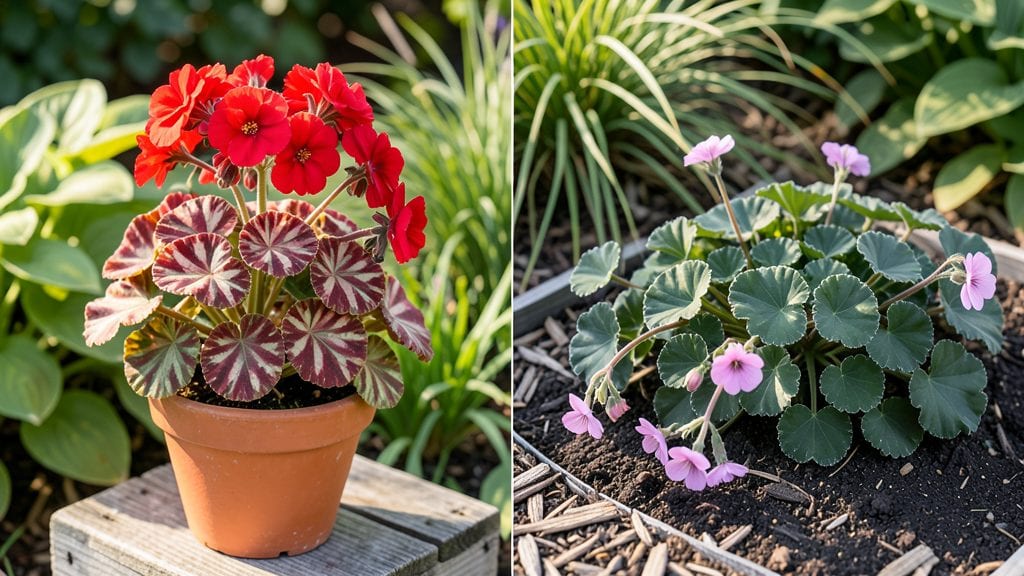
Whether geraniums are annual or perennial depends entirely on your climate zone. In warm USDA zones 10-11, they thrive as perennials year-round, while in colder zones 3-9, frost makes them act like annuals unless you take special steps. Hardy types like Pelargonium zonale handle mild winters better than tender varieties such as Pelargonium peltatum, which often need winter protection or replanting.
This distinction comes down to temperature tolerance—most geraniums can't survive freezing, so they die back in winter unless you're in a frost-free zone. 🌱 The good news? Even in colder areas, you can still grow them year-round with simple overwintering techniques, like digging up tubers or moving potted plants indoors.
I've found that container-grown geraniums adapt best to indoor conditions during winter, especially if you provide bright light and moderate humidity.
For gardeners in zones 3-9, the choice between annual replanting and overwintering often boils down to convenience versus cost. While replanting is easier, saving your geraniums for another season can save money and preserve your favorite varieties.
Some cold-hardy cultivars, like the evergreen Pelargonium graveolens, even survive light frosts with proper mulching—making them a great low-maintenance option.
💡 In This Article
- Geranium Lifespan by Climate and Variety
- Extending Geranium Life in Cold Climates
Geranium lifespan by climate and variety
Geraniums belong to two distinct botanical groups with vastly different cold tolerances: the tender Pelargonium species (like Pelargonium zonale and Pelargonium peltatum) and the hardy crane's-bill (Erodium) varieties.
The key difference lies in their cellular structure—Pelargonium species have thin, frost-sensitive leaves that rupture at 32°F (0°C), while Erodium varieties develop woody stems and dormant buds that survive down to 15°F (-9°C).
This explains why Erodium thrives as a true perennial in zones 5-9, while most Pelargonium types act as annuals unless protected.
The USDA zone system maps these thresholds precisely: in zones 10-11 (average minimum 30°F/-1°C), even tender Pelargonium varieties can overwinter outdoors with minimal care. But in zones 3-9 (where winters dip below 20°F (-7°C)), the 32°F (0°C) threshold becomes critical.
For example, the evergreen Pelargonium graveolens (rose-scented geranium) can handle brief exposures to 28°F (-2°C) if mulched heavily, while Pelargonium peltatum (ivy geranium) typically dies back completely without protection. 🌿
What most gardeners overlook is how microclimates can shift these boundaries by 5-10°F. A south-facing wall or raised bed might create a 10°F warmer pocket, allowing tender varieties to survive winters in zone 7 that would otherwise kill them.
This is why I always recommend planting geraniums near heat-retaining structures—even a simple brick wall can mean the difference between annual and perennial growth. The science here involves radiant heat absorption during the day and slow release at night, creating a buffer against frost.
For those in zones 3-5, the dormant tuber strategy is your best bet with Pelargonium species. When temperatures drop below 40°F (4°C), these plants naturally redirect energy to underground tubers, which can survive 10-15°F (-12 to -9°C) when buried 6 inches deep in sand or straw.
I've successfully overwintered Pelargonium 'Mrs. Pollock' this way for 5+ years in zone 4, simply by lifting tubers in October and storing them in a cool (40-50°F/4-10°C) dark place until spring.
Hardy Erodium species offer a low-maintenance alternative, with some cultivars like Erodium manescavii developing woody crowns that regenerate annually. These plants use a bud dormancy strategy similar to peonies, where protected buds remain viable underground until spring warmth triggers regrowth.
The trade-off? Erodium typically produces smaller flowers than Pelargonium, but their 3-4 foot height and self-seeding habit make them ideal for naturalizing in perennial borders.
Here's a quick comparison of your options by climate zone:
- Zones 10-11: All Pelargonium varieties thrive as perennials with minimal care (just prune back after winter rains).
- Zones 7-9: Tender Pelargonium can overwinter outdoors if planted in protected microclimates or lifted as tubers. Hardy Erodium grows naturally as a perennial.
- Zones 3-6: Pelargonium must be overwintered indoors or as tubers; Erodium is your only true perennial option.
The bottom line? Your geranium's lifespan hinges on matching the right variety to your winter lows. For colder climates, Erodium is the clear winner for hands-off growing, while Pelargonium enthusiasts need to embrace winter storage techniques.
Either way, with the right approach, you can enjoy these cheerful bloomers for years beyond a single growing season. 🌸