
Flowers
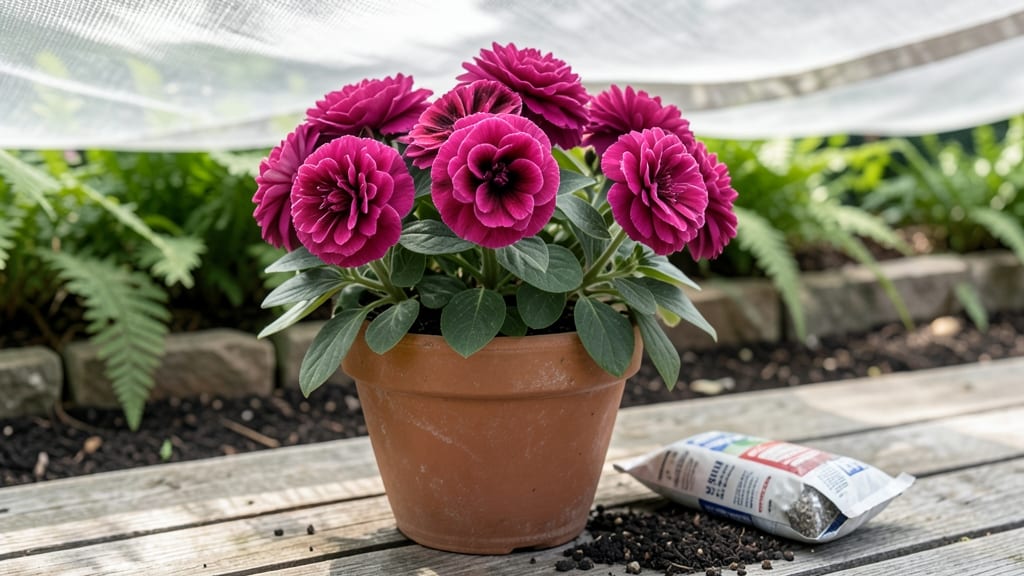
These vibrant flowers thrive as annuals because they originate from tropical climates where frost is nonexistent. 🌱 When temperatures dip below 32°F, their delicate stems and leaves freeze, causing the entire plant to die back. The good news?
Their seeds often survive in the soil, sprouting fresh blooms the following spring—this natural reseeding is why they seem to "come back" year after year.
In milder climates, you can extend their lifespan by moving potted plants indoors during winter or covering garden beds with thick mulch to shield roots from light freezes.
What sets double impatiens apart from other shade-loving plants is their self-sustaining habit. Unlike many annuals that require replanting, their prolific seed production means they'll often pop up where you least expect them.
For gardeners in cooler zones, this makes them a low-maintenance choice—just let nature handle the propagation while you enjoy their bright blooms all season. In frost-free areas, treating them as perennials means fewer replacements and more continuous color.
💡 In This Article
- Why Double Impatiens Die Back in Cold Climates
- Extending Double Impatiens Lifespan in Gardens
Why double impatiens die back in cold climates
Double impatiens originate from tropical West Africa, where temperatures rarely drop below 50°F and humidity stays consistently high. Their biological makeup simply isn't equipped to handle frost—when temperatures fall below 32°F, ice crystals form within their thin, succulent stems, rupturing cell walls and causing irreversible damage.
This sensitivity stems from their evolutionary adaptation to warm, moist environments where freezing conditions never occur. 🌡️ Unlike hardy perennials like hostas (which survive -20°F), these plants lack the protective mechanisms like antifreeze proteins or deep root systems to withstand cold snaps.
The key difference lies in their cellular structure. Double impatiens have thin, water-rich stems that act like sponges, absorbing moisture to maintain their vibrant blooms. When frost hits, this water expands as it freezes, literally bursting the plant's delicate tissues from within.
This process is called cryogenic injury, and it's why even a light freeze can kill the entire plant overnight. Compare this to begonias, which can tolerate brief dips to 28°F by entering a semi-dormant state, or fuchsias, which die back to the ground but regrow from roots in spring.
What makes their seasonal cycle so fascinating is how they've evolved to compensate for their short lifespan. These plants produce an astonishing 10,000+ seeds per plant under ideal conditions, ensuring genetic survival even when the parent plant perishes.
The seeds contain natural antifreeze compounds that protect embryonic tissue during brief cold periods, allowing them to germinate when temperatures rise again.
This adaptation explains why double impatiens often "come back" year after year—it's not the same plant persisting, but rather a new generation emerging from seeds that survived winter's chill.
Interestingly, their tropical heritage also affects their growth patterns. Double impatiens grow most vigorously when nighttime temperatures stay above 60°F, which is why they thrive as summer annuals in temperate zones.
When autumn arrives and nights grow cooler, their metabolic processes slow dramatically—photosynthesis decreases by 40-50% as chlorophyll production drops. This physiological shift explains why they stop blooming and eventually wither when frost approaches, rather than entering true dormancy like perennials.
Understanding this lifecycle helps explain why they behave differently in various climates. In USDA Zone 7b (where winters dip to 0-5°F), they'll always act as annuals.
But in Zone 9a (with winter lows of 20-25°F), their roots can sometimes survive if protected, allowing them to regrow from the base in spring.
The distinction between annual and perennial behavior comes down to whether their root systems endure winter's cold—something that requires careful insulation in marginal climates. 🌱
For gardeners curious about their hardiness, consider this comparison: Double impatiens share frost sensitivity with other tropical shade plants like caladiums and philodendrons, but differ from cold-hardy annuals like pansies (which tolerate 15°F) or sweet alyssum (down to 20°F).
Their inability to withstand freezing makes them perfect for warm-season gardens but requires strategic planning in cooler regions where winter protection becomes essential for extending their growing season.