
Plants
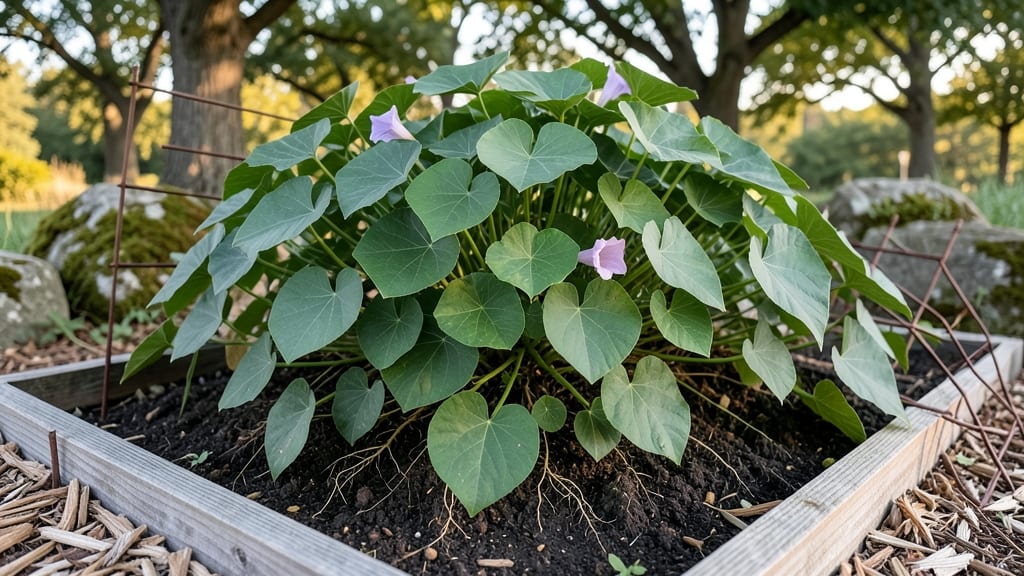
Sweet potato vine isn't a true perennial in most climates, though it often regrows from its root system when conditions are right. In warmer USDA zones 9-11, it behaves like a perennial, thriving year-round as a tough ground cover.
This vine's behavior depends heavily on winter temperatures. 🌱 In colder regions (USDA zones 3-8), frost kills the above-ground growth, but the roots often survive underground—especially if protected by mulch or snow cover.
The key difference lies in the plant's ability to regenerate: in mild climates, it grows continuously, while in cooler areas, it acts more like a tender perennial that needs seasonal care to persist.
For gardeners in marginal zones, overwintering strategies like container cultivation or digging up tubers can extend its lifespan. The vine's adaptability makes it a favorite for both annual and perennial gardens, depending on your location.
💡 In This Article
- Sweet Potato Vine Lifespan by Climate Zone
- Overwintering Sweet Potato Vine in Cold Regions
Sweet potato vine lifespan by climate zone
The sweet potato vine's behavior as a perennial hinges on its root system's hardiness and frost tolerance. In USDA zones 9-11, where winter temperatures rarely drop below 20°F, the vine's fibrous roots remain active year-round.
These roots store carbohydrates that fuel continuous growth, allowing the vine to spread aggressively as a ground cover. The key difference is that in these warm climates, the plant never fully enters dormancy—its metabolism stays active, producing new shoots even during mild winters.
In colder zones (3-8), the above-ground growth dies back when temperatures fall below 32°F, but the roots often survive if protected. Here's what's happening: sweet potato vine roots contain natural antifreeze proteins that prevent ice crystal formation in cells, similar to how winter wheat survives frost.
However, prolonged exposure to 15°F or colder can kill even these hardy roots. The plant's ability to regrow depends on how quickly spring warmth returns—typically within 2-4 weeks of soil temperatures reaching 55°F.
Growth patterns differ dramatically between tropical and temperate climates. In Florida or Hawaii (zone 11), vines can reach 10-15 feet in a single growing season, producing continuous new growth without rest periods.
In contrast, temperate zone vines (like in zone 7) grow rapidly in summer but enter a semi-dormant state in fall, conserving energy until spring. This explains why gardeners in cooler areas often treat it as an annual—it simply doesn't have the energy reserves to sustain year-round growth.
The vine's leaf color changes provide visual clues about its seasonal behavior. In warm zones, leaves maintain their vibrant orange or purple hues year-round. In cooler zones, leaves turn yellowish-brown in winter, signaling dormancy.
What's fascinating is that even dormant roots can detect light through soil, triggering regrowth when conditions improve—a survival adaptation called photomorphogenesis that's common in many perennials.
For gardeners, understanding these mechanisms explains why some vines return reliably while others don't. The 30-50% survival rate in marginal zones (like zone 8) occurs because only the most robust root systems make it through winter.
In zone 9, survival rates approach 90% because the plant never fully shuts down its growth cycle. This biological flexibility makes sweet potato vine one of nature's most adaptable ground covers.
Here's a practical comparison: In Miami (zone 10), a single vine can cover 100 square feet in one season. In Chicago (zone 5), the same vine might only return if you provide 6+ inches of mulch and protect it with frost blankets.
The difference isn't just about temperature—it's about how the plant's entire physiology responds to seasonal light and temperature cycles.