
Plants
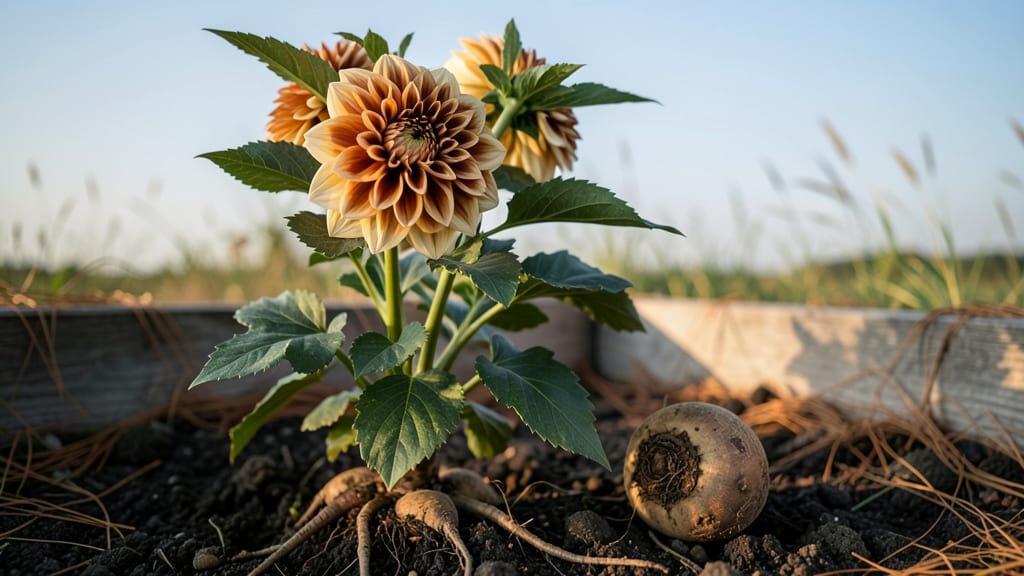
Dahlias are not true perennials in cold climates but behave as tender perennials in USDA Zones 8-11, dying back to the ground each winter and regrowing from tubers. In colder regions, they must be dug up and stored indoors to survive.
This classification comes down to temperature tolerance—dahlias thrive as perennials in warmer zones where frost never reaches their roots. 🌱 In colder areas, their tubers freeze without protection, which is why gardeners in zones 7 and below treat them as annuals or take extra steps to preserve them over winter.
The key difference lies in their root systems: while true perennials survive winter underground, dahlias need that human intervention to make it through harsh freezes.
What's fascinating is how their growth cycle mirrors that of tropical plants—they go dormant when temperatures drop, much like many bulbs or cannas. This makes them perfect for container gardening in cooler climates, where you can simply move the pots indoors before the first frost.
I've seen gardeners in zone 6 successfully overwinter dahlias by storing tubers in peat moss at 35-45°F—the secret is keeping them dry and frost-free until spring planting.
💡 In This Article
- Dahlia Cold-Hardiness Zones Explained
- How to Overwinter Dahlias in Cold Climates
Dahlia cold-hardiness zones explained
The cold-hardiness of dahlias hinges on their biological response to temperature thresholds. In USDA Zones 8-11—where winter temperatures rarely drop below 10°F—dahlias behave as true perennials, entering dormancy naturally when soil temperatures fall below 50°F. Their tubers, which store nutrients, remain viable underground until spring warmth triggers regrowth.
This natural cycle mirrors that of true perennials like peonies, but with one critical difference: dahlias lack the frost-resistant cellular structures found in hardy perennials.
The science behind their dormancy involves a process called vernalization, where cold exposure actually stimulates flowering in spring. However, dahlias can only tolerate brief exposure to 20-25°F before cellular damage occurs.
In Zones 7 and colder, where winter lows frequently drop below 10°F, their tubers freeze solid, killing the plant's ability to regenerate. The root systems of dahlias contain high moisture content—around 70-80%—which expands when frozen, rupturing cell walls in a process similar to how ice cracks pavement.
What makes this fascinating is how their growth habits adapt seasonally. During summer, dahlias develop a corm-like tuber system that stores carbohydrates and proteins, similar to potatoes but with a more fibrous structure. This adaptation allows them to regrow quickly in spring, but only if protected from prolonged freezing.
In warmer zones, the soil acts as natural insulation, maintaining temperatures above 32°F—the critical threshold where tuber damage begins. This is why gardeners in Zone 8 can often leave dahlias in the ground year-round with just a thick mulch layer.
For comparison, consider how true perennials like hostas survive winters in Zone 5: their underground rhizomes contain antifreeze proteins that prevent ice crystal formation. Dahlias lack these proteins, which is why they require human intervention in colder climates.
The 30°F mark becomes the practical dividing line—below this, even well-established tubers will suffer irreversible damage within 24-48 hours of exposure, making overwintering essential for gardeners in Zones 1-7.
Interestingly, some dahlia varieties show slight variations in cold tolerance. The Café au Lait series, for example, has been observed to tolerate brief dips to 20°F when fully dormant, while dinnerplate varieties with larger tubers often fare better than delicate pompon types.
This variation stems from differences in tuber size and moisture content—larger tubers have a better surface-area-to-volume ratio, reducing moisture loss during storage. Understanding these nuances helps gardeners select varieties that align with their local climate challenges.
The transition between zones also affects flowering patterns. Dahlias in Zone 9 may bloom continuously from spring to frost, while those in Zone 8 often have a 6-8 week growing season. This shorter window forces gardeners to choose early-blooming varieties or extend the season with row covers.
The key takeaway is that while dahlias can't survive winter outdoors in cold climates, their tuber-based growth system makes them remarkably adaptable with proper care—turning what might seem like a limitation into an opportunity for creative gardening solutions.