
Flowers
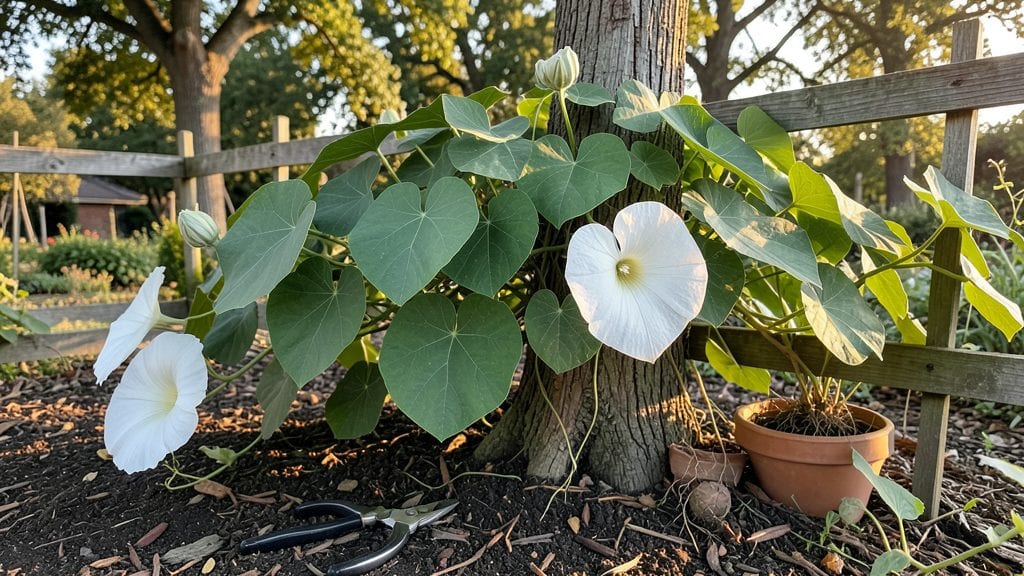
Moonflowers are annuals, not perennials, meaning they complete their life cycle in one growing season and must be replanted yearly. Their delicate vines thrive in warm climates (USDA zones 9-11) but die back with frost, requiring new seeds each spring for recurring blooms.
Moonflowers' annual nature comes from their rapid growth cycle—germinating quickly in warm soil, blooming within weeks, and setting seeds before frost. 🌙 Unlike hardy perennials such as morning glories, they lack dormant root systems to survive winter chill, which is why gardeners in cooler zones must replant every season.
Their night-blooming habit also makes them vulnerable to early morning frosts, cutting their lifespan short unless protected.
In warmer regions like Florida or Southern California, moonflowers can self-seed prolifically, creating naturalized patches year after year without replanting. However, even in these zones, individual plants rarely survive past their first frost—making them technically annuals despite their persistent presence.
💡 In This Article
- Moonflower Lifespan and Growth Cycle Explained
- How to Extend Moonflower Season in Different Climates
Moonflower lifespan and growth cycle explained
The botanical reason moonflowers (Ipomoea alba) behave as annuals lies in their evolutionary adaptation to warm climates. These vining plants evolved in tropical and subtropical regions where frost is rare, so they prioritize rapid reproduction over winter survival.
Their seeds germinate within 7-14 days in soil temperatures above 70°F, and vines can grow 6-10 inches per day under ideal conditions—outpacing potential frost threats in their native habitats.
Here's what sets them apart from true perennials like morning glories (Ipomoea purpurea): Moonflowers allocate nearly all their energy to flowering and seed production (up to 1,000 seeds per plant)) rather than building storage roots or rhizomes.
Their delicate stems contain 80-90% water content when mature, making them highly susceptible to freezing—even 32°F temperatures cause irreversible cell damage. This night-blooming habit also creates vulnerability: Flowers open at dusk and wilt by dawn, leaving them exposed to early morning frosts that can kill the entire plant within hours.
The key difference in survival strategy becomes clear when comparing their root systems. While morning glories develop thick, woody roots that can regenerate after frost damage, moonflowers produce only fibrous roots that store minimal reserves.
Their entire life cycle—from seed to seed—completes in just 90-120 days in optimal conditions, which is why they're classified as "short-day annuals" that time their blooming precisely to avoid winter's arrival.
What most gardeners don't realize is how their night-blooming adaptation affects their annual status. Moonflowers use a process called "thermogenesis" to generate heat in their flowers (up to 10°F warmer than ambient air), which helps attract night-flying pollinators like moths.
This metabolic boost comes at a cost: It depletes the plant's energy reserves faster than slower-growing perennials, forcing them to complete their reproductive cycle before frost arrives. In cooler climates, this means their natural growth window shrinks dramatically—sometimes to just 60 days—making annual replanting essential.
Interestingly, moonflowers exhibit one perennial-like trait in frost-free zones: They can self-seed prolifically. A single plant may drop 500-1,000 seeds that remain viable for 3-5 years in the soil, creating the illusion of perennial behavior.
However, these aren't true perennials because each generation starts fresh from seed rather than regrowing from established roots. This explains why moonflowers often return year after year in warm climates without human intervention.
The night-blooming habit also plays a crucial role in their annual classification. Flowers that open at night must complete their pollination cycle before dawn, which creates evolutionary pressure to produce seeds quickly.
This "race against time" means moonflowers can't afford the luxury of perennial growth—they must set seed before frost arrives, even if it means sacrificing long-term survival for rapid reproduction. 🌙