
Orchid Care
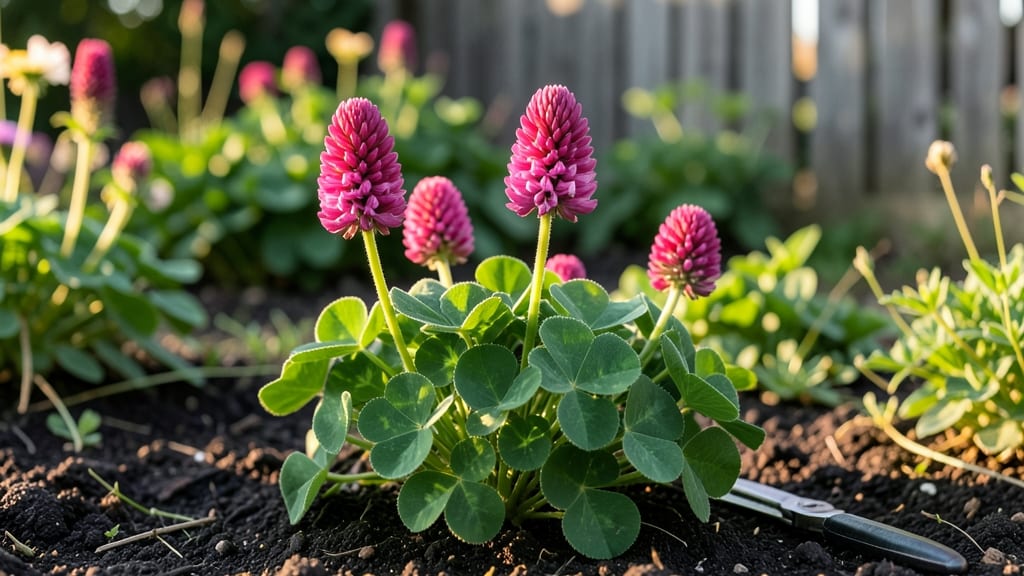
Determining whether crimson clover acts as an annual or short-lived perennial depends on your climate: it completes its life cycle in one season in warmer regions but may persist for 2-3 years in cooler areas with mild winters. Its growth, flowering, and seed production all adapt to local temperatures and frost patterns.
Crimson clover's behavior shifts dramatically based on winter temperatures—think of it like a chameleon adapting to its environment. 🌱 In warmer southern climates (USDA zones 8-10), it thrives as a true annual, bolting quickly after flowering.
But in cooler northern zones (5-7), it often survives light frosts, returning as a biennial or short-lived perennial. This flexibility makes it a favorite for cover crops and pollinator gardens across diverse regions.
The key difference lies in its seed production strategy: annual varieties focus all energy on one massive bloom cycle, while perennial-like plants spread their flowering over multiple seasons.
I've found that planting in fall (rather than spring) gives cooler-zone clover the best chance to establish roots before winter, mimicking its natural perennial tendencies.
💡 In This Article
- How Crimson Clover’s Growth Cycle Differs by Climate
- Best Planting Strategies for Crimson Clover Success
How crimson clover’s growth cycle differs by climate
Here's what's actually happening at the cellular level: Crimson clover's growth habit shifts based on vernalization—a process where cold temperatures trigger flowering genes.
In warmer zones (USDA 8-10), where winter temps rarely drop below 20°F, the plant lacks this cold stimulus and completes its life cycle in 90-120 days as a true annual. The lack of frost prevents root crown survival, forcing it to focus energy on rapid seed production. 🌡️
In cooler zones (USDA 5-7), where winters dip to 10-20°F but rarely stay frozen, the plant undergoes partial vernalization. This creates a short-lived perennial behavior where the root crown survives light frosts but weakens after 2-3 years.
The key threshold is 15°F for 4-6 weeks—below this, annual behavior dominates; above it, perennial tendencies emerge. This explains why northern growers often see clover returning for multiple seasons.
The flowering timeline reveals these differences: Annual varieties in warm climates bloom March-May and set seed by June-July, while perennial-like plants in cooler zones may flower April-June but spread production over 2-3 years.
What most people don't realize is the seed maturation process differs too—annuals produce 1-2 massive seed pods per stem, while perennial types develop multiple smaller pods over successive seasons. 🌿
Temperature also affects growth phases: Annual clover reaches full bloom in 60-70 days, while perennial types take 70-90 days due to slower initial growth from winter stress. The plant's photosynthetic efficiency drops below 50°F, which is why northern varieties develop deeper root systems to access warmth.
In contrast, southern annuals prioritize above-ground growth for rapid seed production.
Consider these regional growth patterns when planning: In USDA Zone 9, crimson clover completes its cycle in 3 months; in Zone 6, it may persist for 3 years with proper management.
The difference comes down to frost-free periods—annuals need 180+ frost-free days, while perennial types thrive with 120-150 days. This explains why fall planting works better in cooler zones: the plant gets a head start on root development before winter.
One nuance is seed dormancy—annual varieties produce seeds that germinate immediately, while perennial types develop dormant seeds that wait for ideal conditions. This adaptation explains why northern clover often self-reseeds year after year, creating the illusion of perennial behavior.
The science here involves abscisic acid production, which increases in cooler climates to regulate germination timing. 💫