
Flowers
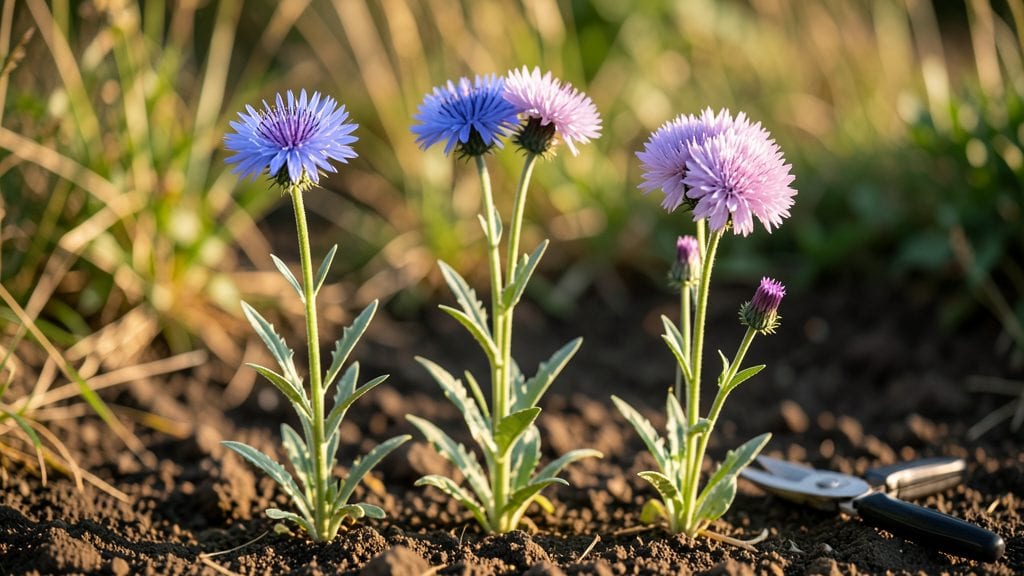
Whether bachelor button grows as an annual or perennial depends on your climate and the specific variety. Centaurea cyanus typically behaves as an annual in most regions, while hardier types like Centaurea montana can return year after year in milder zones with proper care.
Most gardeners know bachelor button (Centaurea cyanus) as the cheerful blue flower that pops up in summer and fades with frost—classic annual behavior. 🌿 But here's the twist: this plant's lifespan isn't set in stone. The key difference lies in your growing zone and the specific cultivar.
In colder climates (USDA zones 3-6), even perennial varieties often act like annuals because winter kills them back. That's why I always check seed packets for hardiness notes—it saves heartbreak when you're hoping for next year's blooms!
For those in milder zones (7-10), the real secret to perennial performance is winter prep. A thick layer of mulch can mean the difference between a dead plant and one that surprises you with fresh growth in spring.
I've seen Centaurea montana come back reliably for years when given this simple protection—it's all about giving those roots a fighting chance against freeze-thaw cycles.
💡 In This Article
- Climate and Variety Factors Affecting Bachelor Button Lifespan
- How to Extend Bachelor Button Blooms Like a Perennial
Climate and variety factors affecting bachelor button lifespan
Here's what's actually happening beneath the surface: Bachelor button's lifespan hinges on two key factors—your USDA hardiness zone and the specific species you're growing. The classic Centaurea cyanus (cornflower) is a true annual in zones 3-8, meaning its entire life cycle—from seed to bloom to seed production—completes in one season.
The plant's cells lack the specialized proteins that help perennials survive freezing temperatures, so when winter arrives, the entire plant dies back to soil level. 🌱
Temperature tolerance varies dramatically between species. Centaurea montana, often called mountain bachelor button, thrives in zones 4-8 and can persist for years because its roots develop deeper, more insulated storage tissues.
These roots contain higher concentrations of sugars and antifreeze proteins that prevent ice crystal formation in cells during winter. In contrast, Centaurea cyanus has shallower roots with minimal cold resistance—its survival strategy is rapid reproduction before frost, not winter endurance.
The science gets even more interesting when we look at soil conditions. Bachelor button prefers well-draining soil with a pH between 6.0-7.5, but in heavier clay soils common to colder regions, waterlogged roots accelerate cell death during freeze-thaw cycles.
This is why you'll often see Centaurea montana thriving in rocky alpine gardens—its roots can penetrate crevices where moisture drains quickly, protecting against winter damage. 💧
What most people don't realize is how regional adaptations create "in-between" varieties. In coastal California (zone 9-10), some Centaurea cyanus plants may behave semi-perennially because milder winters allow partial root survival.
The plant's natural dormancy mechanisms kick in when night temperatures drop below 45°F, but in frost-free zones, this never happens—resulting in multi-year growth. This explains why seed packets often list both annual and perennial potential for the same variety.
Consider these key factors when choosing varieties for your region:
- Zone 3-6: Stick with Centaurea montana for perennial performance—its roots can tolerate down to -25°F with proper mulching
- Zone 7-8: Both species may persist if given winter protection (mulch or row covers)
- Zone 9-10: Even Centaurea cyanus may return yearly due to mild winters
One practical example: In my zone 5 garden, I planted Centaurea montana last spring and it's now in its third year, while my Centaurea cyanus reseeds annually but never overwinters. The difference?
A 6-inch layer of straw mulch applied in November that insulates those critical root zones. This simple technique can transform an annual into a perennial performer in marginal climates. 🌟