
Flowers
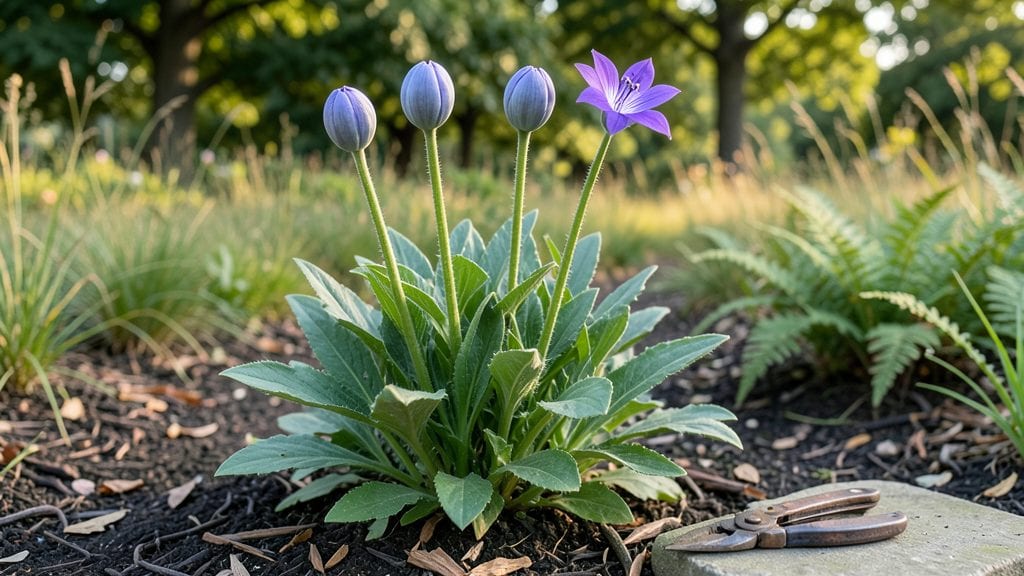
Deciding whether balloon flower (Platycodon grandiflorus) is an annual or perennial depends on your climate: it thrives as a hardy perennial in USDA zones 3-8, reblooming yearly with consistent care, but may act like an annual in colder regions where frost destroys its roots.
Balloon flowers earn their perennial reputation thanks to their thick, tuberous roots that store nutrients through winter, allowing them to regrow each spring. 🌱 In zones 3-8, these roots survive winter dormancy, while in colder microclimates, gardeners often treat them as annuals since they don't reliably return.
The plant's self-seeding habit in mild winters actually helps extend its lifespan—many gardeners find new volunteers popping up even after the original plant fades.
What sets balloon flowers apart from true annuals like zinnias is their cold tolerance—they can handle down to -30°F when properly mulched, though their blooming may be delayed until late spring.
For gardeners in marginal zones, cutting back dead foliage in fall and adding 3-4 inches of mulch dramatically improves their chances of returning next year.
💡 In This Article
- Balloon Flower Lifespan and Cold Hardiness Explained
- Growing Balloon Flowers as Perennials or Annuals
Balloon flower lifespan and cold hardiness explained
The secret to balloon flower's perennial behavior lies in its thick, fleshy roots that function like underground storage tanks. These roots contain high concentrations of starches and sugars—up to 25% of their dry weight—which act as energy reserves during dormancy.
Unlike true annuals such as zinnias, which die completely after flowering, balloon flowers enter a deep physiological dormancy when temperatures drop below 40°F, shutting down metabolic processes to preserve these root reserves.
Here's what happens botanically: when frost arrives, the plant's above-ground growth dies back, but the roots remain alive underground, protected by their thick cell walls.
Some cultivars, like 'Mariesii' or 'Grandiflorus', have even thicker roots that can withstand -30°F temperatures—far colder than true annuals like marigolds, which die at 28°F.
The key difference is that balloon flowers' roots can regenerate new shoots when soil temperatures reach 50°F in spring, while annuals have no such survival mechanism. 🌱
Cold tolerance varies dramatically between cultivars. For example, 'Astra Blue' handles zone 4 winters with minimal protection, while 'White Pearl' may need extra mulch in zone 5. This variation occurs because some selections have been bred specifically for northern climates, developing thicker root systems through selective propagation.
In contrast, tropical annuals like celosia have no cold tolerance mechanisms at all—their entire life cycle must complete within one growing season.
The plant's self-seeding habit actually serves as a backup survival strategy. When winters are mild (zones 7-8), balloon flowers may produce seed pods that germinate the following spring, creating new plants even if the original roots fail to regrow.
This explains why many gardeners find balloon flowers popping up year after year in mild climates—it's not just the roots returning, but also new seedlings from dropped seeds. This dual survival strategy makes balloon flowers more resilient than most annuals.
What most gardeners don't realize is how the plant's growth cycle affects its cold hardiness. Balloon flowers establish their root systems most aggressively during their first growing season, building up reserves that determine their winter survival.
If planted late in the season, they may not develop sufficient root mass to survive freezing temperatures. This is why gardeners in marginal zones (like zone 5) often get better perennial results by planting in early spring rather than late summer. ✨
Comparing balloon flowers to true annuals reveals their unique cold resilience. While zinnias and marigolds complete their entire life cycle in 90-120 days and die when frost arrives, balloon flowers can remain dormant for 6-8 months before regrowing.
This extended dormancy period, combined with their root storage system, explains why they persist year after year in colder climates where annuals would fail completely.