
Orchid Care
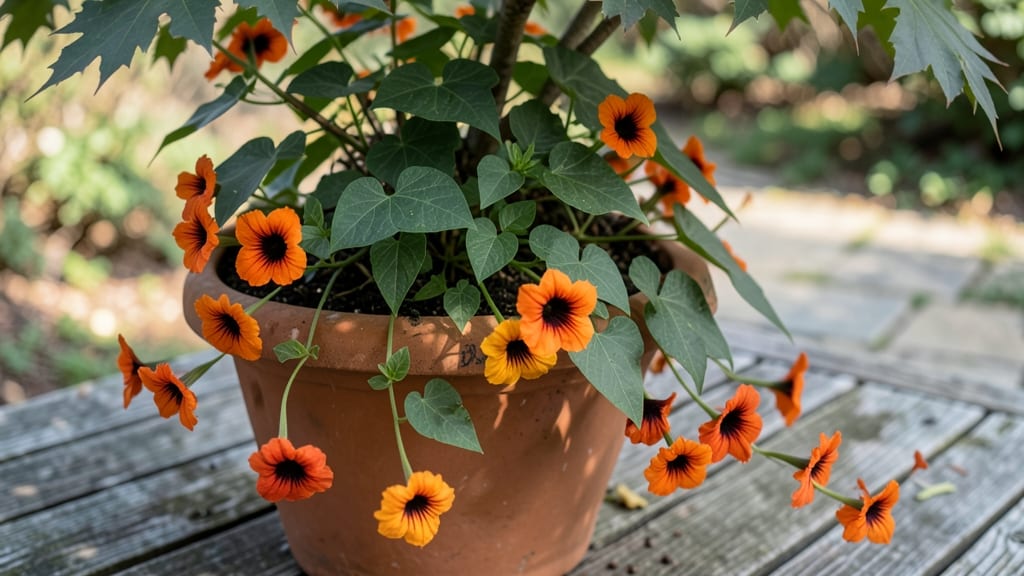
The key difference between annual and perennial varieties lies in their growth habits.
Annual black-eyed Susan vine focuses all its energy on flowering and seed production during its single season, while perennials like Rudbeckia hirta regrow from the same root system year after year. 🌱 This annual behavior means you'll enjoy vibrant blooms each summer, but only if you start fresh seeds or replant each spring.
The good news? Many gardeners find the self-seeding habit makes maintenance easier over time, as new plants pop up without extra effort.
For those in cooler climates, annual growth means more deliberate planning—starting seeds indoors 6-8 weeks before the last frost gives you the jumpstart needed for a full season of color. The trade-off?
Annuals often produce more abundant flowers than their perennial cousins, since they put all their resources into that single spectacular display. It's this burst of energy that makes black-eyed Susan vine such a showstopper in summer gardens.
💡 In This Article
- Black-Eyed Susan Vine’s Annual Life Cycle Explained
- Maximizing Annual Black-Eyed Susan Vine Growth
Black-eyed Susan vine’s annual life cycle explained
Here's what's actually happening botanically: the black-eyed Susan vine (Thunbergia alata) follows a rapid growth cycle triggered by temperature cues. Seeds germinate best when soil temperatures reach 65-75°F, which typically occurs in spring when daytime highs consistently exceed 60°F.
This warm-season trigger ensures the plant completes its entire life cycle before winter frost arrives. Unlike perennials that store energy in roots, annuals like this vine allocate all resources to flowering and seed production within 90-120 days of germination.
The flowering process begins when the vine reaches 12-18 inches tall, typically 6-8 weeks after planting. Each flower contains both male and female reproductive structures, allowing for self-pollination.
What's fascinating is how the plant times its seed production: mature seeds form 4-6 weeks after flowering, right as daytime temperatures begin dropping below 70°F. This timing ensures seeds disperse before frost kills the parent plant.
In warmer climates (USDA zones 9-11), seeds often germinate naturally the following spring, creating new plants without human intervention.
Temperature zones dramatically influence this cycle. In cooler regions (zones 3-7), the vine behaves strictly as an annual, dying back completely in winter. But in mild climates (zones 8-11), it may persist as a short-lived perennial, living 2-3 years before eventually succumbing.
The key difference from perennial Rudbeckia hirta is that black-eyed Susan vine lacks a robust root system to survive winter dormancy. Instead, it relies entirely on seed production for propagation, which is why gardeners in colder areas must replant annually.
What most people don't realize is how light exposure affects this cycle. The vine requires 6-8 hours of direct sunlight daily to trigger flowering. In northern latitudes where summer days are shorter, plants may produce fewer blooms unless given supplemental light.
The dark "eye" in each flower isn't just decorative—it's a specialized structure that helps attract pollinators like bees and hummingbirds, which are crucial for seed set. Without proper pollination, seed production drops by 30-50%, reducing the plant's ability to self-seed.
The annual growth pattern makes this vine particularly responsive to garden conditions. Unlike perennials that spread gradually, black-eyed Susan vine grows aggressively once established, reaching 6-10 feet in a single season. This rapid growth is possible because it's not diverting energy to underground storage structures.
The trade-off? Without careful seed collection, gardeners risk losing their plants entirely after the first frost. 🌿 In ideal conditions, however, a single plant can produce 500-1,000 seeds, ensuring next year's garden gets a head start.
Understanding this cycle helps explain why black-eyed Susan vine thrives in tropical and subtropical regions. In areas with mild winters, the plant can sometimes overwinter if protected, but it still behaves more like an annual because it lacks the cold-hardy root systems of true perennials.
The self-seeding habit becomes particularly valuable in these climates, as it creates a natural succession of blooms throughout the growing season.